
You call her name once. Then twice. The third time, your voice tightens, and she still doesn't look up. Her thumb is doing that little flick on the tablet, the one you've started to dread, and her face has gone slack in a way that doesn't look like the child you know. When you finally take the device away, the meltdown is volcanic. Twenty minutes later, when she has cried herself out and is curled against you on the couch, you find yourself wondering the question that almost every parent of a young child wonders now: what exactly is happening to her in there? And why is it so hard for her to stop?
If you've asked yourself that question, you are not a bad parent. You are a parent paying attention. The struggle you're watching is not a character flaw in your child, and it isn't a failure of your parenting. It's the predictable result of an enormous, well-funded engineering effort designed to capture and hold the attention of very young humans. The apps, shows, and games your child is using were built by teams of people whose job titles include "engagement strategist" and "retention designer." Those people are extremely good at what they do. Your three-year-old is not.
This article is the long version of the answer. We are going to look, without judgment, at three things. First, the actual engineering: how studios test which scenes hold toddler attention down to the second, how autoplay and reward loops are tuned, and why the design borrows so directly from slot machines. Second, what the research tells us this is doing to developing brains, including findings published in JAMA Pediatrics, the 2023 advisory from the US Surgeon General, and decades of work from the Harvard Center on the Developing Child. Third, and most importantly, what actually helps. Not removal, not lectures, not shame. Replacement. Quieter, slower, more tactile experiences that give a child's nervous system a chance to come back to itself.
If you read to the end, you will understand why your kid can't stop, and you will have a clearer sense of what to do about it. Take a breath. This is not your fault.
Part One: The Engineering Behind the Screen
The single most important thing to understand is that children's digital content is not designed the way children's books or wooden toys are designed. A picture book is made by an author and an illustrator who try to tell a good story. A YouTube Kids video that has 800 million views was, in many cases, optimized scene by scene against a quantitative test of toddler attention. The economics are completely different, and so is the result.
The "Distractatron" and the second-by-second optimization of attention
Moonbug Entertainment, the company behind CoComelon, Blippi, and Little Baby Bum, has been unusually open about its methodology. In interviews with Bloomberg and The New Yorker, Moonbug executives have described a testing setup sometimes referred to internally as the "Distractatron." A child is shown the content on one screen while a second screen plays a competing, distracting clip alongside it. Researchers track exactly when the child's eyes leave the target video. Scenes that lose attention are flagged, reworked, or cut. Scenes that hold it are kept and replicated.
What this means in practice is that a CoComelon episode is not a story so much as a stitched sequence of attention-tested moments: a cut every one or two seconds, oversaturated colors, exaggerated facial expressions, repeating melodic hooks. The aesthetic is not an accident. It is the surviving output of a filter that selects, ruthlessly, for whatever a toddler cannot look away from. The point is not that the content is evil. The point is that the design goal is engagement, not development, and those two goals are not the same thing.
Autoplay, the infinite feed, and the removal of stopping cues
Once a child is watching, the next layer of engineering takes over. YouTube and YouTube Kids autoplay the next video by default. There is no end of the episode, no closing credits that signal "you are done now." The same pattern shows up in TikTok's For You feed, in Instagram Reels, and in the related-videos rail on almost every streaming platform. The traditional cues that used to help a child (and an adult) feel finished have been deliberately removed.
This matters enormously for a young brain. Children aged three to six are still developing what neuroscientists call executive function: the bundle of skills that includes impulse control, working memory, and the ability to switch tasks. Asking a four-year-old to voluntarily stop watching when the next video has already started playing is a bit like asking an adult to walk away from a slot machine mid-spin. The stopping decision has been engineered out of the experience.
Variable reward schedules, borrowed from the casino floor
This brings us to the deepest layer, and the one that most directly explains the "can't stop" feeling. Games like Roblox, and the loot box and gacha mechanics inside many free-to-play children's games, run on what behavioral psychologists call a variable ratio reinforcement schedule. The reward (a rare item, a new skin, a level-up, a flashy animation) comes on an unpredictable timeline. Sometimes you get it after two tries, sometimes after twenty.
This is the exact same reinforcement schedule that B.F. Skinner identified in the mid-twentieth century as the most powerful and most resistant to extinction. It is the schedule used in slot machines, and it is no accident that game designers borrow from gambling: many of them have publicly said so. When researchers like Natasha Dow Schüll (author of Addiction by Design) describe the "machine zone" that slot players enter, the description is unsettlingly similar to the slack-faced look on a child caught in a Roblox session.
Dopamine is involved in reward prediction and motivation, but it is not a simple pleasure meter or a direct measure of harm. Variable rewards are powerful because the next reward is uncertain. That uncertainty can keep a child checking, trying again, or asking for one more round even when the activity no longer looks especially fun.
Part Two: What This Is Doing to Developing Brains
It would be easy, at this point in the article, to throw a wall of scary statistics at you. We are not going to do that. The honest scientific picture is more nuanced than the headlines, and the nuance is actually more useful for parents than the panic. Here is what the better-quality evidence says.
Executive function and attention
A 2019 study published in JAMA Pediatrics by Sheri Madigan and colleagues followed more than 2,400 children in Canada and found that higher screen time at ages two and three predicted poorer performance on developmental screening at later ages, particularly in domains tied to communication and problem-solving. A separate 2023 JAMA Pediatrics study, also led by Madigan's group, looked specifically at the link between screen time and child development across multiple cohorts and again found small but consistent associations, especially when screen use displaced interactive activities.
It's worth being careful here. These are associations, not proven causation, and the effect sizes are modest. But the pattern is robust: high-volume, passive, fast-cut content in the youngest years is associated with weaker outcomes in attention and self-regulation. A classic experimental study by Angeline Lillard at the University of Virginia found that just nine minutes of a fast-paced cartoon was enough to measurably reduce executive function performance in four-year-olds immediately afterward, compared to a slower educational program or free drawing. Nine minutes.
Language development
Language is built through what researchers call "serve and return" interaction: a child babbles, an adult responds, the child tries again, the adult elaborates. Screens, even very good ones, are one-directional. A 2020 study in JAMA Pediatrics used MRI to examine the brains of preschoolers and found that higher screen use was associated with lower measures of white matter integrity in regions linked to language and literacy. The American Academy of Pediatrics has consistently recommended that for children under 18 months, screens be avoided except for video calls, and that for ages two to five, screen time be limited to about an hour a day of high-quality content, ideally co-viewed with a parent.
Sensory overload and the come-down
You have probably noticed that your child is harder to live with right after screens come off. There is a name for this in the clinical literature, sometimes called the "screen hangover." A nervous system that has been receiving rapid, high-saturation input for an hour does not return to baseline the moment the device is closed. The contrast between the sensory intensity of the screen and the comparatively quiet real world feels, to a young brain, like understimulation. The result is often crying, clinginess, or rage. This is not your child being manipulative. It is a real physiological state.
The Surgeon General's advisory and the bigger picture
In May 2023, US Surgeon General Vivek Murthy issued a formal advisory titled "Social Media and Youth Mental Health." While the advisory focused primarily on adolescents, its underlying argument applies more broadly: digital platforms used by young people have been designed in ways that may not be safe by default, and the burden of protection has been unfairly placed on individual families. Murthy explicitly called for design changes, transparency from platforms, and age-appropriate defaults. For parents of three to six-year-olds, the takeaway is not that screens are poison. It is that the current ecosystem is not neutral, and that pretending it is sets families up to fail.
What developing brains actually need
The Harvard Center on the Developing Child has spent decades documenting what young brains thrive on, and the list is remarkably consistent: predictable rhythms, responsive caregivers, rich language exposure, manageable challenges, and long enough stretches of engagement with a single activity to build sustained attention. None of these are things screens reliably provide, and several are things screens actively interrupt. This is the frame to hold onto. The problem is not the existence of a tablet in the house. The problem is what the tablet is displacing.
Part Three: What Actually Works
Now the useful part. If you came here looking for permission to throw every device into the ocean, we won't give it to you, because that approach almost never works and often backfires. What works, in our experience and in the research, is a quiet shift in strategy from removal to replacement.
Replacement, not removal
Children, like adults, do not respond well to deprivation. A child who has lost access to a beloved activity will spend the next several hours grieving it, asking for it, and resenting you. A child who has been offered something genuinely absorbing in its place will, after an initial protest, get curious. The question to ask yourself is not "how do I get the screen away from her" but "what am I offering instead, and is it good enough to compete?"
It does not need to compete on stimulation. It cannot, and shouldn't try. CoComelon will always be more visually exciting than a basket of pinecones. What real-world activities offer that screens cannot is agency: the child gets to choose, build, shape, and finish something. The satisfaction is slower and quieter, but it lasts longer, and it builds the very skills the screens erode.
The boredom-creativity link
Here is something most parents are not told clearly enough: a bored child is not a problem to be solved. Boredom is the doorway to imaginative play. Researchers like Teresa Belton at the University of East Anglia have documented that children who are allowed to sit with the discomfort of "nothing to do" reliably invent something within ten to fifteen minutes, and that the inventions tend to be richer and more sustained than what they would have done with a prompt. The first time you let your four-year-old be bored without rescuing her, it will feel like a small cruelty. The hundredth time, it will feel like you've given her a gift.
Practically, that means resisting the urge to fill every gap. The car ride does not need a tablet. The waiting room does not need a phone. The fifteen minutes before dinner does not need PJ Masks. Most of the time, if you can hold steady through the first few minutes of complaint, something else will emerge.
Long-form tactile activities
The opposite of fast-cut, dopamine-pulsed content is a single, hand-driven task that takes thirty to ninety minutes and ends with something visible. Cooking together. Gardening. Building with blocks. Drawing. Modeling clay. And, yes, puzzles. These activities share a set of properties that are almost the inverse of what screens offer:
- Slow pace. The reward comes at the end, not every two seconds.
- Physical engagement. Hands, fingers, and proprioception are involved, which integrates rather than overloads the sensory system.
- Control of error. A puzzle piece either fits or it doesn't. The child can self-correct without a parent intervening, which builds independence.
- A natural stopping point. When the last piece is in, the activity is genuinely complete. There is no autoplay.
- Personal meaning. Especially when the activity ties to something the child cares about, the engagement deepens.
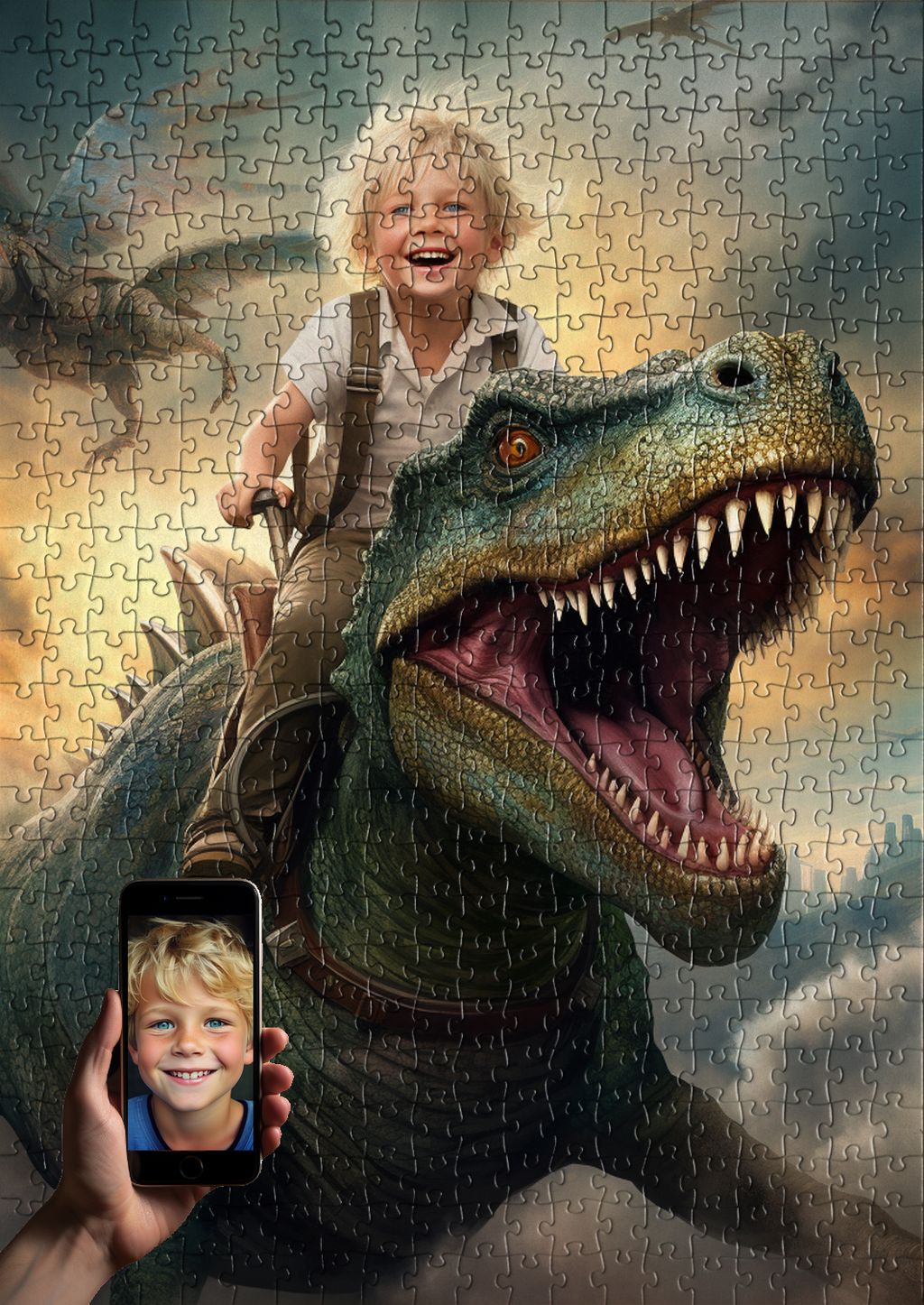
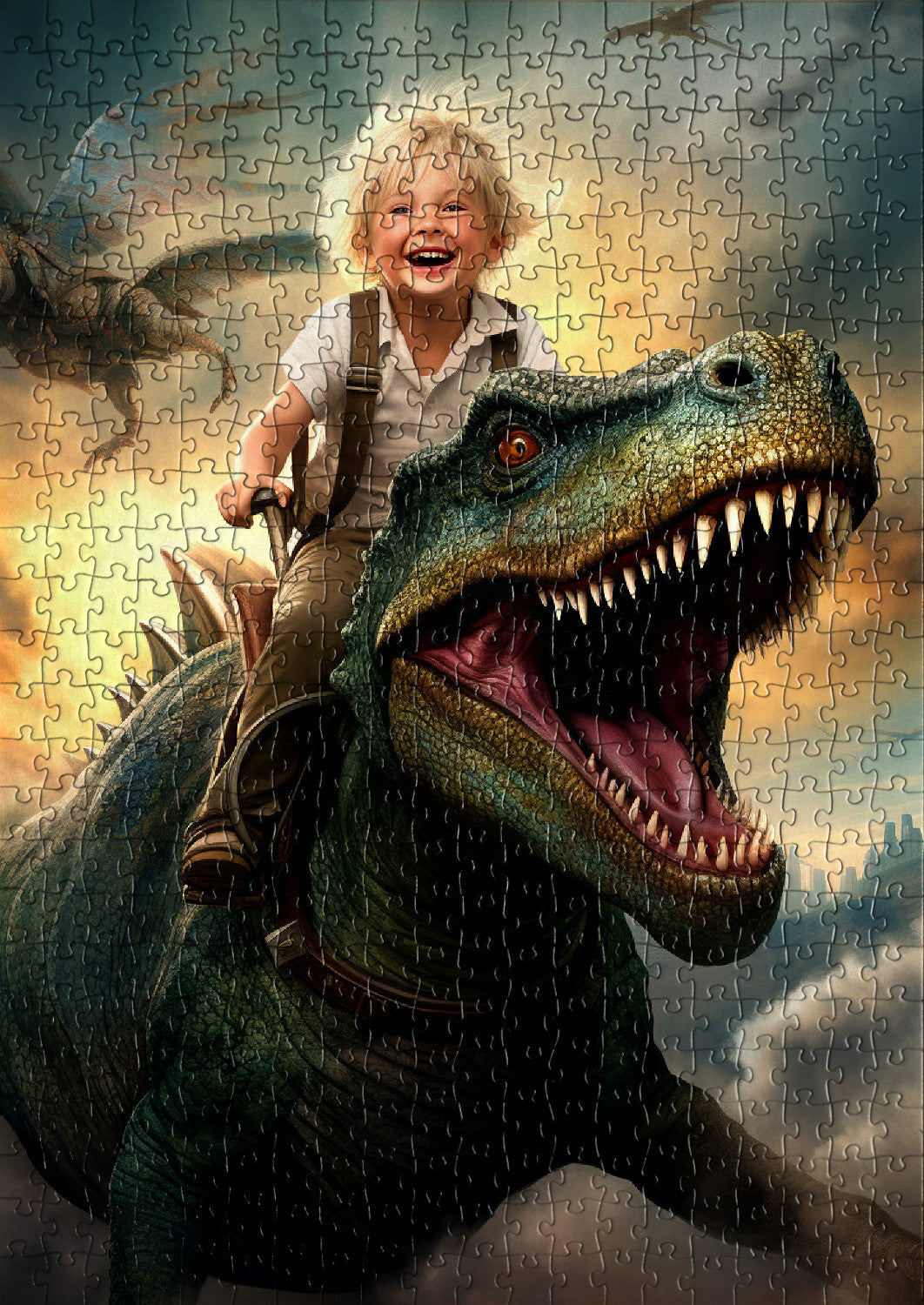
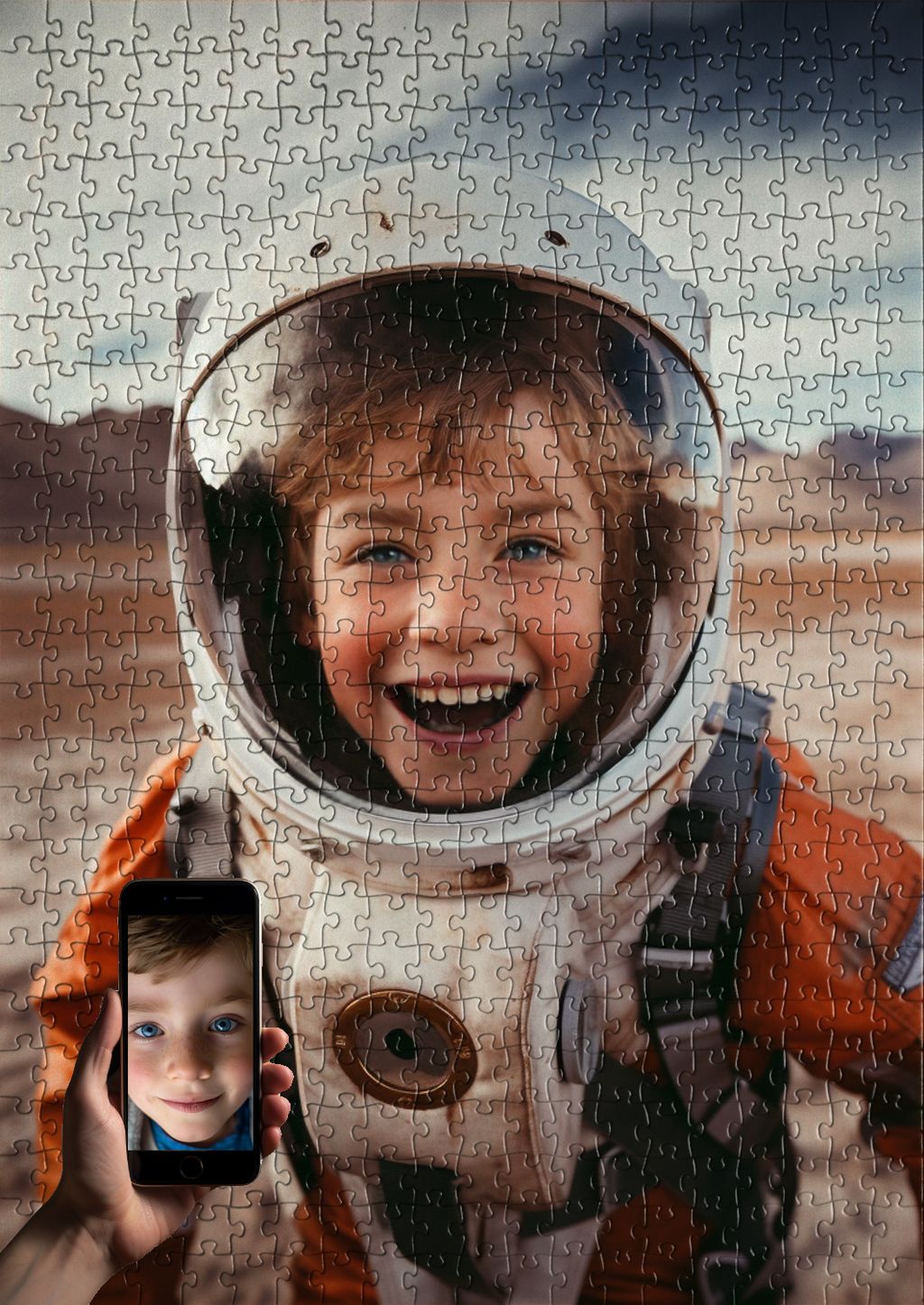
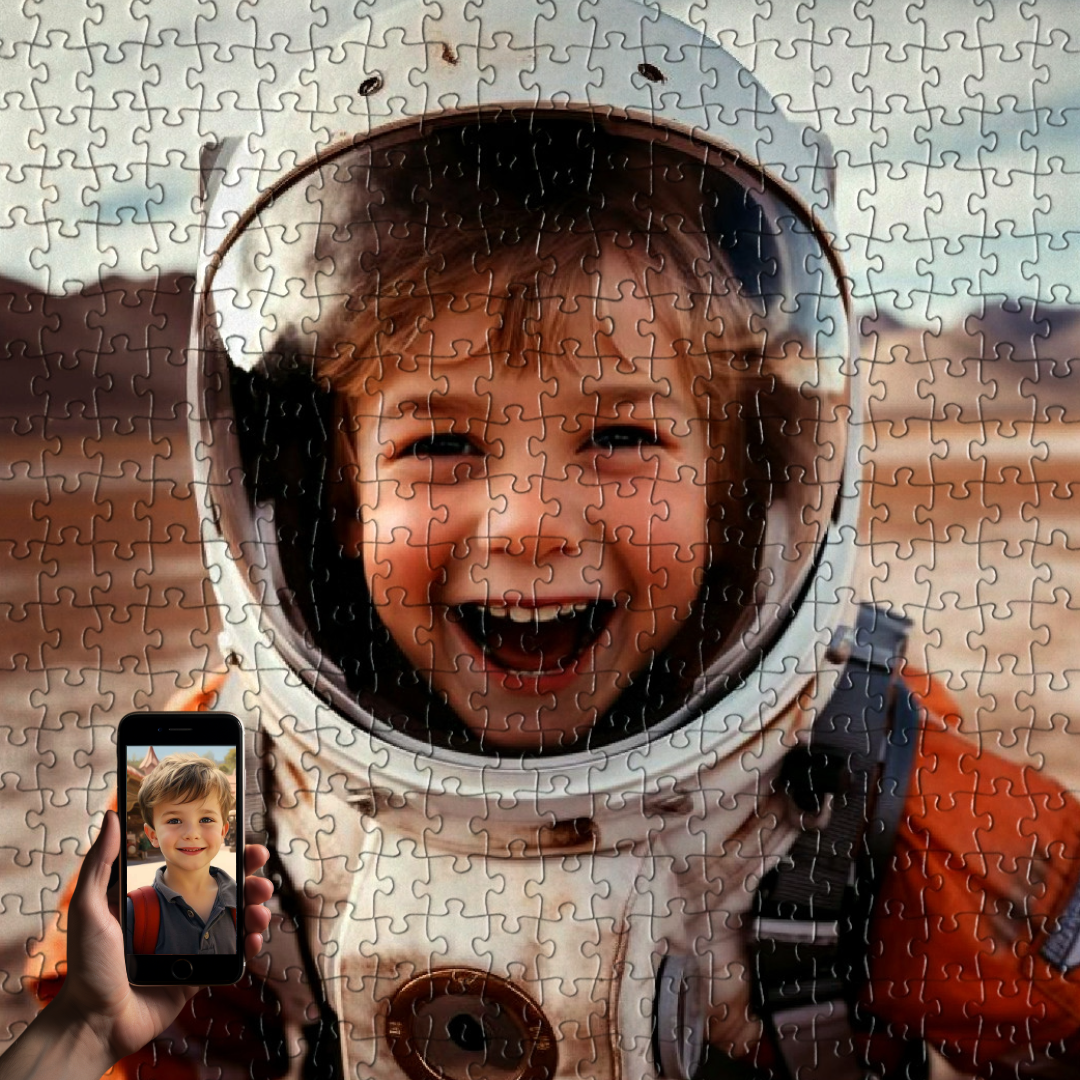
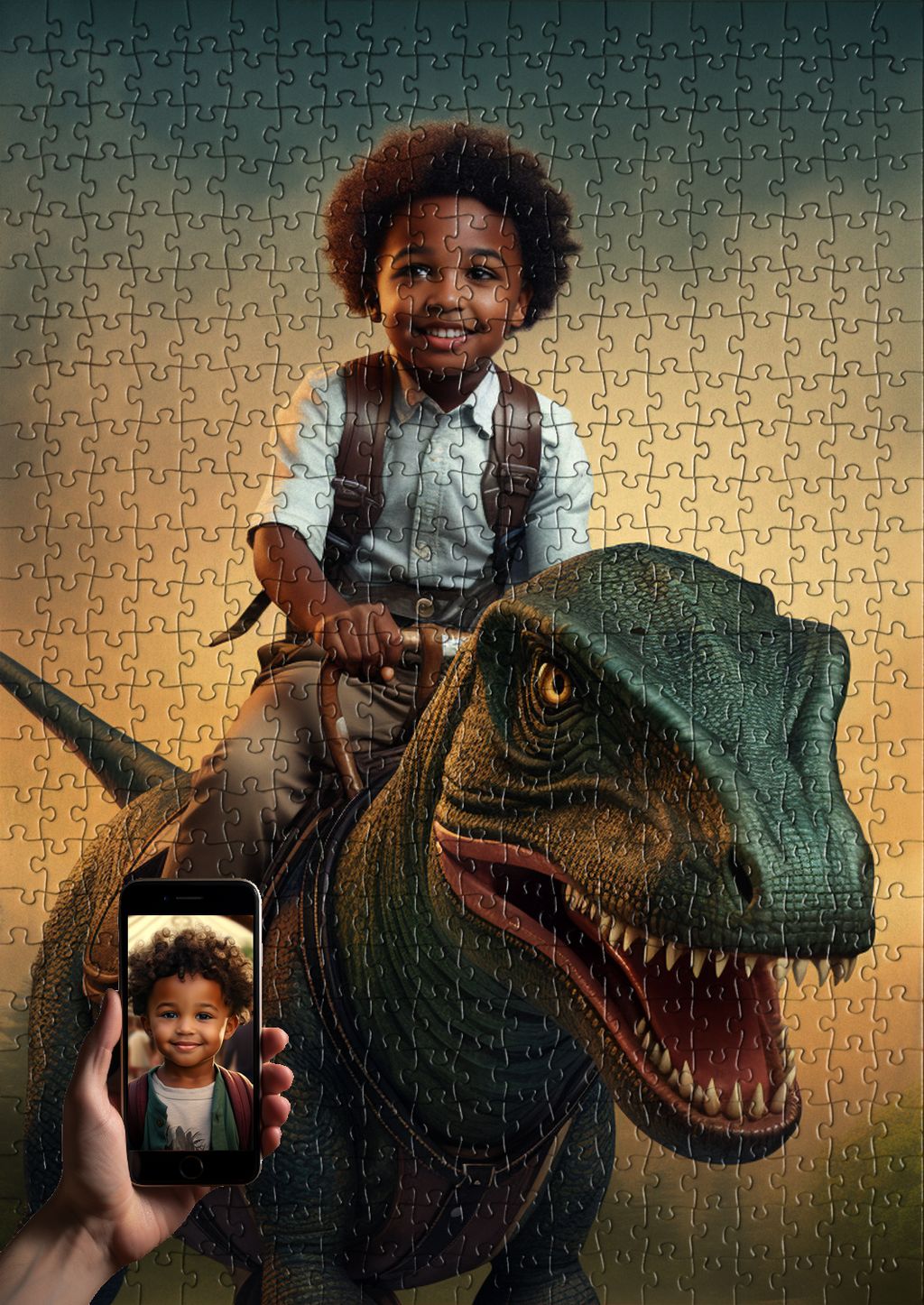
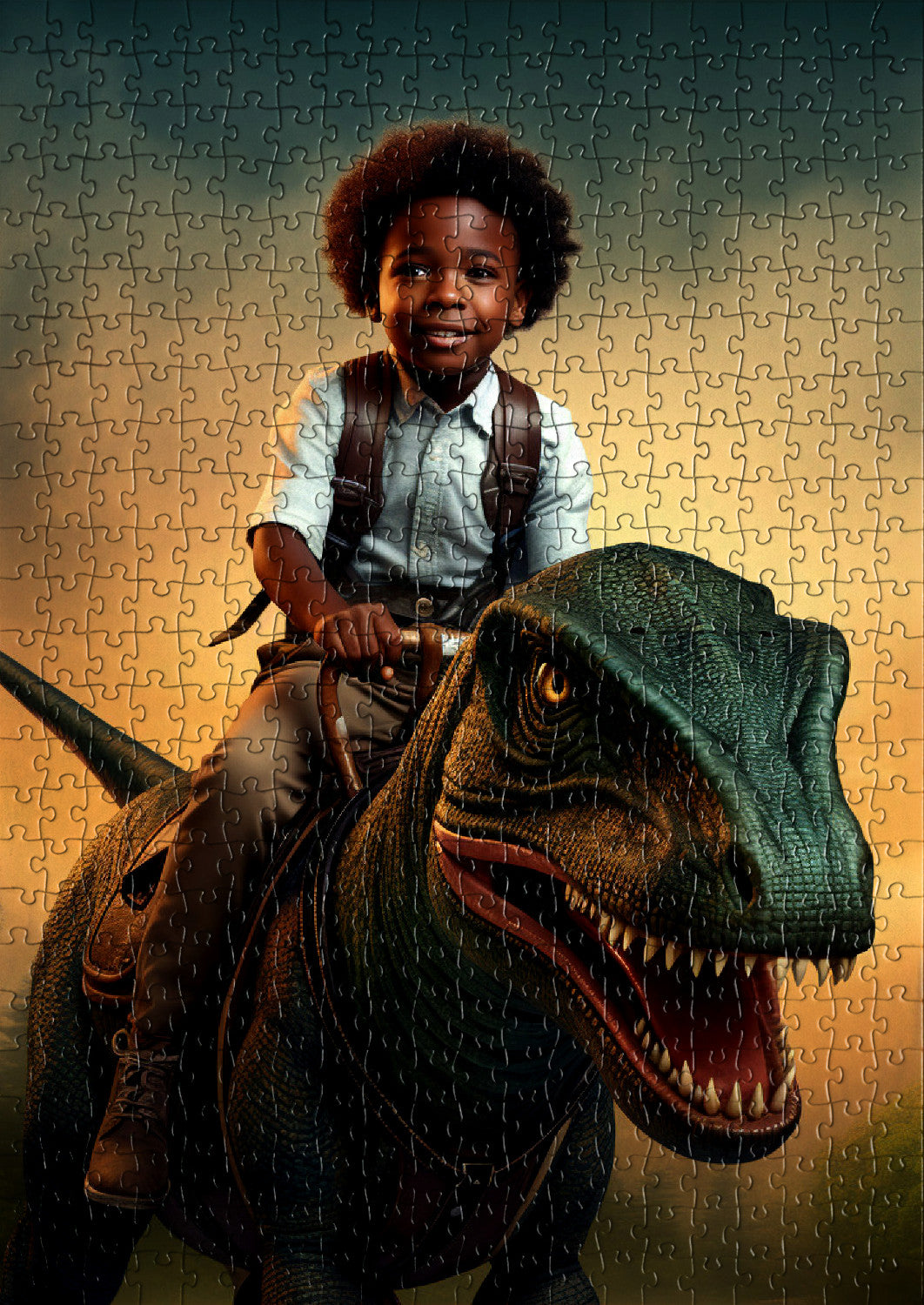
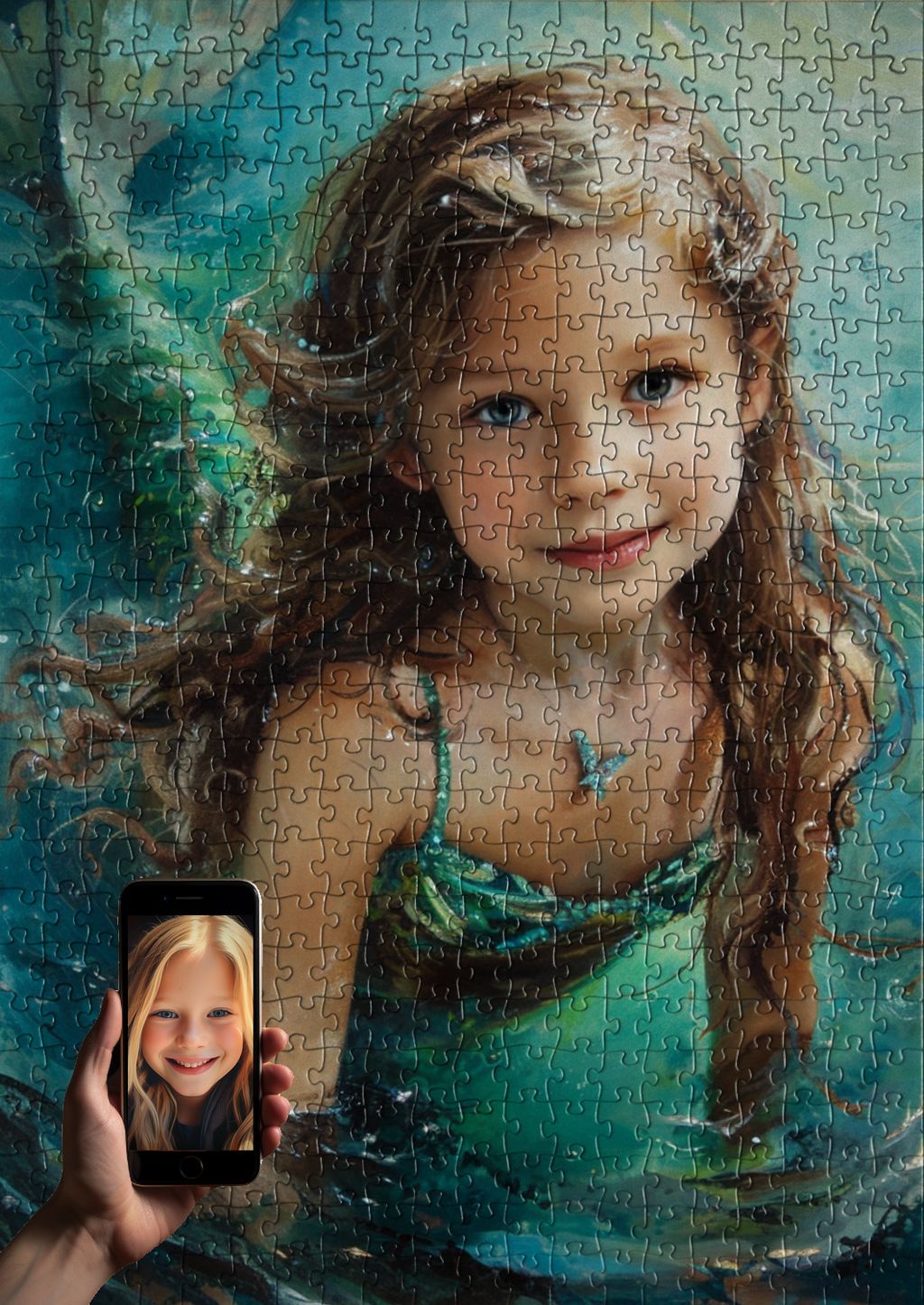
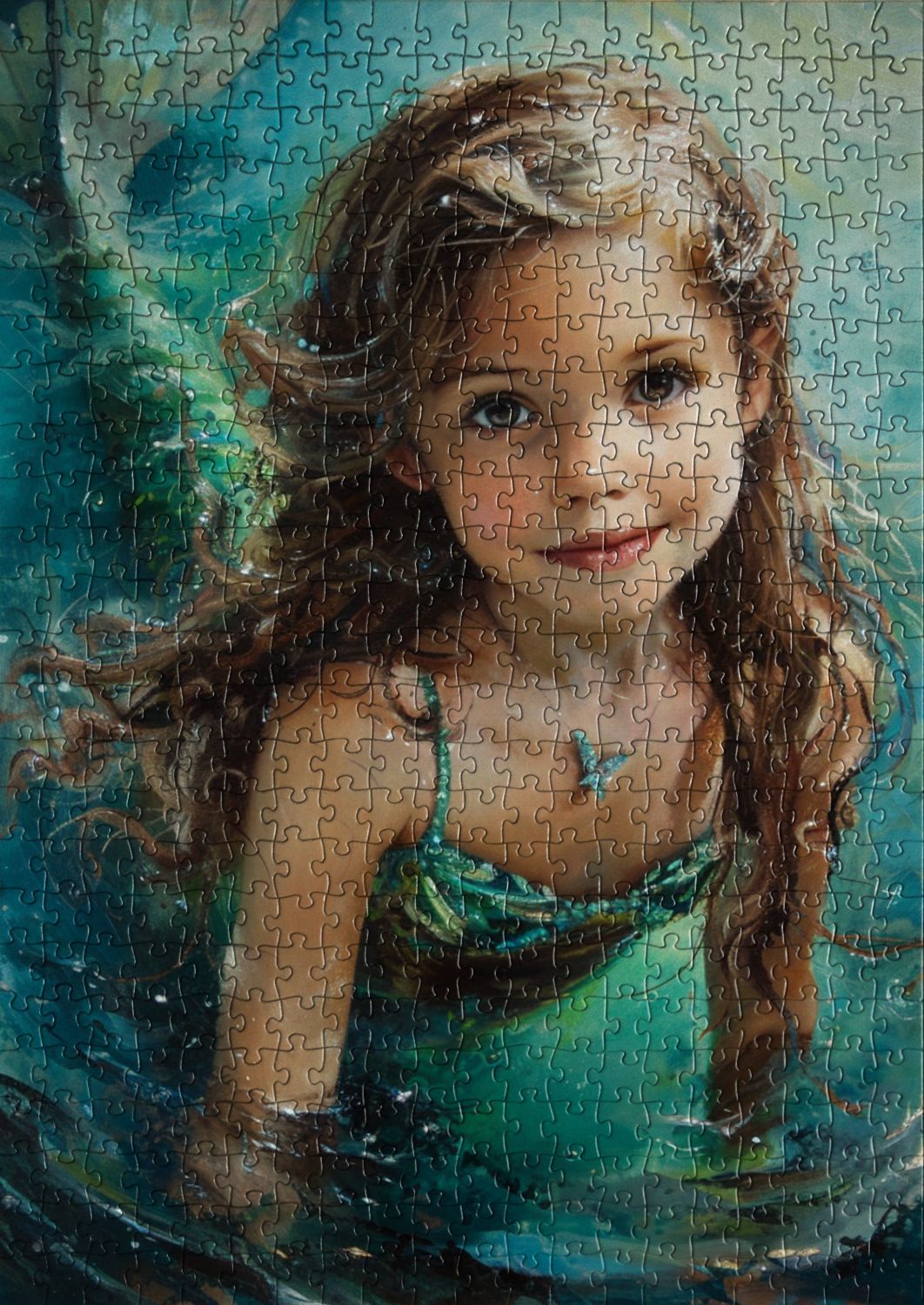
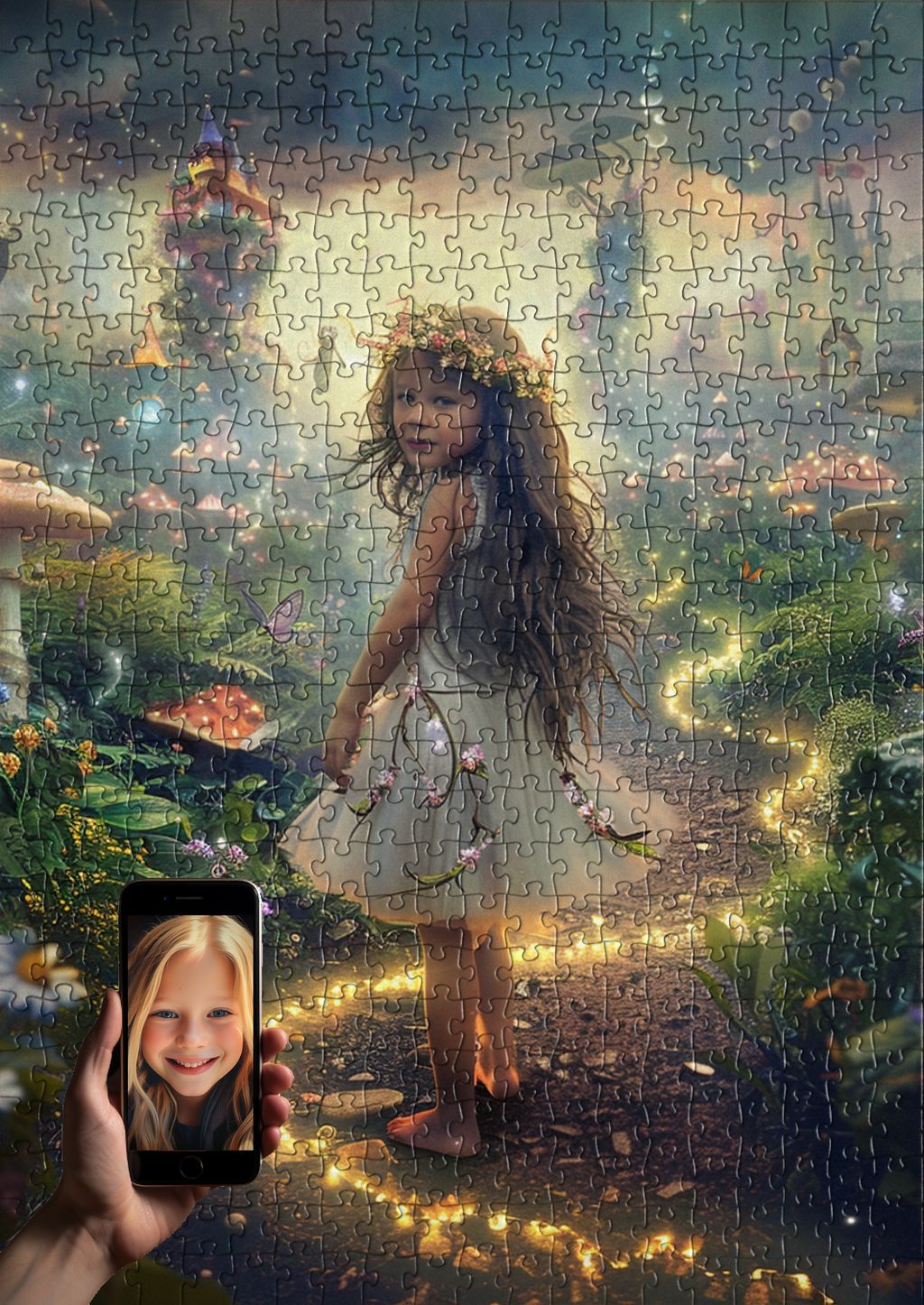
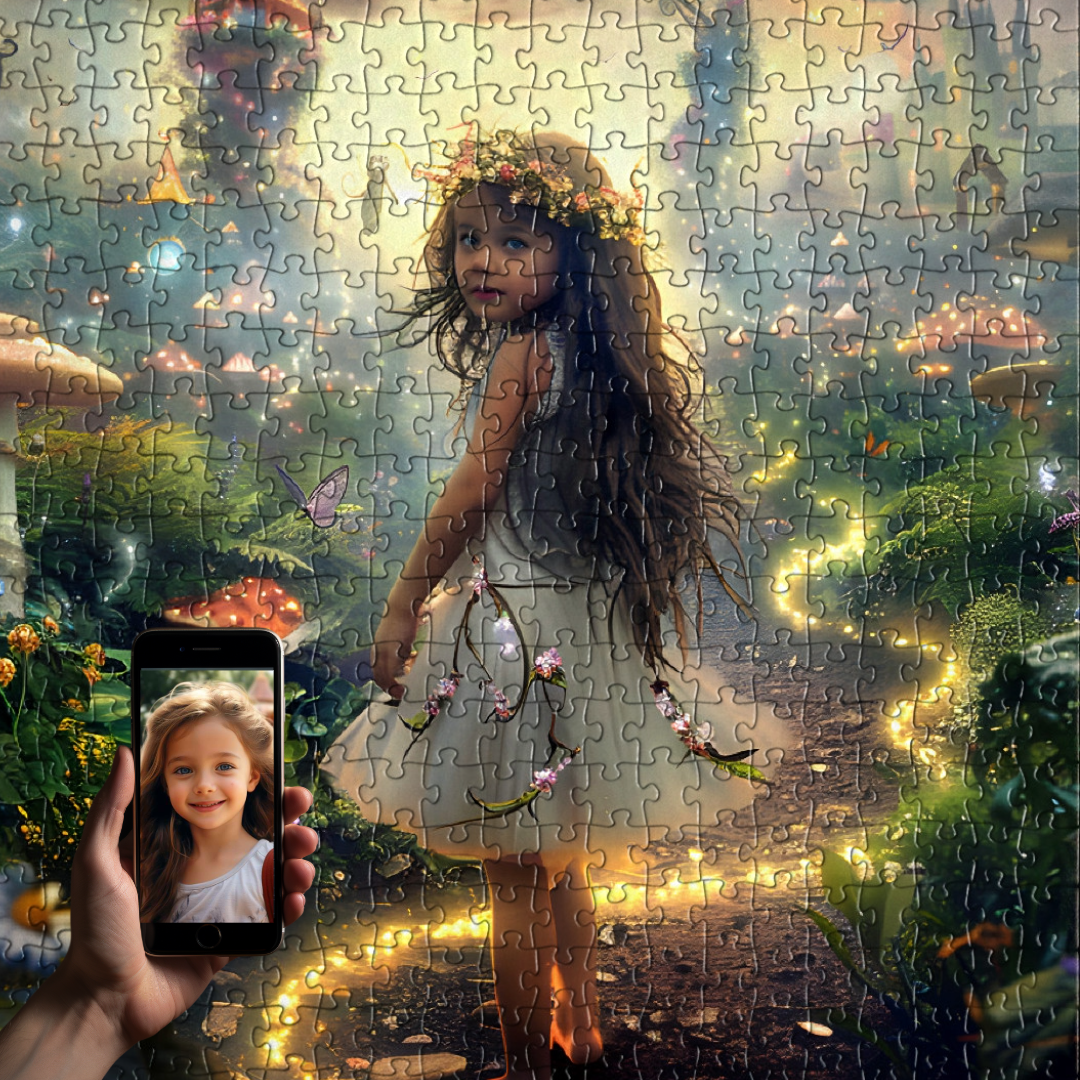
This last point is where personalization matters more than people realize. A generic puzzle of a generic cartoon character will hold a child for ten minutes. A puzzle that features the child themselves as the hero of the picture, the pirate, the astronaut, the firefighter, the princess in her castle, can hold the same child for an hour, and they will come back to it for weeks. At SwappyPrint we make personalized puzzles for exactly this reason. A child solving a custom photo puzzle made from a favorite family picture is not just doing a fine-motor task. They are reconstructing a moment that matters to them. A child working on a superhero kid puzzle with their own face on the hero is, in a small way, rehearsing a story about who they are. That is not something a screen offers. We mention this as one example among many. Wooden blocks, clay, gardening, and a stack of library books will do the same work.
Co-regulation before self-regulation
One of the most useful frames from the Harvard Center on the Developing Child is that young children learn to regulate their own nervous systems by borrowing yours first. This is why "just go play" rarely works after a screen session. The child does not yet have the internal resources to come down on their own. Sitting next to them, narrating quietly, helping them start an activity, and then gradually stepping back works much better than issuing instructions from the kitchen. You are lending them your calm.
A realistic, non-punitive framework
If you want a starting structure, here is one that we have seen work for many families with children aged three to six:
- Make screens predictable, not negotiable. Same time, same length, same shows. The fight is not about whether, but about when, and "when" is decided in advance.
- Choose slower content when you do use screens. Older Pixar films, Bluey, classic Sesame Street, and nature documentaries are paced more like real life than CoComelon or Cocomelon-style imitators.
- Turn off autoplay everywhere you can. This is the single highest-leverage setting change in your house.
- Co-view when possible. Even occasional co-viewing turns a passive activity into a shared one, and gives you a way to bookend it with conversation.
- Build a reliable bench of offline alternatives. Rotate them. Novelty matters more than quantity. A bin of puzzles, blocks, art supplies, and dress-up rotates better than a room full of toys all visible at once.
- Protect the bookends of the day. No screens in the first hour after waking and the hour before bed. These are the periods when regulation is most fragile.
If you want to go deeper on the specific platforms, we have written companion pieces on how YouTube Kids holds attention and what to do about it, why Roblox and similar games are so hard to put down, making Netflix and streaming work for young children, and a 14-day plan for resetting screen habits at home. None of those pieces ask you to go cold turkey. They ask you to make small, well-aimed changes.
Frequently Asked Questions
Why are screens addictive for kids specifically, more than for adults?
Young children have far less developed executive function than adults, which means the brakes on impulse and the ability to switch tasks are still being built. Add to that a content ecosystem that has been quantitatively optimized to hold their attention scene by scene, with autoplay removing natural stopping points and variable rewards keeping anticipation high, and you have a mismatch between very sophisticated design and very immature self-regulation. It is not that kids are weak willed. It is that the design was built to overpower a much stronger will than theirs.
Is all screen time bad?
No. The research is reasonably clear that the type, pace, and context of screen use matter more than raw minutes. A video call with grandparents, a slow nature documentary watched together, or a creative app used alongside a parent looks very different in a young brain than an hour of fast-cut autoplay alone. The American Academy of Pediatrics suggests up to about an hour a day of high-quality content for ages two to five, ideally co-viewed. The honest answer is that quality and context beat quantity.
My child has tantrums when I turn off the screen. Does that mean they are addicted?
"Addiction" is a clinical term that we use carefully for young children, but the behavior you are seeing is real and has a physiological basis. A nervous system that has been highly stimulated does not return to baseline instantly, and a child who has been pulled out of a variable reward loop will protest. This is not evidence that your child is broken. It is evidence that the design worked exactly as intended. Predictable schedules, warning cues before transitions, and a tangible activity ready to go can reduce the intensity of those transitions over time.
What if I have already let my kid watch a lot of fast-cut content? Have I done damage?
The reassuring news is that young brains are remarkably plastic. Most of the effects observed in the research are associated with sustained patterns, not occasional use, and they are not deterministic. Families who shift their patterns typically see changes within a few weeks: better sleep, easier transitions, longer play. You have not closed a door. You have a very real chance to open a different one.
How do I get my child interested in slower activities when screens are so exciting?
The trick is to lower your expectations for the first session and raise them for the tenth. The first time you offer a puzzle or a set of blocks after a heavy screen period, the child may glance at it and ask for the tablet. That is normal. Sit down. Start the activity yourself. Narrate quietly. Within a few minutes, most children join in. After repeated exposures over a couple of weeks, the offline activity becomes its own draw, especially if it connects to something personally meaningful: a favorite animal, a beloved story, their own face on the picture. Novelty plus meaning plus a parent nearby beats most screens, eventually.
None of this is about being a perfect parent, and none of it is about getting screens to zero. It is about understanding that the pull your child feels is real, engineered, and not their fault, and then quietly putting something on the other side of the scale. A slower afternoon. A puzzle on the rug. A walk without a phone. The choices that feel small in the moment are the ones your child's developing brain will quietly thank you for, long after the tantrum at the kitchen table has been forgotten.





Share and get 15% off!
Simply share this product on one of the following social networks and you will unlock 15% off!