
Your four-year-old is convinced grandma drove three hours specifically to admire her new shoes. Your six-year-old insists the moon is following the car home, and seems mildly offended when you suggest it might also be visible to other people. Your preschooler narrates breakfast in the third person ("And then Leo took a very big bite of toast, the biggest bite ever in the world"), like a tiny sportscaster covering the most important athlete alive: himself.
Somewhere between the giggling and the eye-rolling, a quieter worry can creep in. Is this normal? Is my child becoming self-centered? Did I, somehow, raise a tiny narcissist by clapping too enthusiastically at the potty? Parents today are especially sensitive to this question. We grew up hearing about "the entitled generation," we read articles about kids who can't share, and we genuinely want to raise compassionate humans. So when our preschooler announces that the birthday party we attended was, actually, about them (it wasn't), our parental antenna twitches.
Here is the relief, right at the top: what you are seeing is almost certainly not a character flaw. It has a name, a developmental timeline, and a very respectable scientific pedigree. Psychologists call it childhood egocentrism, and far from being a warning sign, it is one of the engines that powers imagination, confidence, and emotional resilience in young children. Between roughly ages three and seven, the child's mind is supposed to operate this way. It is not a bug. It is a feature.
Below, we walk through what egocentrism actually means in developmental psychology (spoiler: not what it means at a dinner party), why suppressing it can backfire, and how you can gently, playfully channel it into the kind of confidence and empathy you actually want to grow. We will also cover the small handful of signs that do warrant a conversation with your pediatrician, because reassurance should always come with honest guardrails. Pour the coffee. Your kid is fine. Probably more than fine.
The Science: Why Young Children Genuinely Believe They Are the Main Character
The Swiss psychologist Jean Piaget spent decades watching children think out loud, and one of his most enduring contributions was the idea that young minds pass through distinct stages. Between approximately ages two and seven, children inhabit what he called the preoperational stage. It is a rich, magical, slightly chaotic period defined by symbolic play, fast-growing language, and a particular cognitive quirk: egocentrism.
In everyday speech, "egocentric" sounds like an insult. In developmental psychology, it means something much more specific and much less judgmental. An egocentric child is not selfish. They simply cannot yet fully separate their own perspective from someone else's. If they love bananas, they assume you also love bananas. If they are hiding behind a curtain with their feet sticking out, they genuinely believe you cannot see them, because they cannot see you. The famous "three mountains task" Piaget designed showed this beautifully: preschoolers asked to describe what a doll on the other side of a model mountain range could see usually described their own view. Not because they were being difficult. Because the other view was, cognitively, not yet available to them.
Theory of Mind: The Slow, Beautiful Arrival of "Other People"
Around age four or five, something remarkable starts to happen. Children develop what researchers call theory of mind: the understanding that other people have thoughts, beliefs, and feelings that differ from their own, and that those internal states drive behavior. You can watch it bloom in real time. A three-year-old shown a candy box full of pencils will insist that another child, who has never opened the box, will also expect pencils. A five-year-old will laugh and say, "No, they'll think it's candy, because that's what the box says!"
Theory of mind does not arrive all at once like a software update. It builds in layers over years. A six-year-old may grasp that her friend feels sad about a lost toy, yet still struggle to understand why grandma might not find her seventeenth knock-knock joke as hilarious as the first one. Empathy is a long apprenticeship, and the early years are the workshop.
The Normal Age Range
Most developmental psychologists agree that classic egocentric thinking is at its peak roughly between ages three and six, with meaningful softening between five and seven, and the deeper, more adult forms of perspective-taking still maturing well into adolescence. So if your four-year-old believes the rain started because she was sad, or your six-year-old assumes you already know what happened at school today (because she knows, and aren't your brains the same?), you are looking at textbook development. Literally.
- Ages 2 to 3: Strong egocentrism. The child's perspective is essentially the only one available.
- Ages 3 to 5: Beginning awareness that others see and feel things, but limited ability to take that into account in the moment.
- Ages 5 to 7: Growing theory of mind. Children start predicting others' beliefs, but still default to their own view under stress or excitement.
- Ages 7 and up: More flexible perspective-taking. Empathy starts looking recognizably "grown up," though it keeps refining for years.
Why You Shouldn't Try to Suppress It
Faced with a small person who thinks the world revolves around them, the instinct of many well-meaning parents is to correct, often. "Not everything is about you." "Other people have feelings too." "Stop being selfish." These messages are not wrong, exactly. They are just badly timed. Telling a four-year-old to stop being egocentric is a bit like telling a tulip to stop being a tulip and hurry up about becoming a rose.
More importantly, that "main character energy" is doing essential developmental work. Consider what a young child needs to do in the world: learn a language from scratch, master a body that keeps changing on them, navigate a social environment full of giants with confusing rules, and somehow keep going after every fall, scrape, and embarrassment. To do all that, they need an internal sense that they matter, that their actions have effects, that they are the protagonist of something. Egocentrism is, in part, the scaffolding that holds up early self-confidence.
What Healthy Egocentrism Actually Builds
- Imagination. A child who can put herself at the center of any story can also put herself inside a spaceship, a castle, or the body of a dragon. Pretend play is rocket fuel for cognitive development.
- Resilience. Believing you are the hero makes it easier to get back up after the fall. Small humans face dozens of small failures a day. Main-character energy helps them keep trying.
- Language and narrative. Narrating one's own life, even in third person, is how children practice sequence, cause and effect, and the architecture of stories.
- Secure attachment. A child who feels central in her parents' world develops the safe base from which she can eventually decentralize and care about others.
- Moral reasoning, eventually. Counterintuitively, children who feel deeply seen tend to develop stronger empathy, not weaker. You cannot give what you have not received.
Broaden, Don't Bulldoze
The goal is not to crush egocentrism but to slowly widen the lens. Think of it like teaching a child to use a camera. At first the lens points only one way: at themselves. Your job is not to take the camera away. It is to gently show them that the lens swivels, that other people show up in the frame too, and that the picture gets richer when it does.
That looks less like correction and more like curiosity. "I noticed your sister was crying when you took the truck. What do you think she was feeling?" "Grandma drove a long way today. What do you think she might want to do first, rest or play?" Questions like these invite perspective-taking without shaming the child for not having it yet. Over months and years, the lens widens on its own.
Practical Ways to Channel Main-Character Energy
If egocentrism is fuel, the question becomes: what do we want to power with it? Here are concrete, low-effort ways to put that energy to good use in everyday family life.
Let Them Be the Hero in Bedtime Stories
One of the simplest, most powerful rituals in early childhood is the personalized bedtime story. Drop your child's name into a tale. Let her rescue the kingdom, befriend the dragon, find the lost puppy. This is not vanity-feeding. It is identity-building. Children who hear themselves cast as kind, brave, curious heroes internalize those traits as part of who they are.
You can vary the genre week to week. Tonight she's an explorer in the Amazon, tomorrow an inventor who fixes the broken sun. Notice that the best stories don't make the hero perfect. They make the hero face something hard and choose well. That is where main-character energy quietly turns into moral imagination.
Hero-Themed Play and Costumes
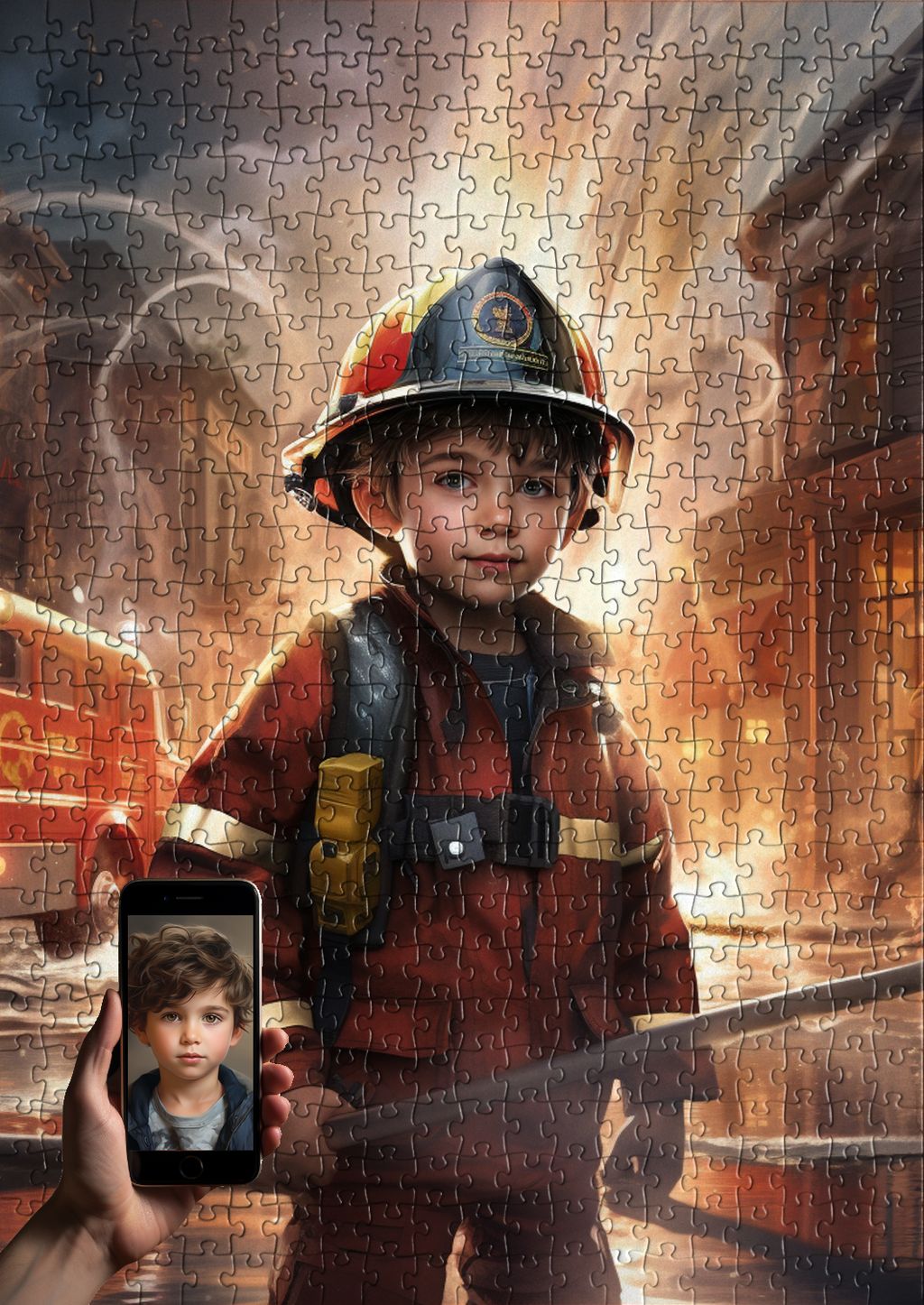
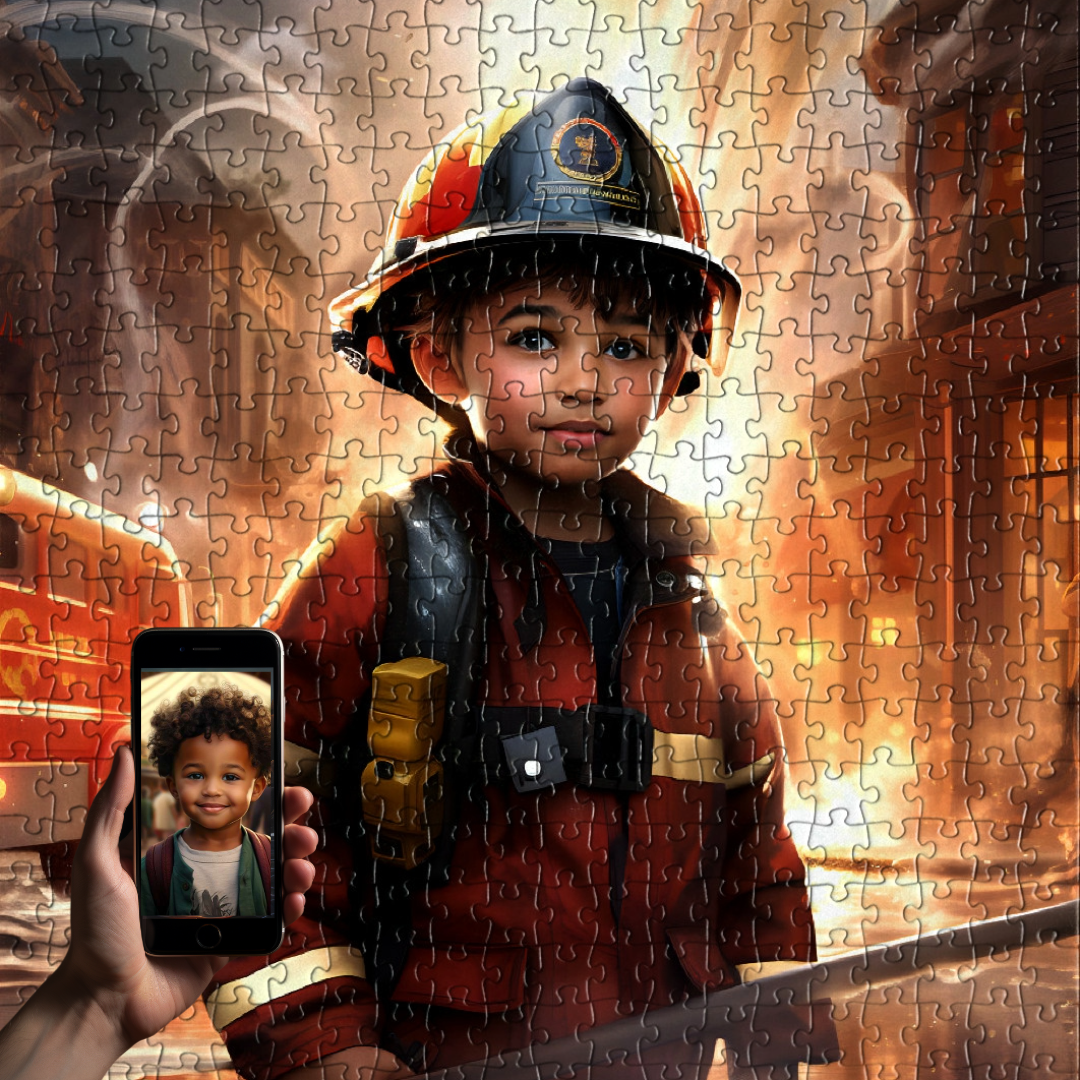
Dress-up is not frivolous. When a four-year-old puts on a cape, she is rehearsing an aspect of herself. Firefighter, astronaut, doctor, pirate, ballerina, scientist, knight. Each costume is a small experiment in identity. Follow your child's lead here, even when their current obsession baffles you. The kid who has been a tiger for six straight weeks is doing real work.
You can also extend pretend play with simple props: a cardboard box becomes a rocket, a blanket becomes a cape, a wooden spoon becomes a wand. The fewer the rules, the better. Adults often want to direct play. The richest pretend play happens when adults are present, warm, and quietly out of the way.
Personalized Objects That Reflect Their Inner Narrative
Children form strong attachments to objects that feel like extensions of themselves: the special cup, the named stuffed animal, the drawing taped above the bed. Personalized objects are powerful because they hold up a mirror to the child's developing sense of self. "Yes, that is me. I really am here. I really am someone."
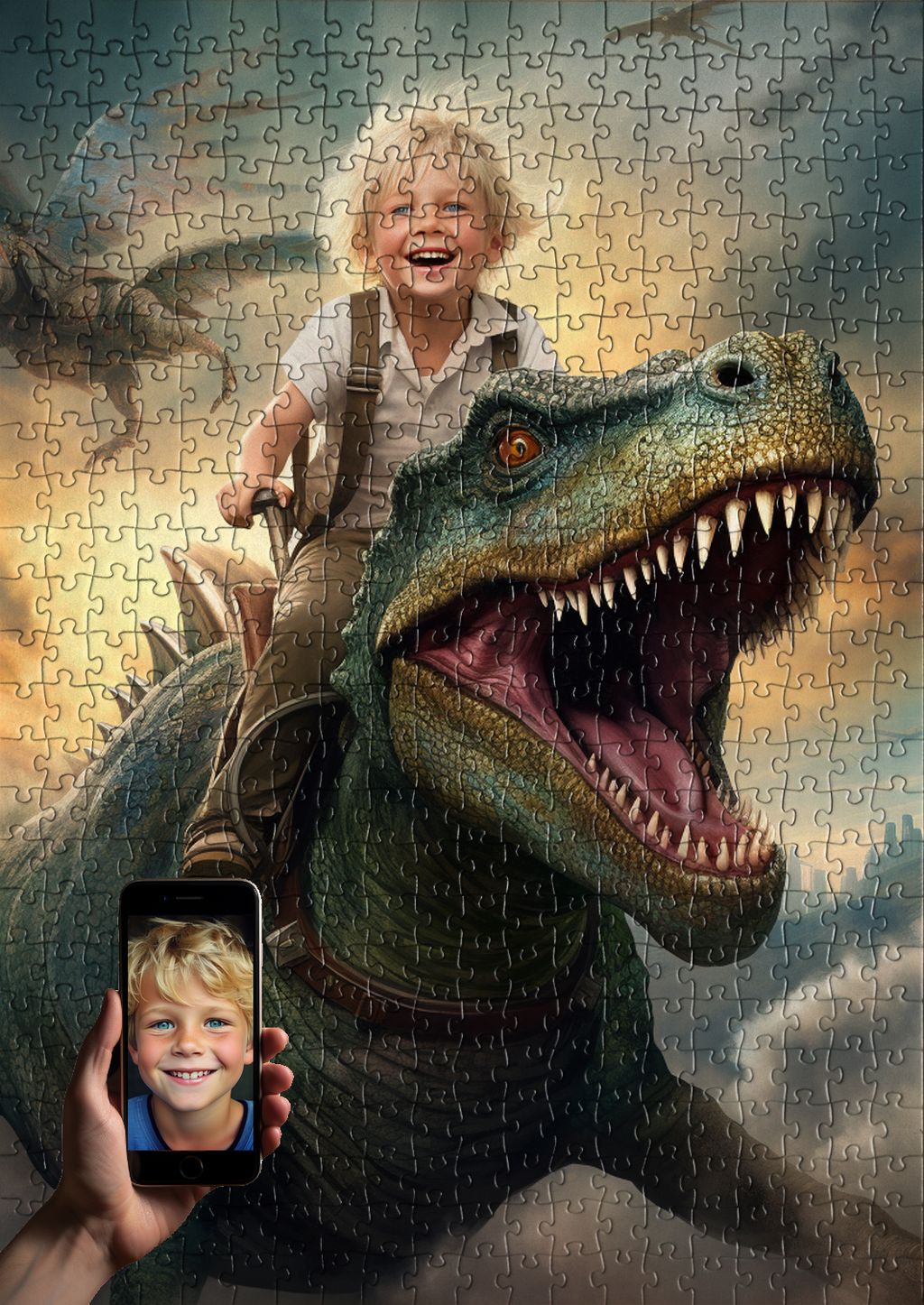
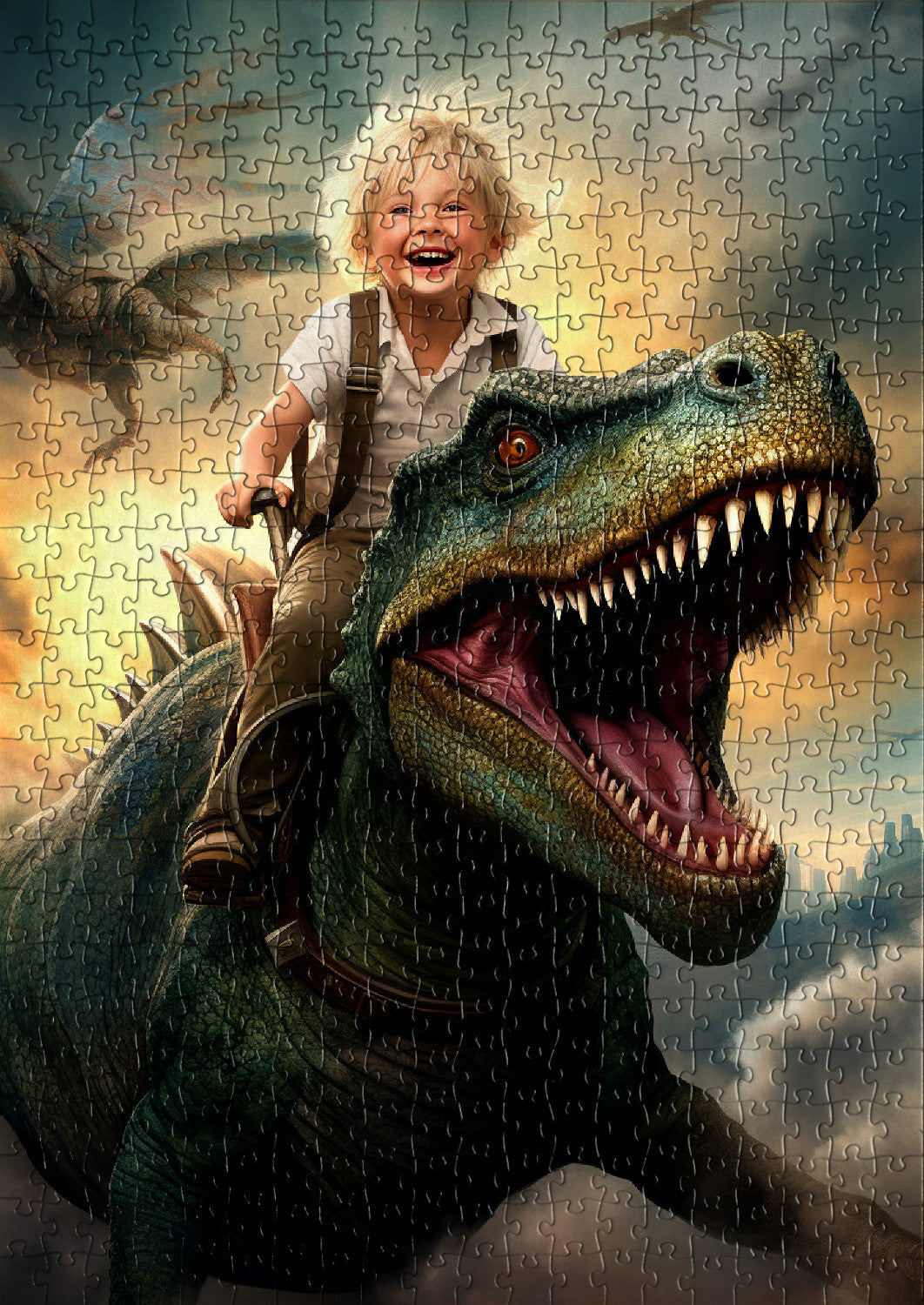
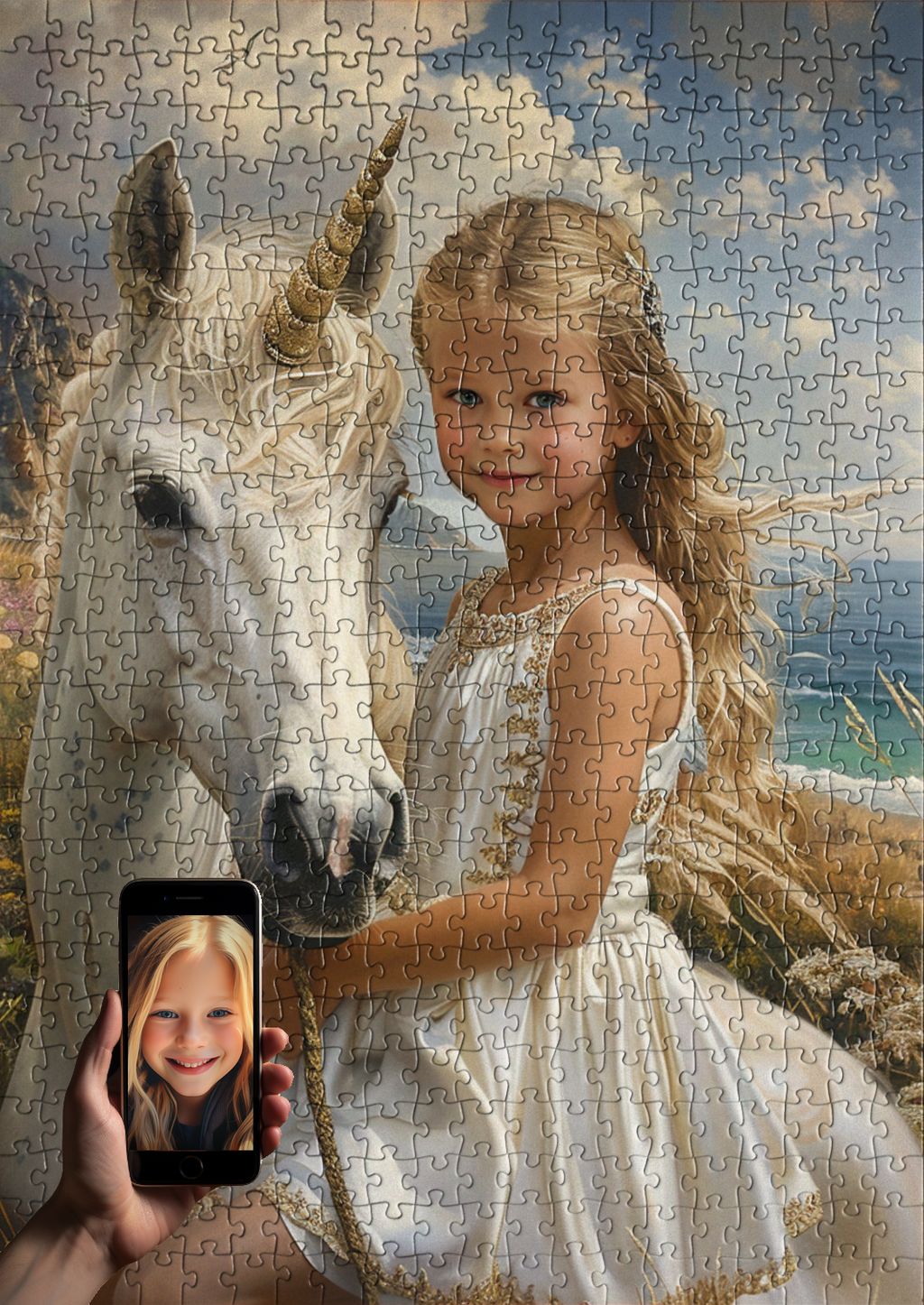
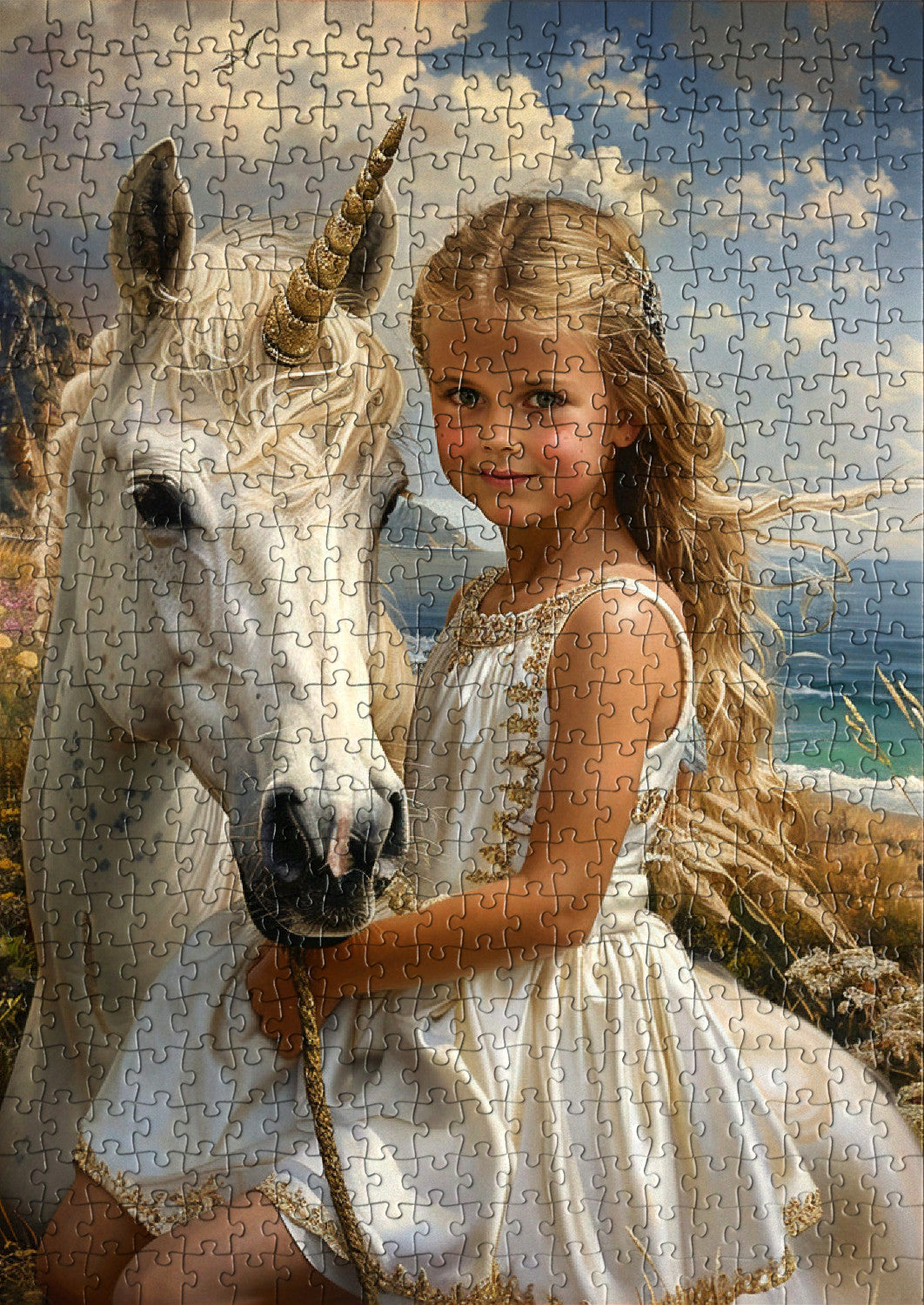
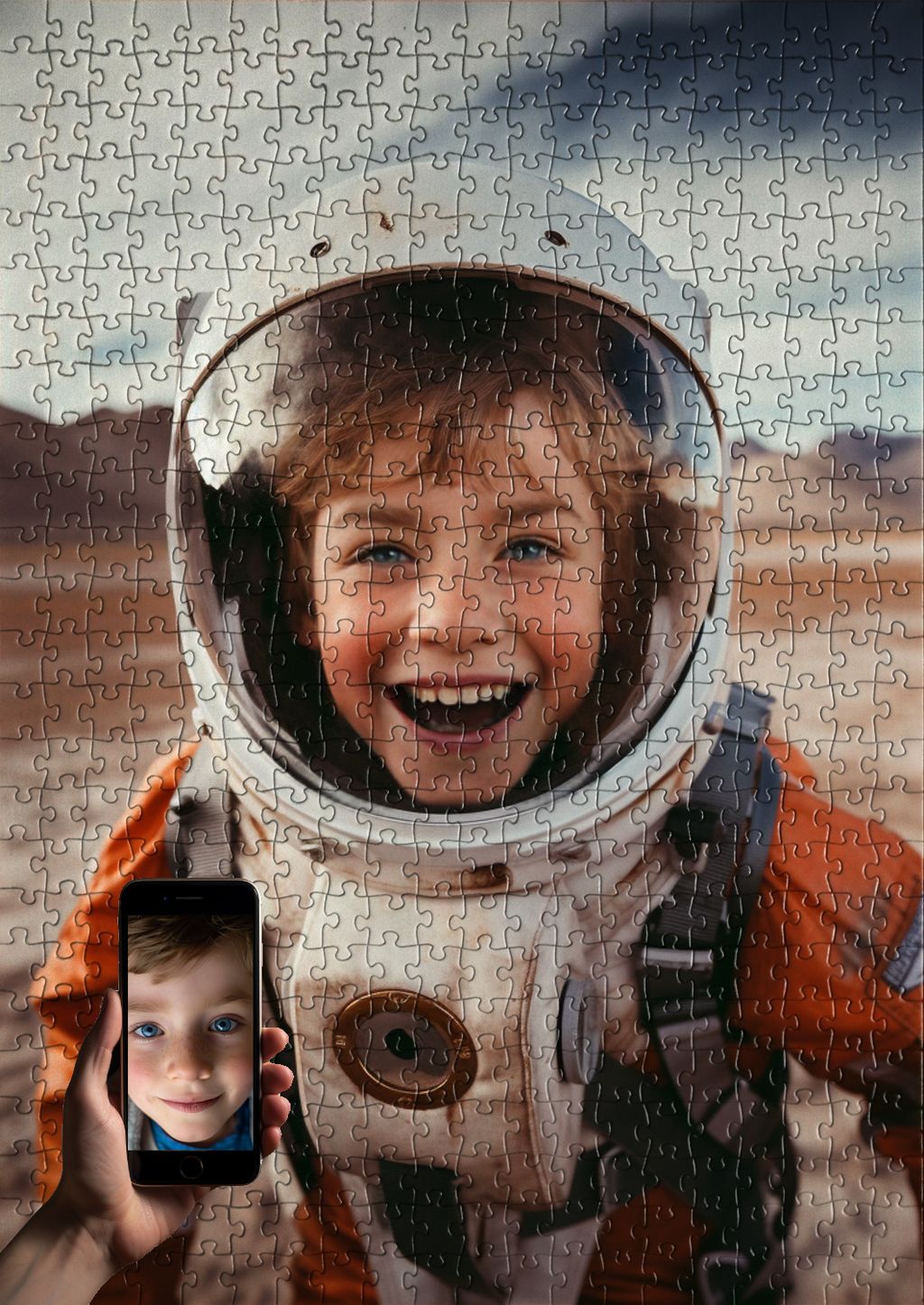
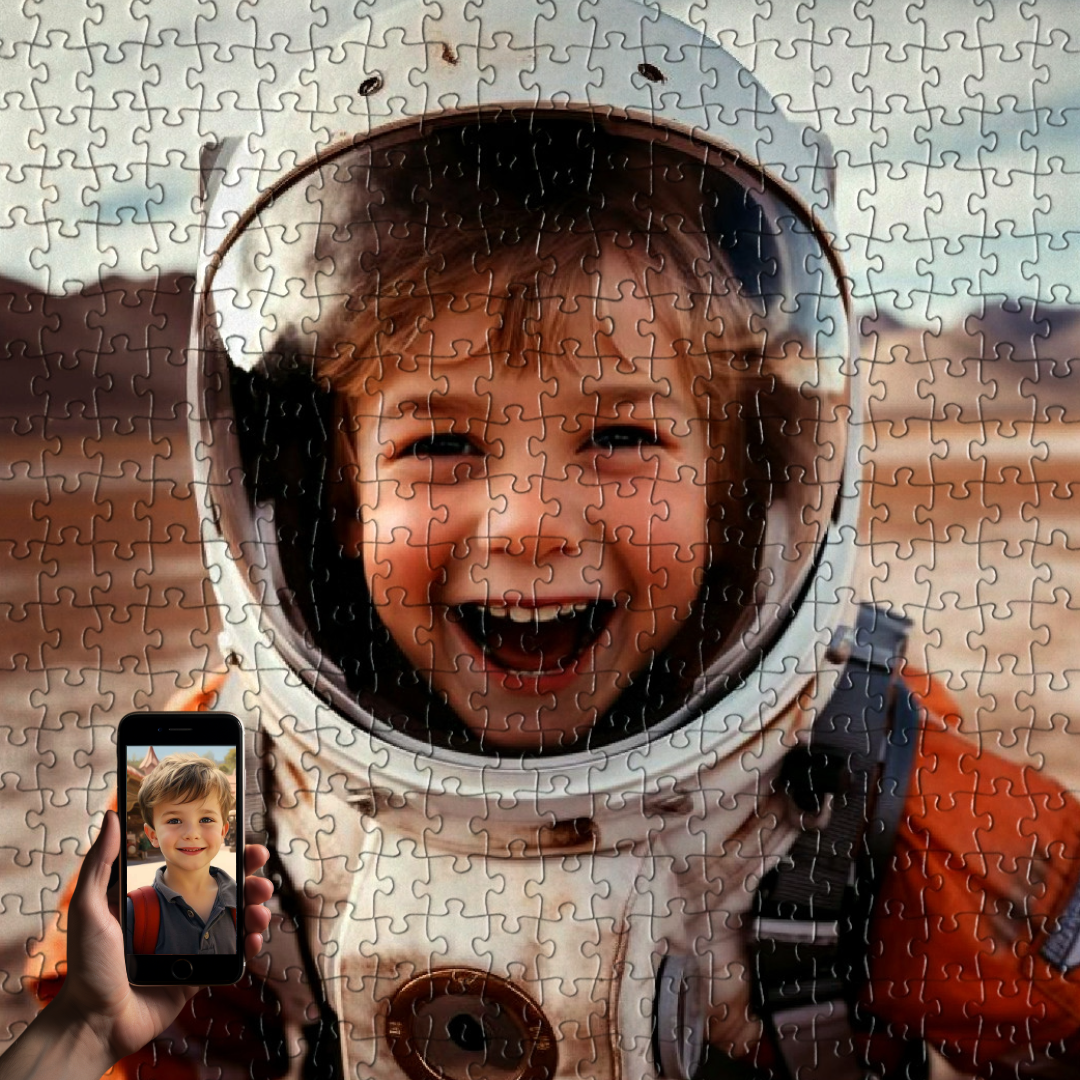
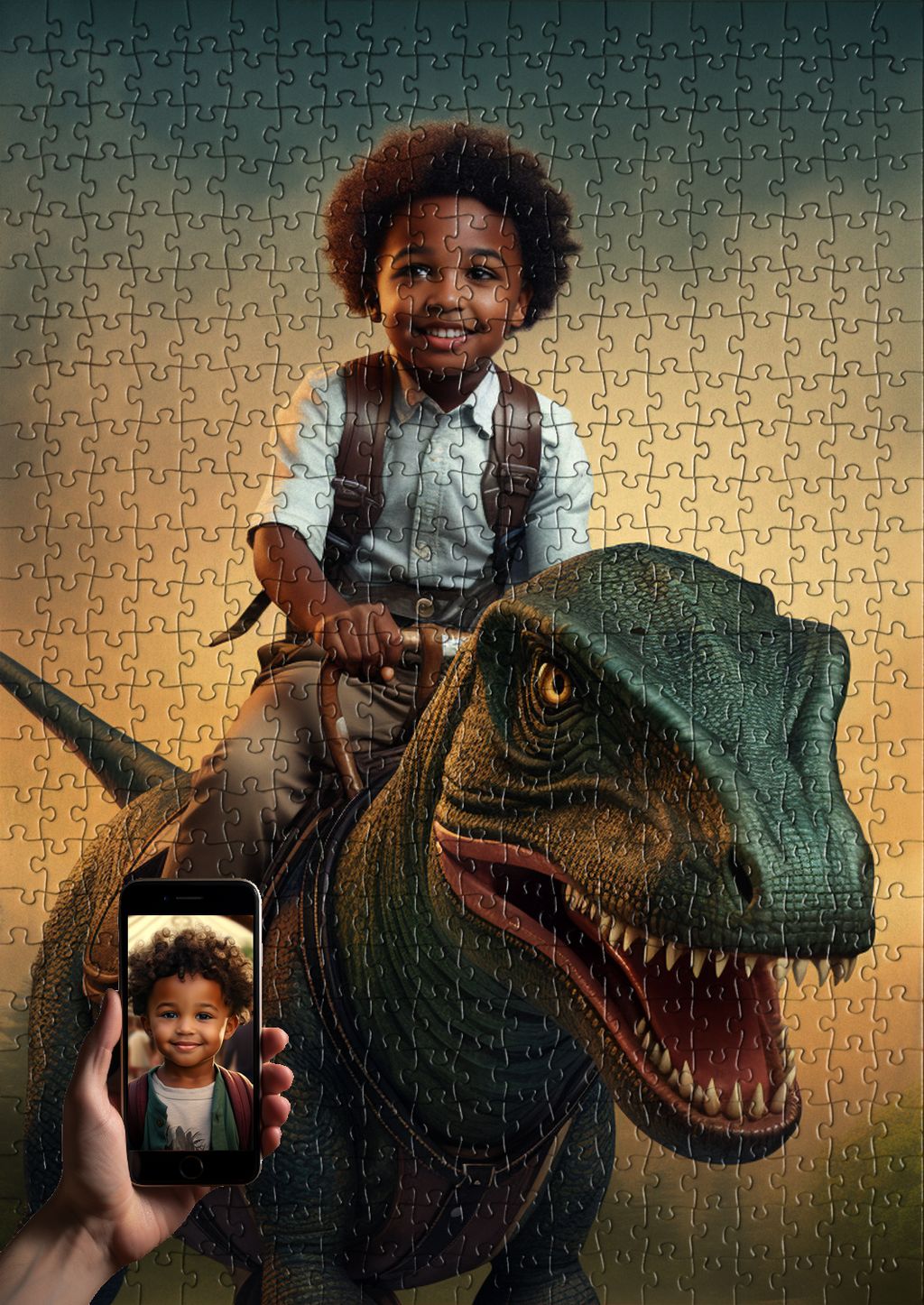
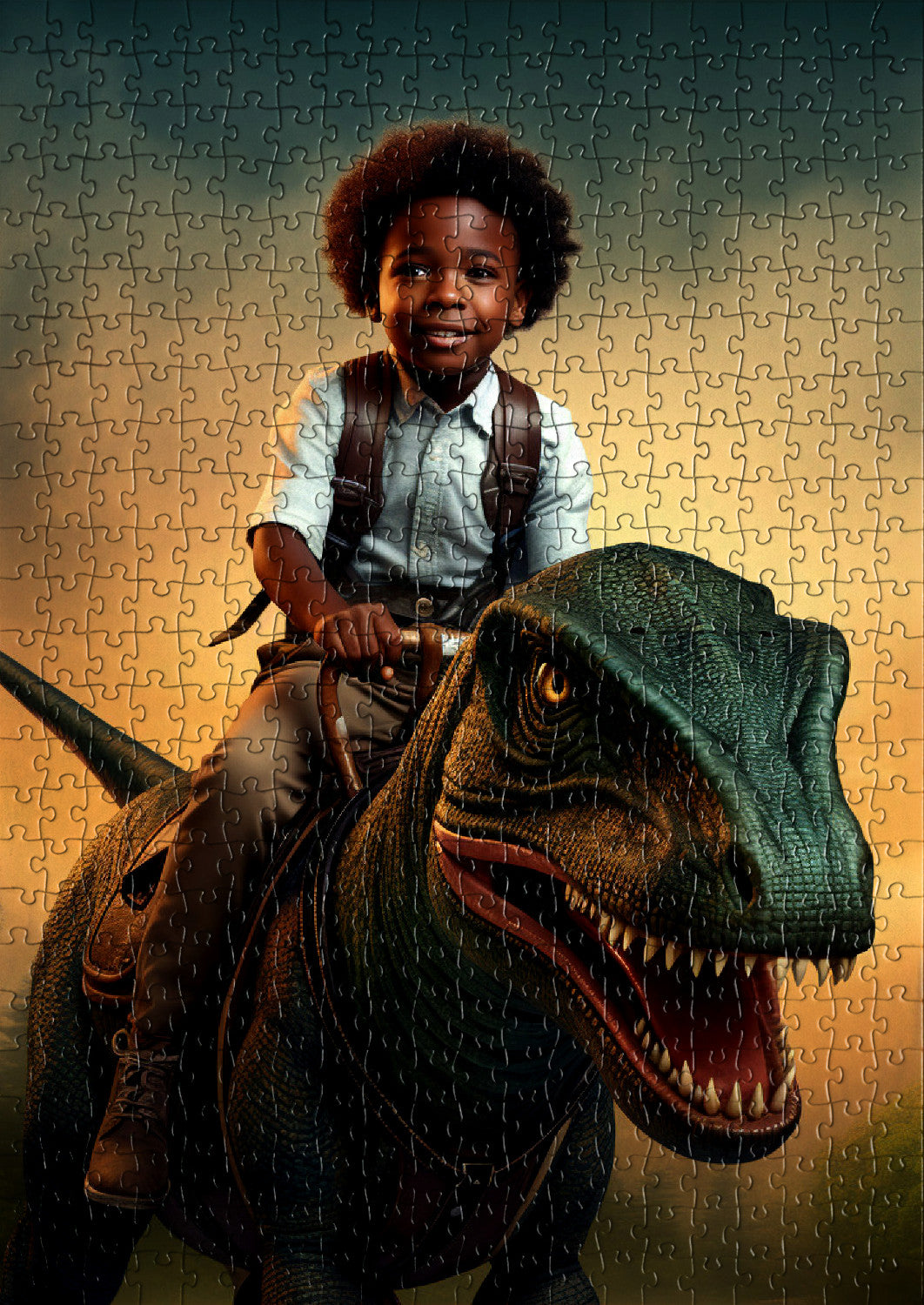
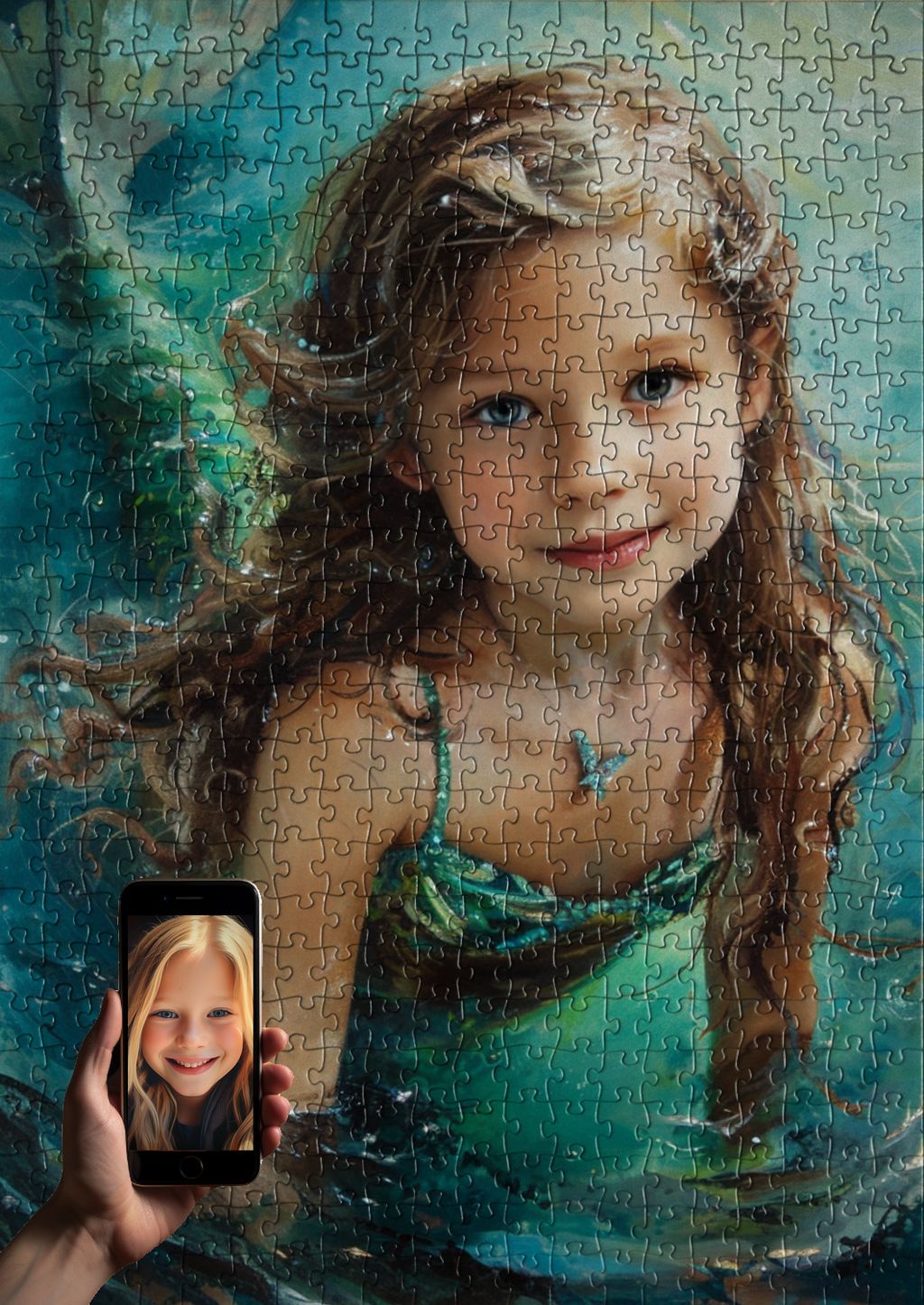
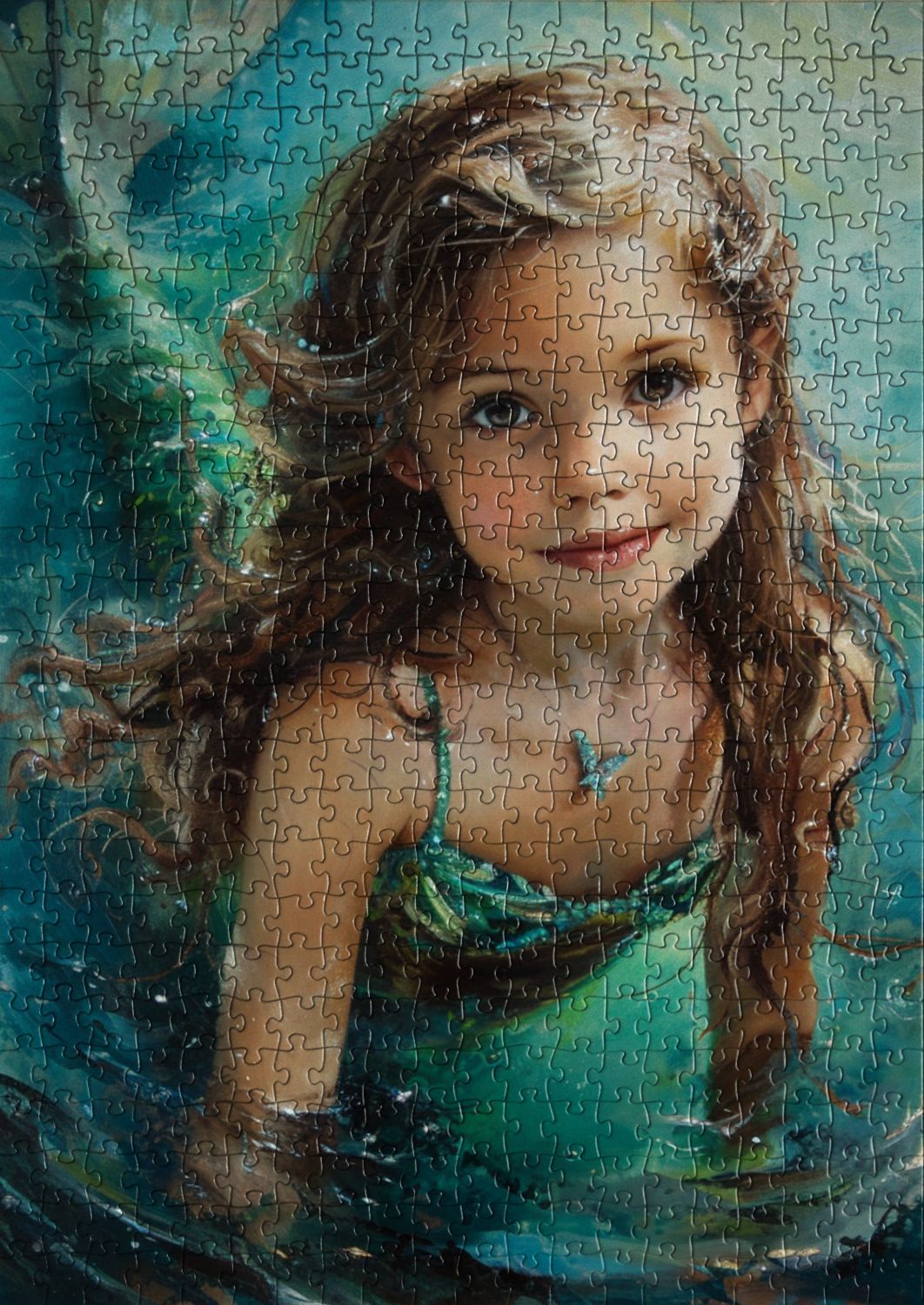
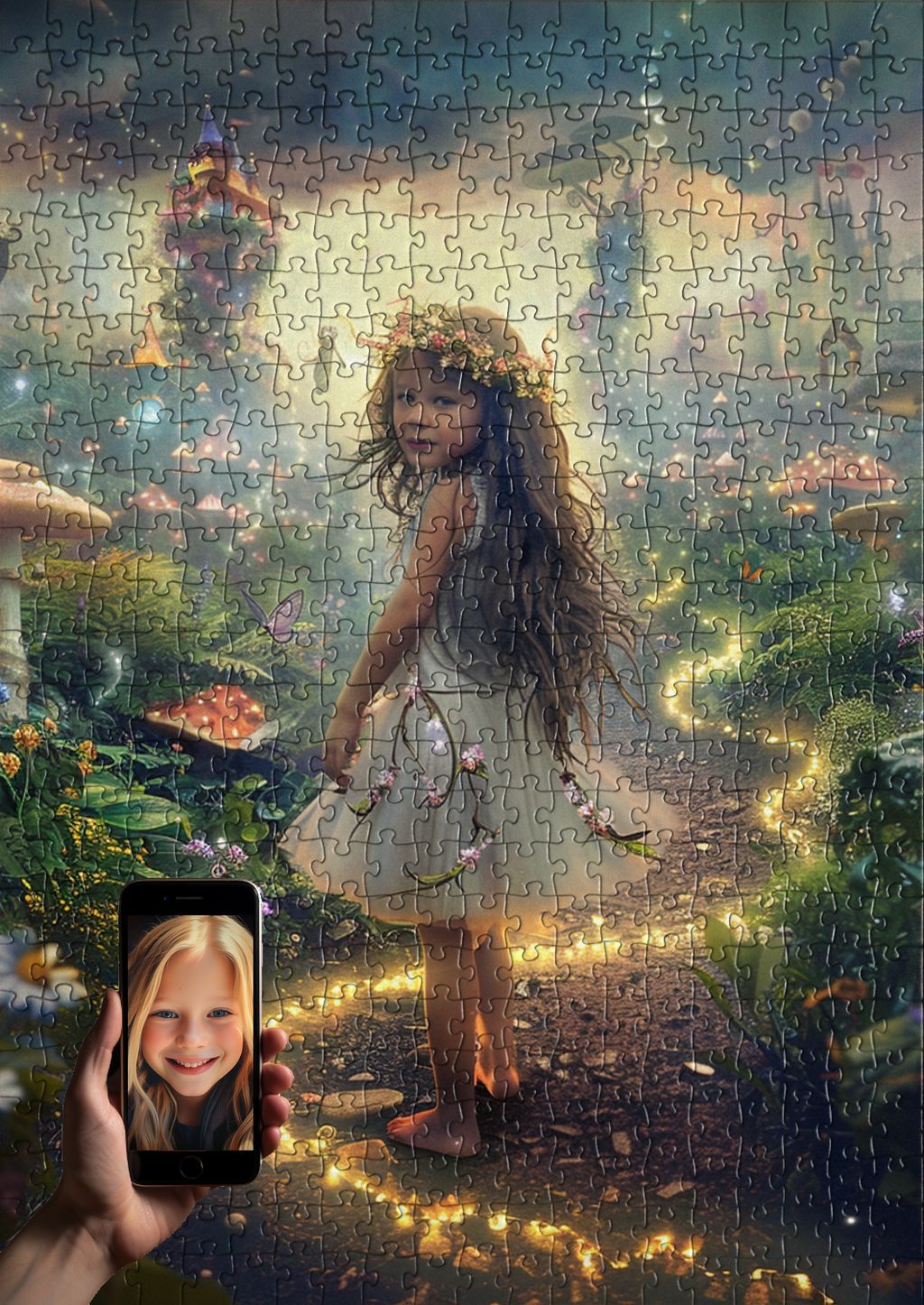
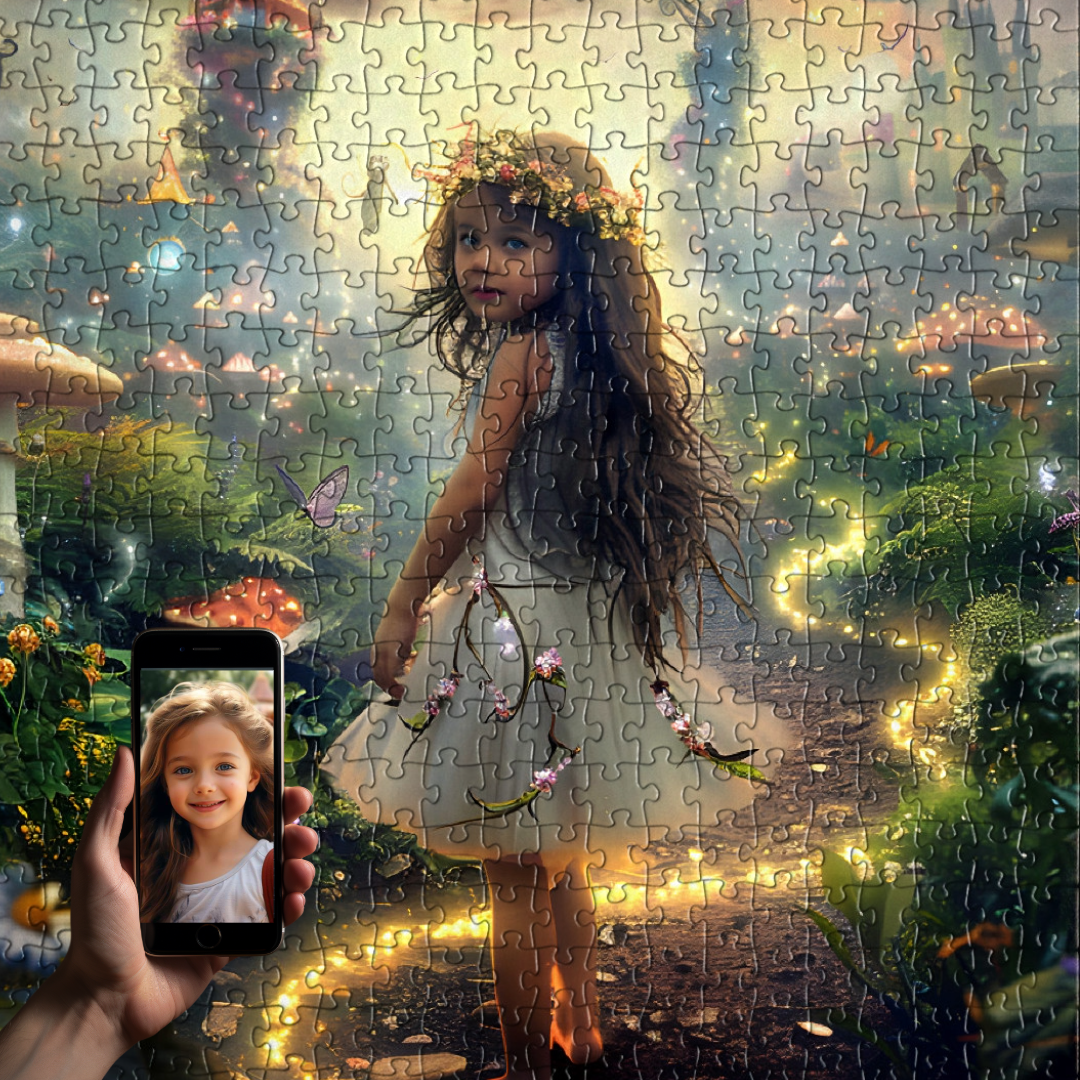
This is one reason personalized puzzles can be such a satisfying gift for this age group. Working a puzzle is already a wonderful slow-skill activity (fine motor, planning, persistence), and when the image features the child as the hero of an imagined scene, the activity doubles as a kind of identity story. A child who loves dinosaurs might light up over a Kid Riding Dinosaur puzzle. A future explorer might be enchanted by the First girl on the moon. For children whose imaginations refuse to fit any single template, a fully custom puzzle lets you build the scene around them. The point is not the puzzle itself. It is the small, repeated message: your inner world is worth taking seriously.
Tiny Acts of Decentering
Alongside hero play, sprinkle in small daily invitations to notice other people. None of this needs to be heavy.
- At dinner, ask each person to share one thing that was hard and one thing that was good. Children learn that other people have inner weather too.
- When reading a picture book, pause and ask, "How do you think she feels right now? Why?"
- Let your child be the helper for someone else: bringing water to a sibling, choosing a small gift for a friend, holding the door for a stranger.
- Name your own feelings out loud, simply. "I'm a little tired today, so I need a quiet minute." This makes other minds visible.
Resist the Urge to Moralize
Lectures rarely build empathy in young children. Experience does. A child who is told "you are selfish" tends to either believe it or rebel against it. A child who is gently shown the effect of their actions ("Look, your brother is crying. Can we figure out together what to do?") learns to read social signals and respond. Save the big moral conversations for moments of calm, not in the heat of a meltdown.
Frequently Asked Questions
Is my child self-centered, or just at a normal developmental stage?
If your child is between three and seven and shows the classic signs (thinks events revolve around them, struggles to share, assumes you know what they know, narrates their own life like a star athlete), this is overwhelmingly likely to be normal egocentrism, not a personality problem. The behaviors should slowly soften over the years as theory of mind matures. Big swings between selfishness and surprising kindness are also typical at this age.
When should I actually worry?
A handful of patterns are worth raising with your pediatrician, particularly past age seven. These include a persistent lack of empathy even in calm, non-competitive moments, repeated cruelty to other children or animals that does not respond to gentle correction, an inability to recognize others' emotions across many contexts, or a sharp regression in social skills after a period of normal development. None of these are a diagnosis on their own. They are simply signals that a conversation with a professional can be helpful and reassuring.
Should I correct my child when they say something self-centered?
Less than you think. Heavy correction tends to either shame the child or teach them to hide the thought rather than examine it. Curiosity works better. "Oh interesting, do you think grandma came just to see you? What else do you think she likes about visiting?" You are not endorsing the egocentrism. You are opening a small window onto other perspectives without slamming a door.
Does too much praise create a self-centered child?
Generic praise ("You're so amazing!") in massive doses can feel hollow over time, but it does not create narcissism. What matters more is the quality of praise: specific, tied to effort or kindness, and honest. "You kept trying even when the puzzle was hard, I saw that" lands much deeper than "You're a genius!" Children can absorb a great deal of warm attention without becoming entitled, as long as the attention reflects who they actually are, not a perfect version of them.
My child is seven and still acts like the main character. Is that too old?
Not necessarily. The transition out of strong egocentrism is gradual, and seven is right at the edge. If your seven-year-old shows empathy in some moments (comforting a friend, worrying about a pet) but still slips into main-character thinking in others, that is on the normal spectrum. If you are seeing no signs of perspective-taking at all by age seven or eight, that is a reasonable time to check in with your pediatrician, more for peace of mind than alarm.
The Bigger Picture
Childhood is short, and the years when your child genuinely believes the moon follows them home are shorter still. There is something tender in remembering that this stage, the one that occasionally tests your patience, is also the one that builds the imaginative, confident, resilient grown-up you hope to know one day. The toddler convinced grandma came specifically for her is also the future adult who will, in turn, drive three hours to be present for someone she loves. The seed is the same. It just needs time, warmth, and gentle widening.
If there is one thing to take away, it is this: you are not raising a narcissist. You are raising a small person whose mind is doing exactly what it should be doing at this age. Your job is not to shrink that inner spotlight. It is to keep adding people to the stage, one warm interaction at a time, until the show becomes an ensemble. The main character will still be there. She will just be sharing the script.
When you choose toys, stories, or small everyday rituals that take your child's inner world seriously (a personalized bedtime story, a hero-themed pretend afternoon, a puzzle that places them in the scene they have been dreaming about), you are not feeding their ego. You are telling them that being someone is a good and safe thing to be. From that quiet foundation, real empathy grows, when it is ready.

Share and get 15% off!
Simply share this product on one of the following social networks and you will unlock 15% off!