
It's 4pm on a Saturday. You've finally sat down with a lukewarm coffee, the laundry is half folded on the couch, and you can hear small footsteps padding toward you with purpose. You know what's coming before it arrives. "Muuum. Daaad. I'm booored." The tablet is right there on the shelf. One tap and you'd have twenty quiet minutes. Nobody would judge you. Probably.
But somewhere in the back of your mind, you know you'd like a different default. Not because screens are evil (they aren't), and not because you're trying to win some imaginary parenting award, but because you've noticed something: the more often boredom gets solved by a screen, the less your child seems able to solve it themselves. The complaints come faster. The threshold drops. And the beautiful, weird, slightly chaotic play that used to fill a rainy afternoon shows up less often.
Here is the good news. You don't need a Pinterest-perfect craft station or a degree in early childhood education to handle "I'm bored." You need a small mental toolkit: a few phrases that buy time, a few that validate the feeling, and a few concrete activities sorted by how much energy you personally have left in the tank. That's what this article gives you. Twelve replies that aren't "watch TV," organized so you can pick the one that fits the moment, whether you have five minutes to spare or absolutely zero.
We'll also walk through a "boredom kit" you can prep in advance so future-you doesn't have to think on the spot. Because honestly? Half of good parenting is just setting things up so the tired version of you has a fighting chance. Let's get into it.
First, a quick reframe: boredom is not an emergency
Before the list, one mindset shift that changes everything. Boredom is not a problem you have to fix. It's a signal, and often a useful one. When a child says "I'm bored," what they often mean is "my brain is in neutral and I haven't figured out what to do next." That gap, the uncomfortable in-between, is exactly where imagination tends to spark. If we rush in too fast with entertainment, we close the gap before anything interesting can grow in it.
This doesn't mean ignoring your child or being smug about it. It means trusting that some discomfort is fine and that your job isn't to be the cruise director. If you want to go deeper on this, we wrote a whole piece on the magic of letting kids be bored and why stepping back is often the most useful thing you can do.
With that in your back pocket, here are the twelve replies.
Replies 1 to 4: validate the feeling (zero effort from you)
Sometimes the best response costs nothing. These four are about acknowledging boredom as a normal human state instead of treating it like a fire to put out. Say them with warmth, not sarcasm, and then go back to what you were doing.
1. "Being bored is okay. Your brain is resting."
Short, calm, and surprisingly powerful. You're telling your child that this feeling is allowed, that it's not something to panic about. Many kids relax visibly when they hear that boredom is a normal stop, not a problem to solve.
2. "Boredom is where good ideas come from."
Frame it as a beginning, not a dead end. You can add, "Some of the best games you've ever invented started exactly here." Then leave the door open and let them wander through it.
3. "I get bored sometimes too. It usually passes."
Modeling matters. Letting your child know that adults also feel bored, and survive it, takes the drama out of the moment. It also gently teaches that we don't need to reach for a screen every time our brain feels flat.
4. "Tell me three things you see in this room that could become a toy."
This one straddles validation and gentle redirection. You're not handing over an activity, you're handing over a lens. A couch cushion is a boat. A scarf is a cape. A wooden spoon is a microphone. The point is to remind them that they are the engine of play, not you.
Replies 5 to 7: the "pick one" redirection (one minute from you)
If pure validation doesn't land, the next move is structured choice. Kids aged 3 to 6 often get stuck not because there is nothing to do, but because there is too much. A blank afternoon is overwhelming. Three clear options is freeing.
5. "Here are three things you can do. Pick one."
The script:
- Option A: something physical (jumping competition in the hallway, dance party, obstacle course with cushions).
- Option B: something quiet (look at books on the rug, do a puzzle, draw).
- Option C: something useful (help me unpack the dishwasher, water the plants, sort the laundry by color).
Yes, option C is sneaky. Yes, it often works. Small children genuinely love being included in "grown-up" tasks, especially when they're framed as a privilege rather than a chore.
6. "Want to check the boredom jar?"
More on this in a minute, but a jar of folded paper slips with activity ideas is one of the highest-leverage parenting hacks out there. The novelty of drawing a slip is half the fun. The other half is that your child made the choice, not you.
7. "Roll the dice. Odd numbers go outside, even numbers stay in."
Inject randomness. Children love a little ritual, and a die or a coin flip turns the decision into a game. You can map any pair of activities to the result: indoor or outdoor, loud or quiet, art or building.
Replies 8 to 10: the "help me start it" moves (five minutes from you)
Sometimes a child genuinely needs a runway. They don't want you to play the whole game with them, they just need help getting airborne. Five minutes of setup from you can buy forty-five minutes of independent play. That's a brilliant trade.
8. "Let's set up the puzzle together, then I'll come back to see your progress."
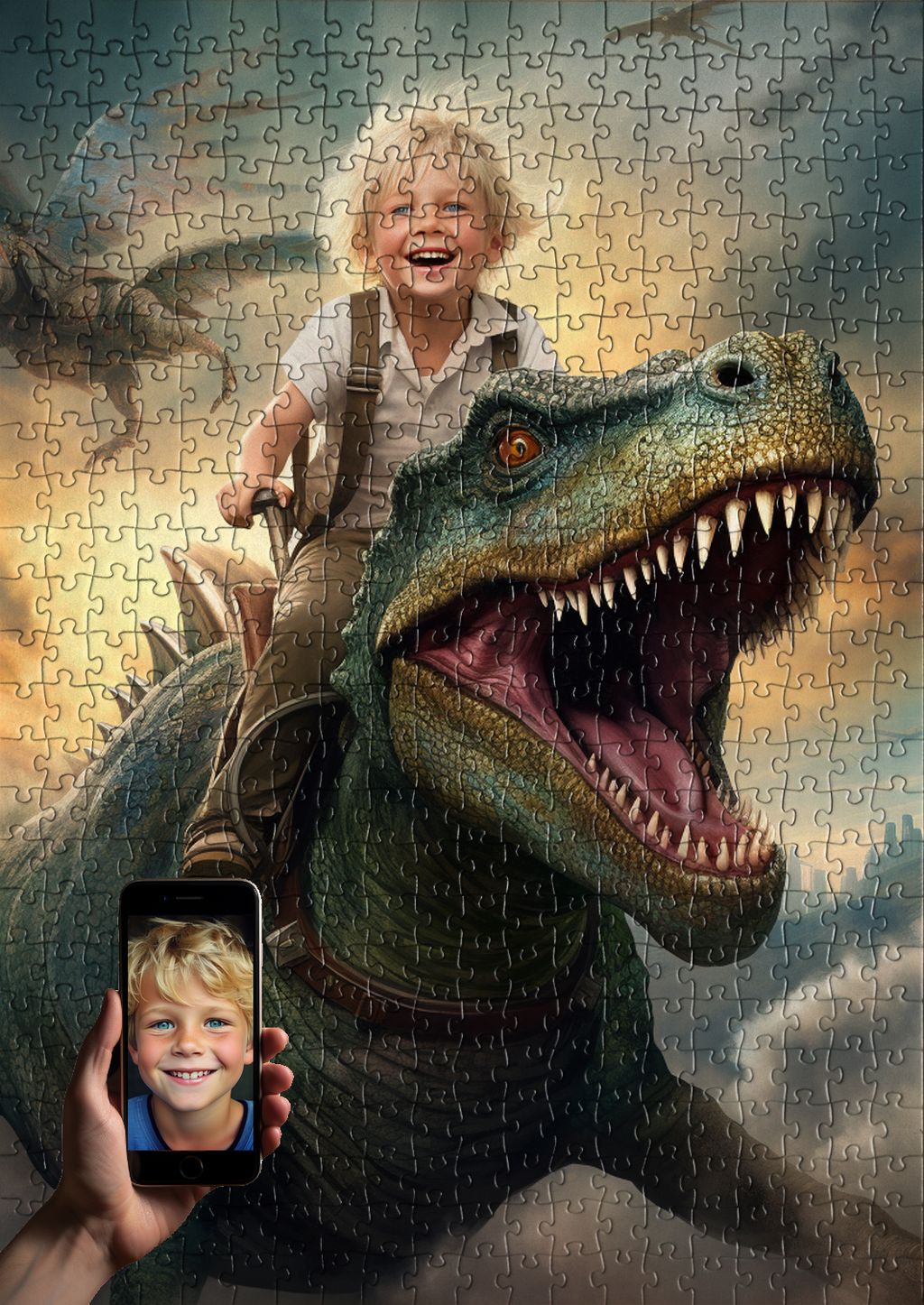
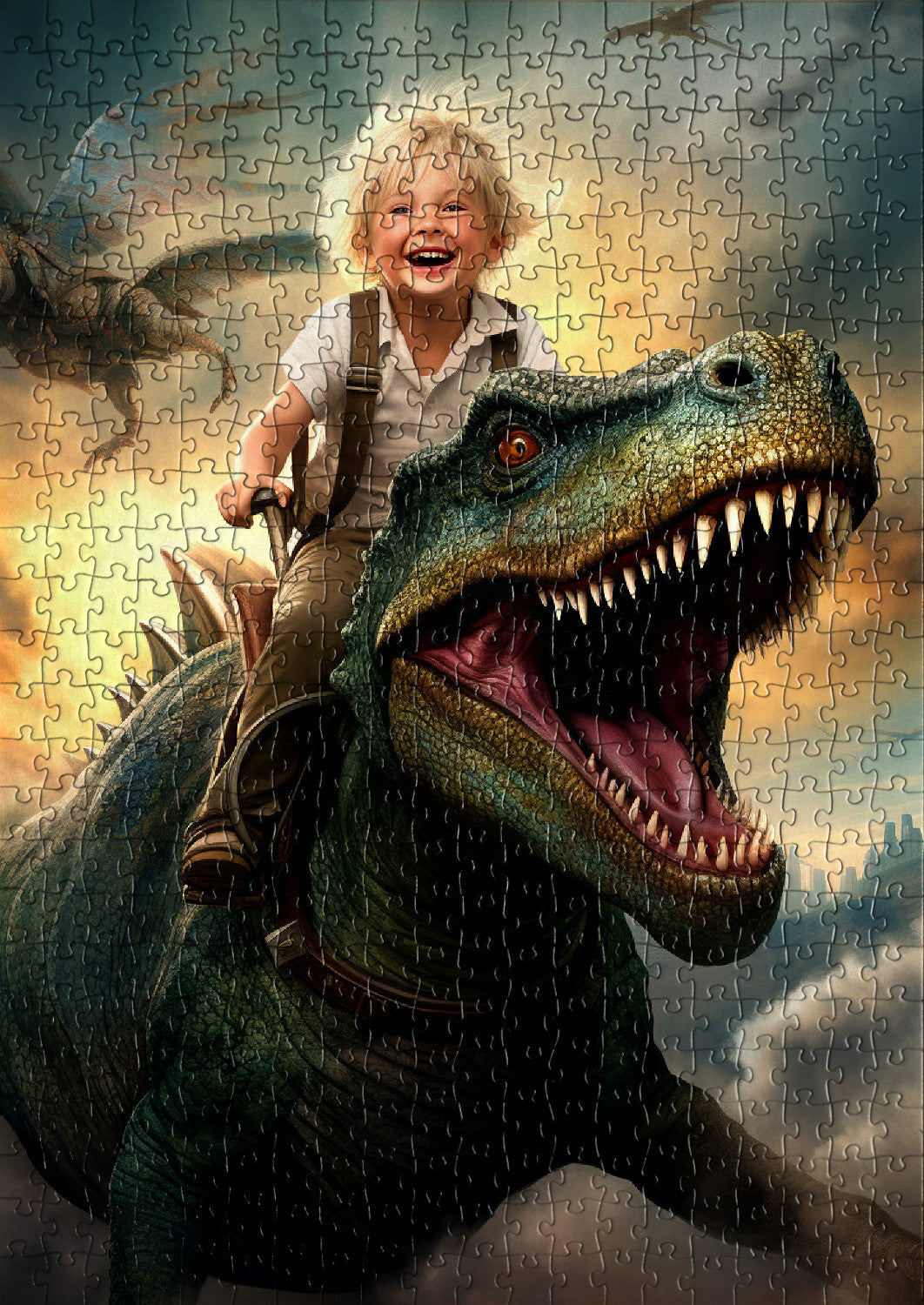
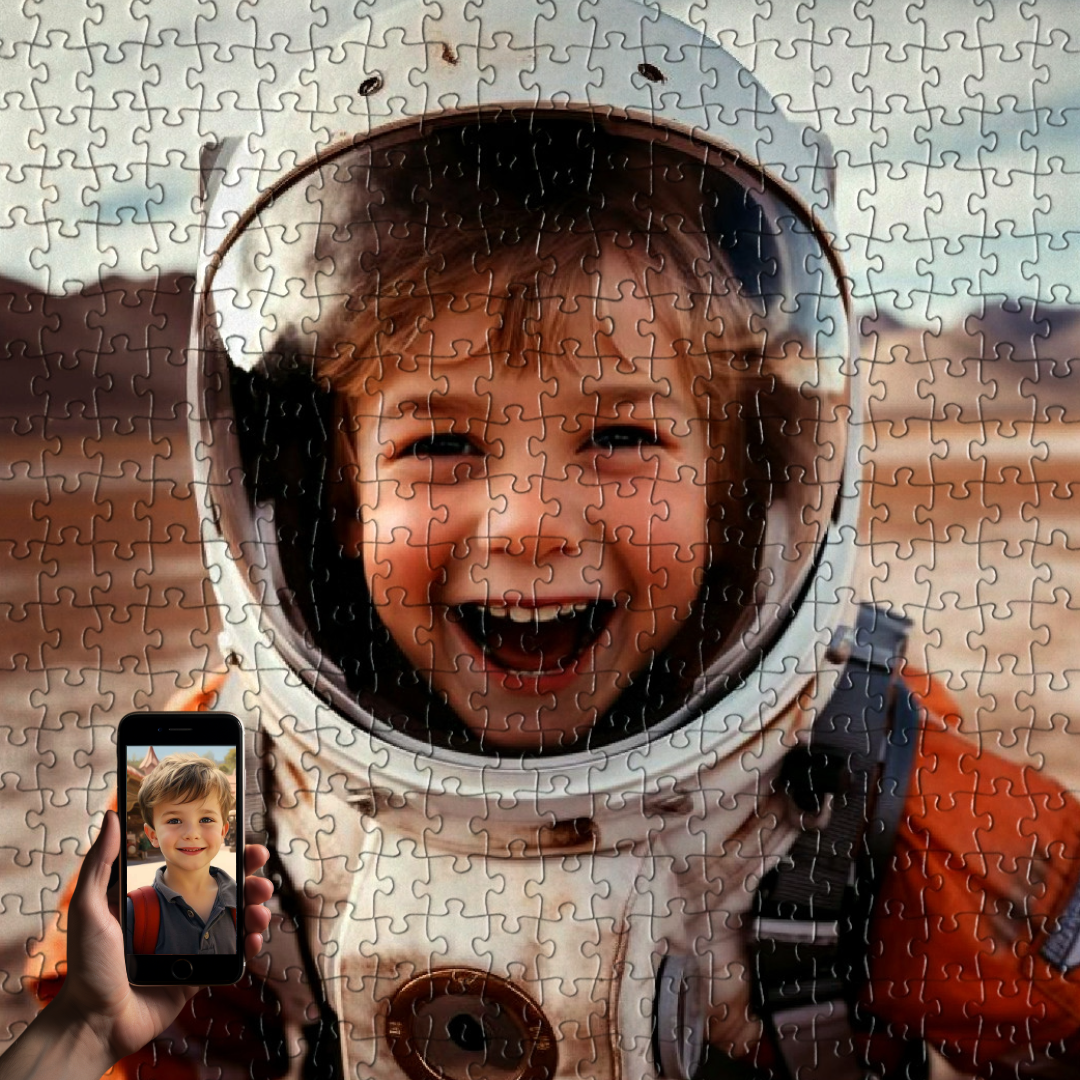
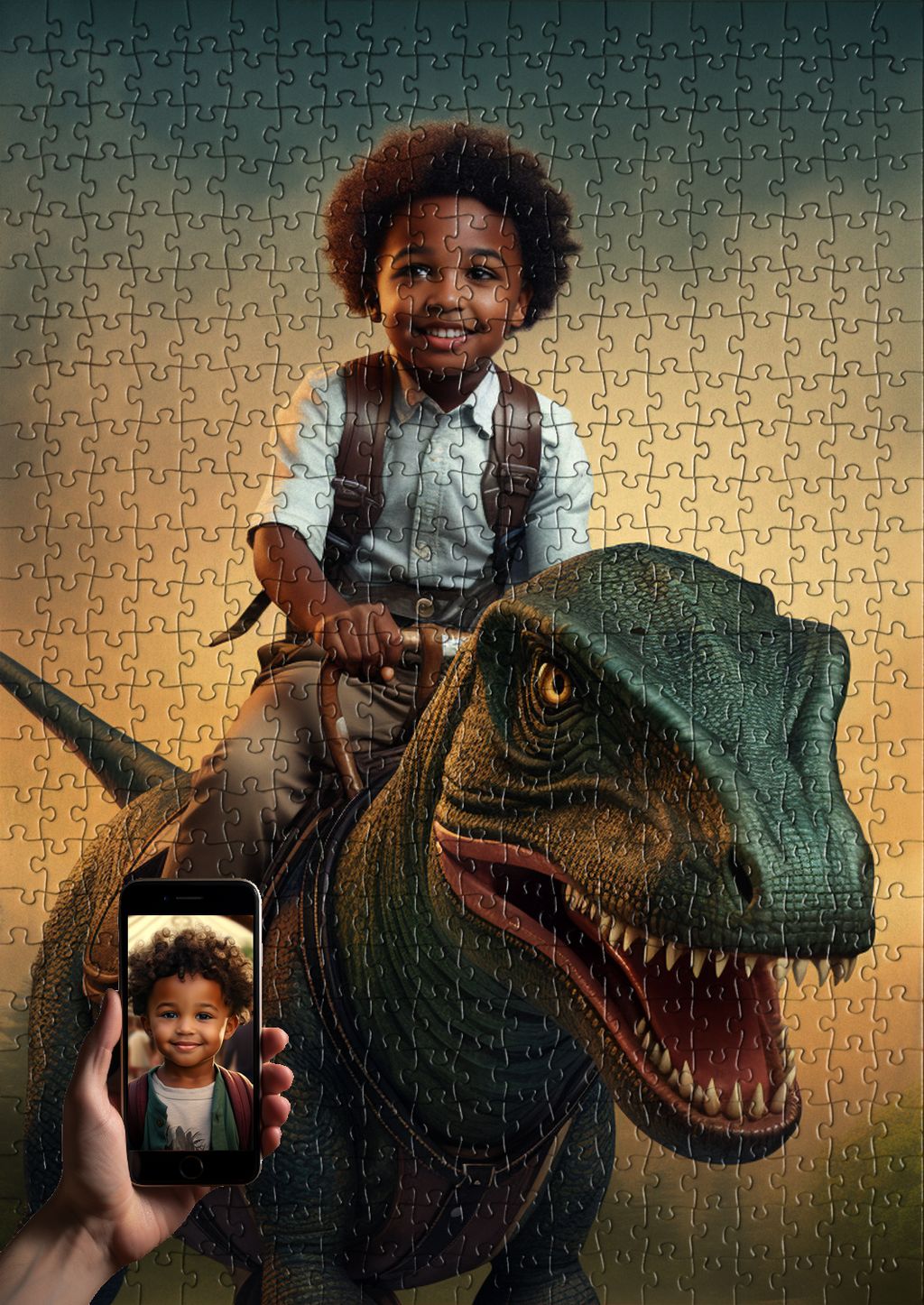
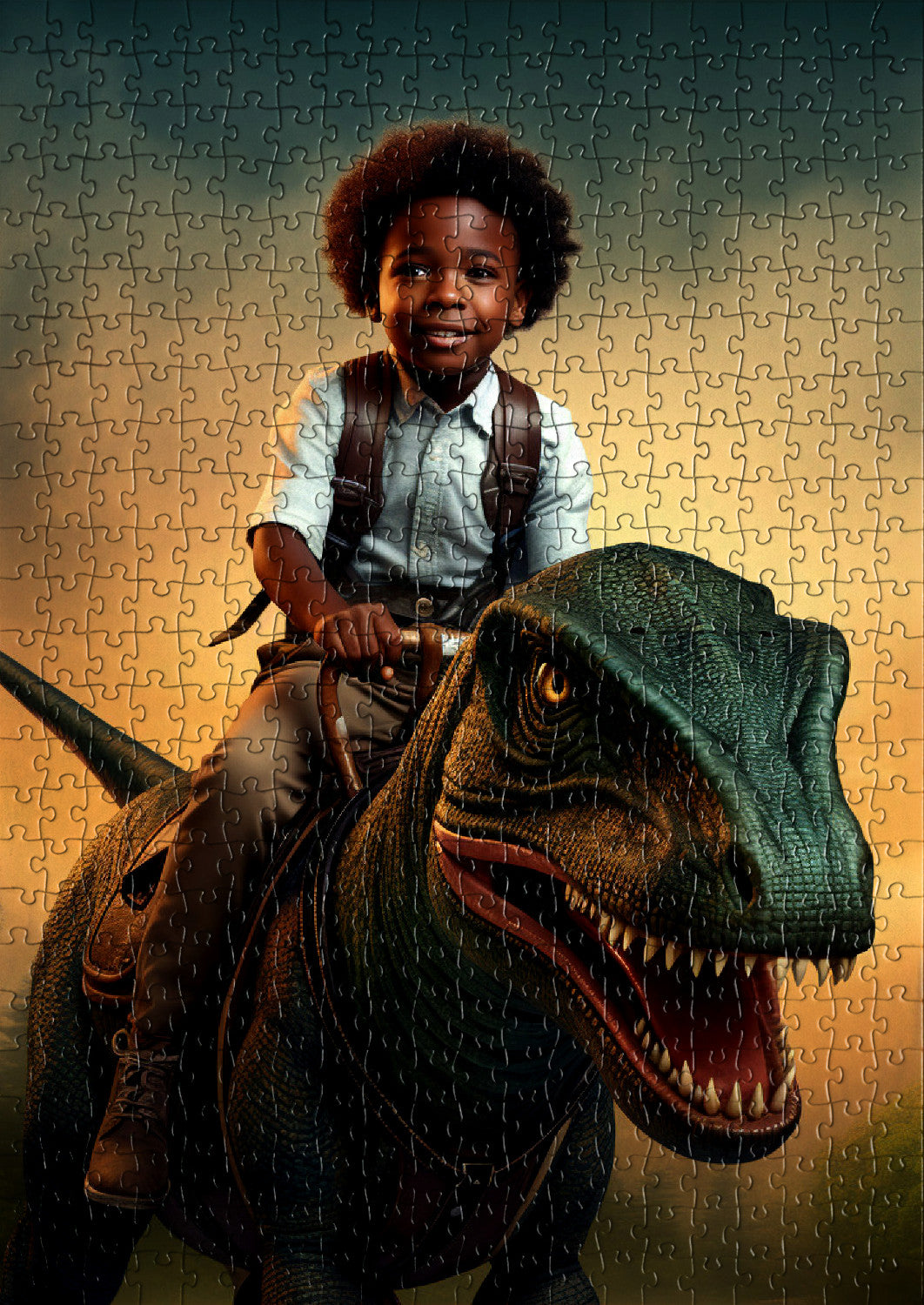
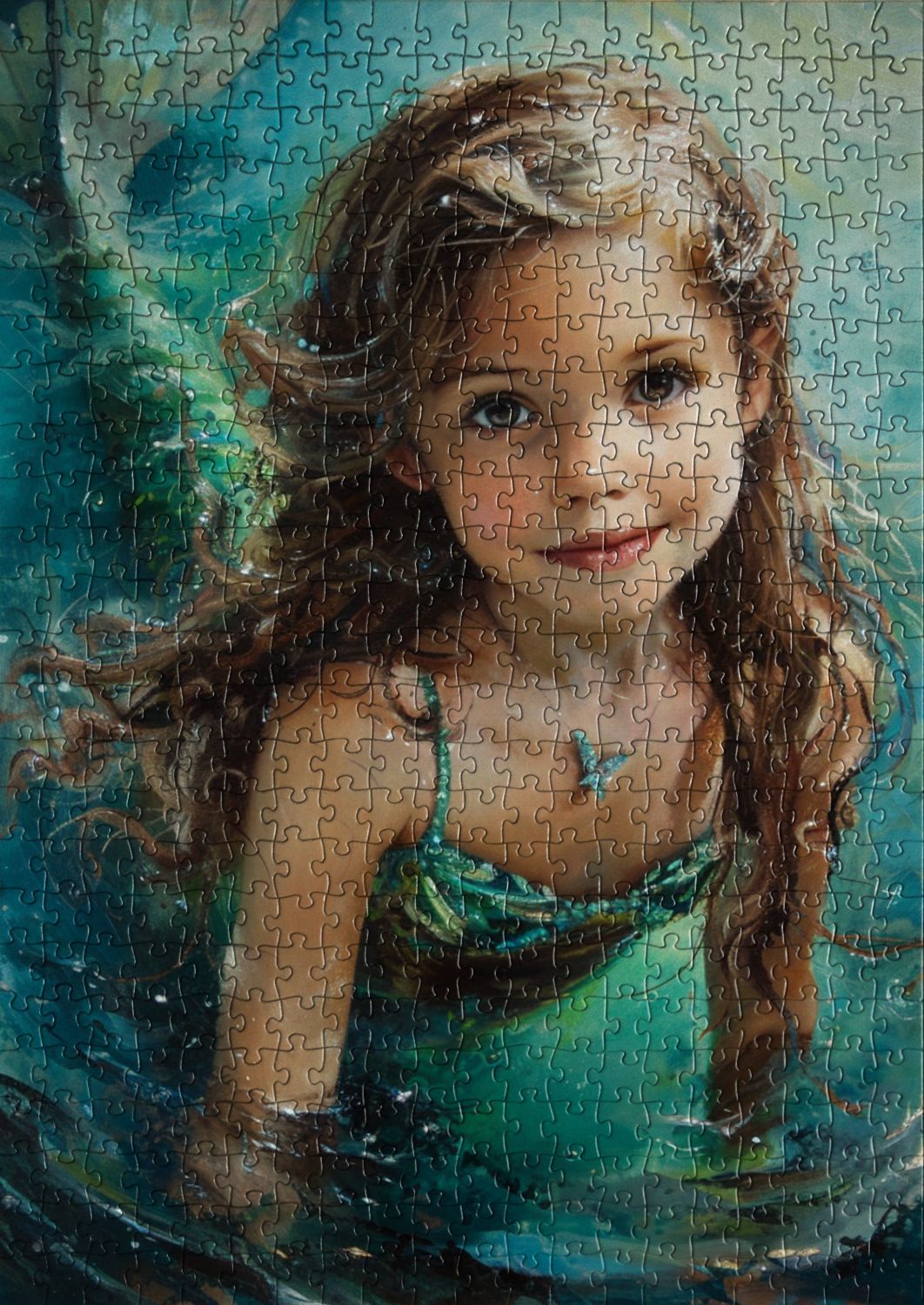
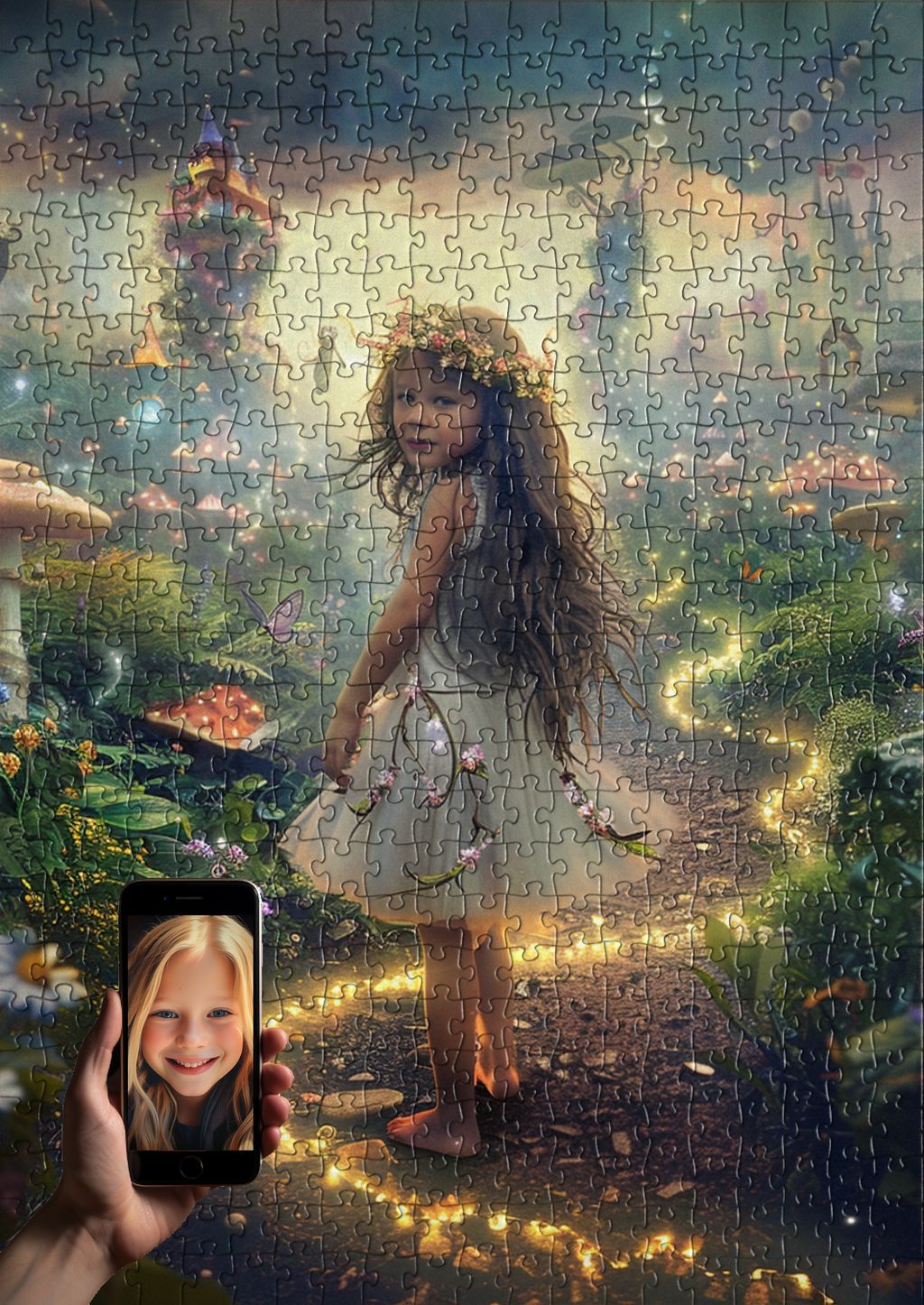
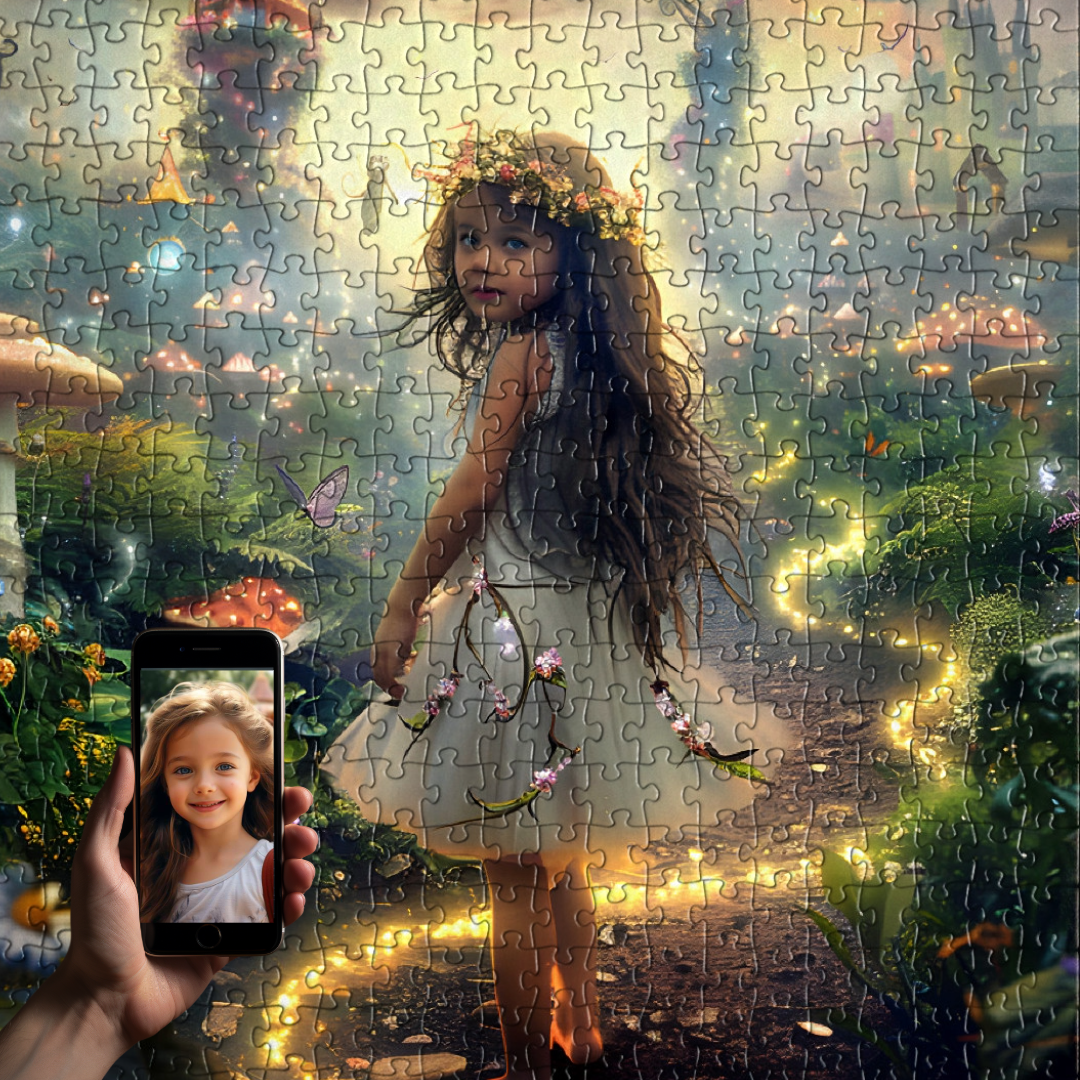
Puzzles are gold for this age group because they're self-contained, have a clear endpoint, and offer a quiet kind of satisfaction. Tip out the pieces, flip them right side up together, find the corners, then step away. Personalized puzzles work especially well because the child is genuinely invested in seeing their own face appear, piece by piece. We've watched kids who "never sit still" stay locked in for half an hour with something like a custom photo puzzle made from a family snapshot, or one of our themed personalized designs like the Kid Riding Dinosaur. The face on the box is theirs. That's a powerful hook.
9. "Let's get the art tray out. I'll set it up, you decide what to make."
The trick is to do the setup yourself: paper out, two or three materials pre-selected, water cup filled. You are removing the friction of starting. Don't suggest what to draw. Leave them with the blank page and walk away.
10. "Build a fort. I'll give you three blankets and two chairs."
Constraints help. "Build a fort" can feel huge. "Build a fort with exactly these materials" feels like a mission. Hand over the supplies, point at a corner, and exit stage left. The fort will be inhabited well past dinner.
Replies 11 and 12: the longer-arc options (for repeat boredom moments)
Some boredom isn't a one-off, it's a pattern, especially on long weekends, school breaks, or rainy stretches. For those, you want activities with a longer arc, things a child can return to over days, not just minutes.
11. "Pick a project we'll work on across the whole week."
A week-long project gives a child something to anticipate. Examples that work well for ages 3 to 6:
- A nature collection (leaves, pinecones, smooth stones) glued onto a poster.
- A handmade book with a story they dictate and you write down.
- A LEGO build with a stated goal: "by Sunday, we're building a zoo."
- A jigsaw puzzle left out on a side table, returned to a few times a day.
This is also a beautiful entry point for slightly shy or hesitant children who thrive when they have something they can claim as theirs. If that sounds like your child, our piece on building confidence in a shy child pairs well with this idea: long-arc projects build mastery, and mastery builds quiet, real self-belief.
12. "Let's invent something nobody else has."
Hand them cardboard, tape, scissors (if age-appropriate), and a problem to solve. "Invent a hat that holds snacks." "Build a trap for a stuffed animal." "Design a new pet for our family." The output doesn't have to be functional. The act of inventing is what matters. Five-year-olds who "invent" things tend to come back to inventing again and again, because the loop of idea, attempt, adjust is genuinely satisfying.
The boredom kit: prep once, use forever
Now the part that pays you back tenfold. Spend one quiet evening setting up a boredom kit and your future self will thank you. A boredom kit is a designated drawer, shelf, or basket your child knows about and can access (mostly) independently.
What goes in it
- A small art supplies drawer. Crayons, washable markers, blank paper, a few sheets of colored paper, child-safe scissors, glue stick, stickers. Keep it tidy and limited. Too much choice is paralyzing.
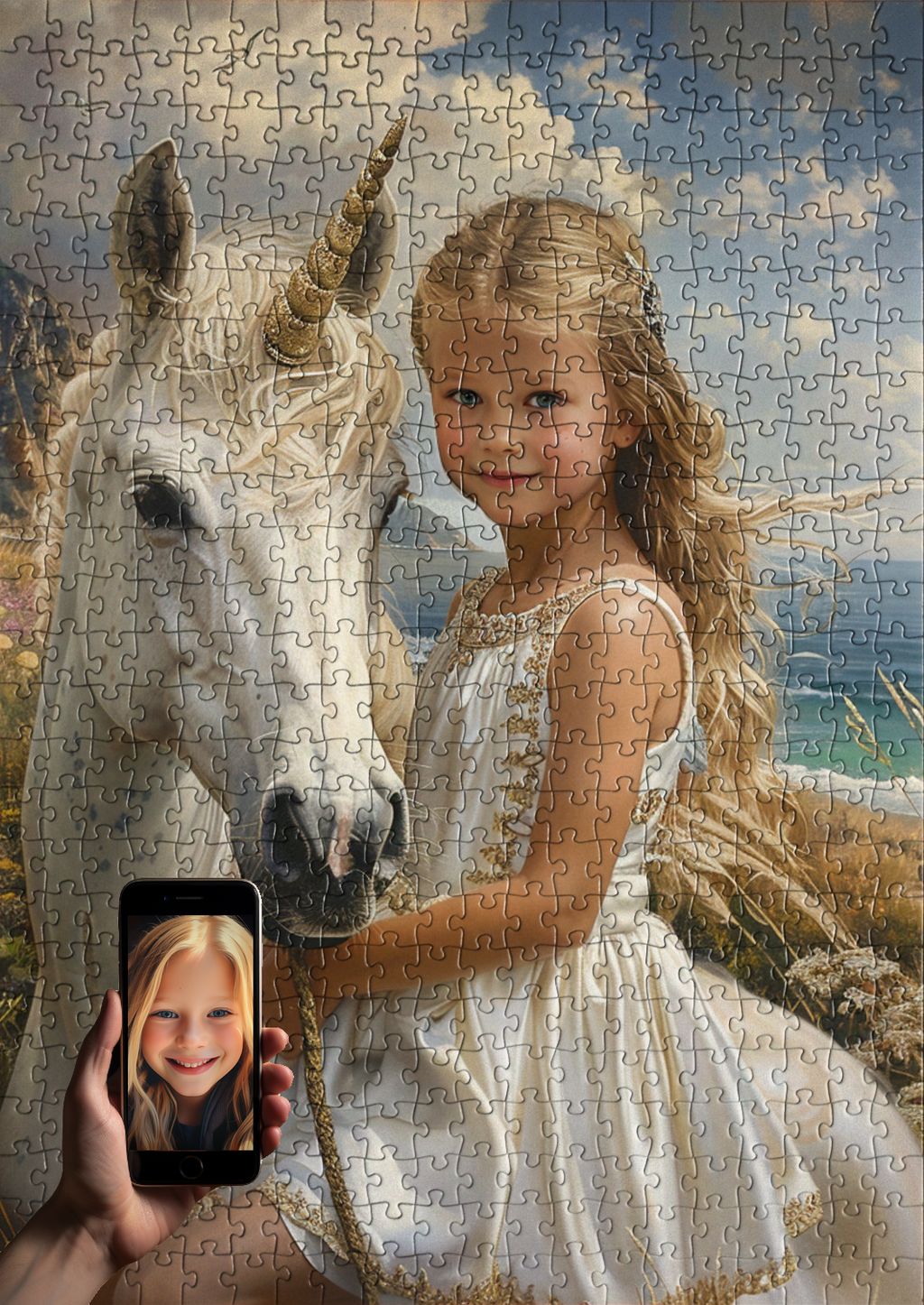
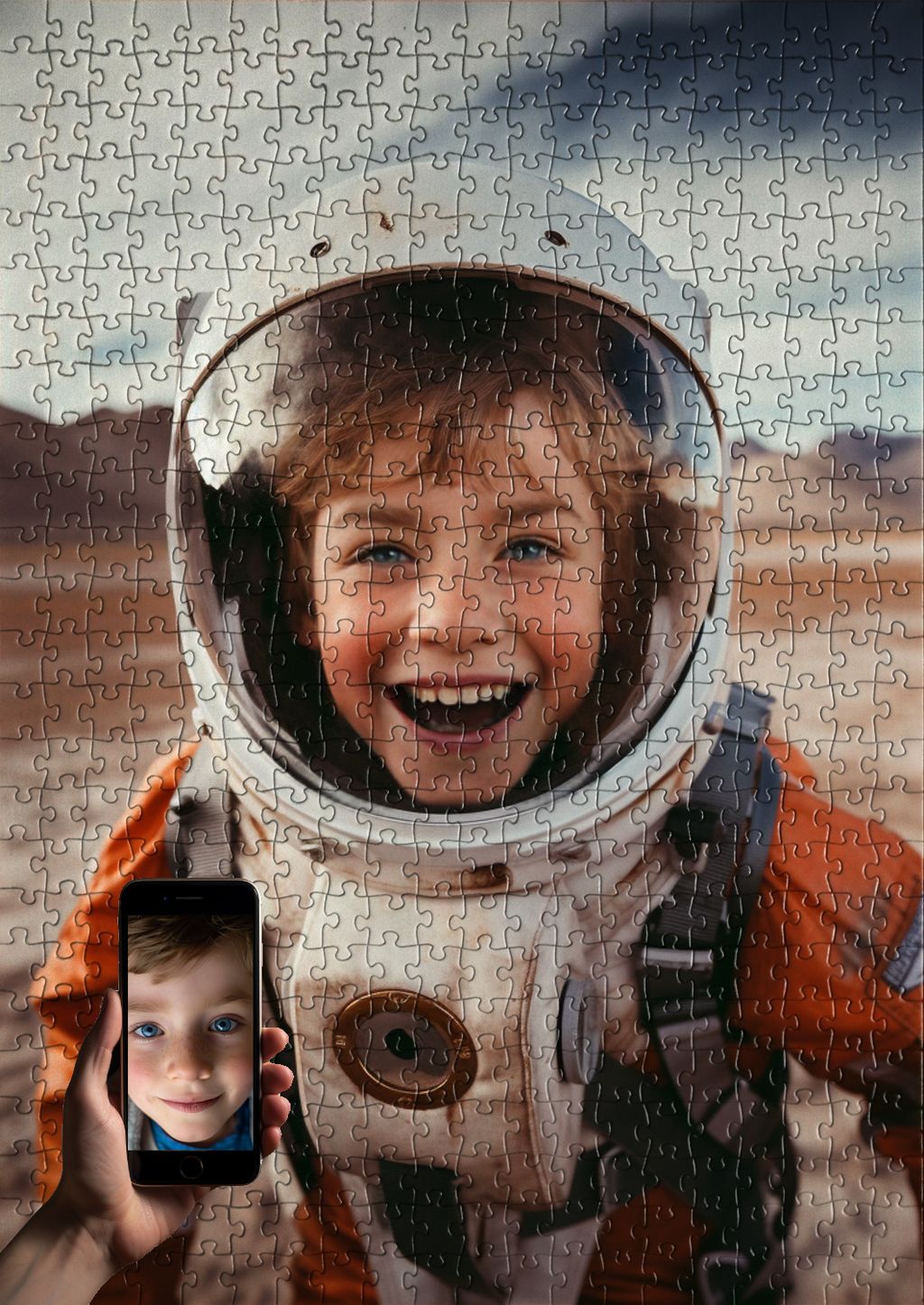
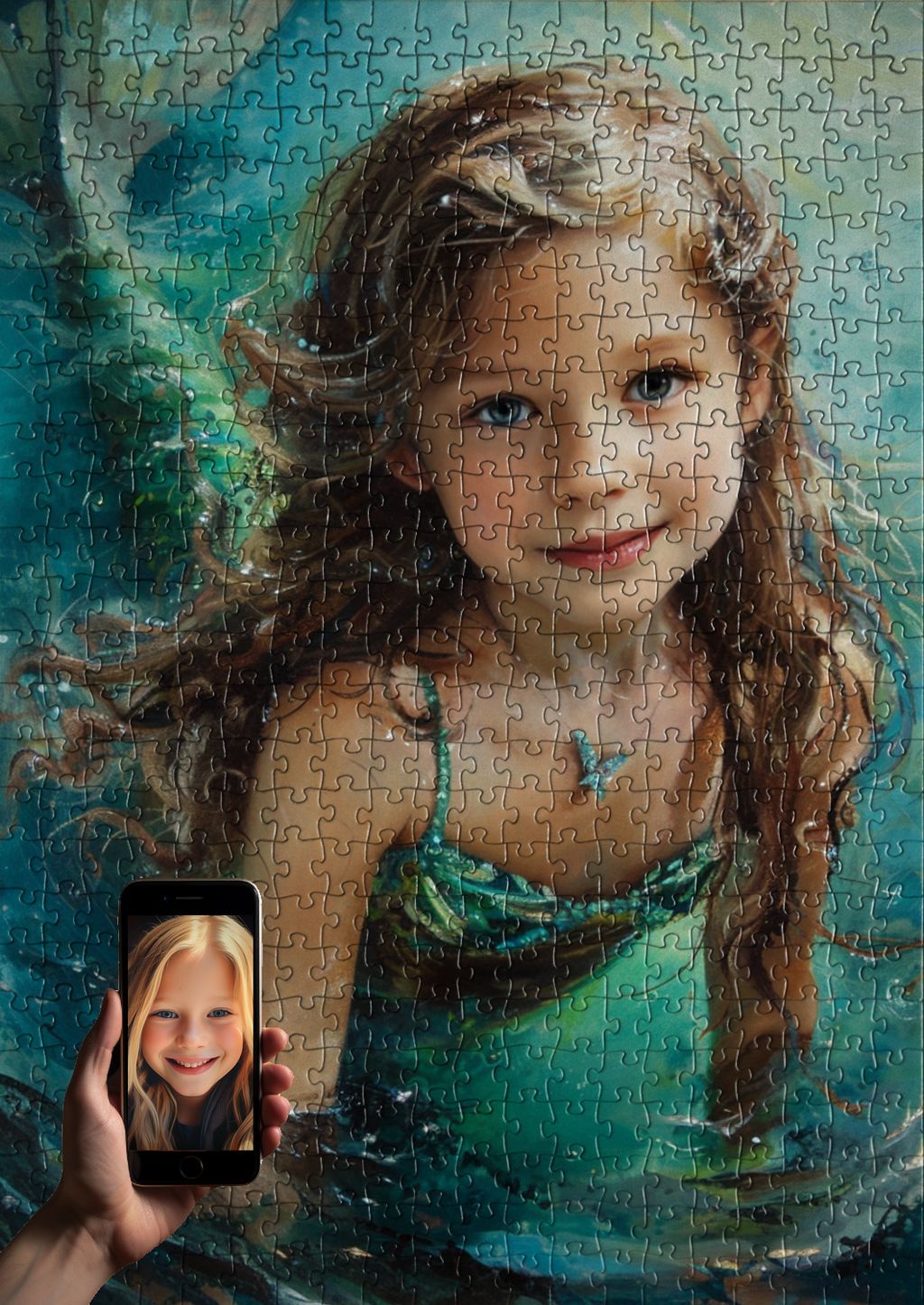
- A puzzle on standby. Keep one good puzzle that hasn't been done in a while in a visible spot. Rotate it every couple of weeks. We're partial to designs that grow with the child, like our custom-imagined puzzles, because the personal connection means they get pulled out again and again.
- Books, rotated weekly. Put six or seven books on a low shelf and tuck the rest away. Swap them out every Sunday. Same books, fresh feeling.
- A "small worlds" basket. A handful of animal figurines, a couple of cars, some wooden blocks, a scrap of green felt for grass. That's it. Open-ended play in a box.
- A movement bin. A jump rope, a balloon, a beanbag. For when the energy needs somewhere to go.
The boredom jar
Sit down with your child on a calm afternoon and brainstorm twenty to thirty activities. Write each one on a slip of paper, fold them, and drop them in a jar. Mix the easy with the slightly ambitious. Some ideas to seed the list:
- Draw a map of our house.
- Have a tea party with three stuffed animals.
- Make a card for someone we love.
- Build the tallest block tower you can.
- Pretend you're a chef and write a menu.
- Do ten jumping jacks, then ten more.
- Read a book to the dog (or the houseplant).
- Find five things in the house that are blue.
The magic of the jar is twofold. One, your child participated in making it, so the activities feel like theirs. Two, the randomness of drawing a slip removes the agonizing "but what should I do" loop. They get a directive from the universe. They go do it.
What not to do (gentle reminders)
A few traps to sidestep, said with love:
- Don't entertain on demand. If every "I'm bored" results in you dropping everything, you'll be the entertainment forever. That is not sustainable, and frankly, not your job.
- Don't lecture about screens. Your child doesn't need a TED Talk on dopamine. They need a calm grown-up offering a different default.
- Don't expect instant enthusiasm. "I don't want to" is part of the process. Acknowledge it ("okay, that's fine") and let them sit with the boredom a bit longer. Most kids, given time, find something.
- Don't fill every gap. Some of the best play happens in the third or fourth minute of staring at the ceiling. Let it cook.
Frequently Asked Questions
How long should I let my child be bored before stepping in?
There's no magic number, but a useful rule of thumb is fifteen to twenty minutes for ages 3 to 6. Most children, given that window without intervention, will find something. If they're still wandering and whining after that, a gentle redirection (reply 5 or 6 above) is a kind move. You're not failing them by waiting, you're giving their imagination a chance to fire up.
What if my child only wants the tablet and rejects every other idea?
This is incredibly common, especially if screens have been the default for a while. Expect a few rough days when you change the pattern. Don't negotiate in the moment, just be matter-of-fact: "The tablet isn't an option right now. The boredom jar is, or you can find your own thing." Repeat calmly. Within a week or two, the protest usually fades and play returns. Hang in there.
Is it okay to assign chores as a boredom response?
Absolutely, with the right framing. For children aged 3 to 6, "helping" feels like a privilege if you present it that way. Sorting socks, wiping a table, watering plants, unloading plastic dishes from the dishwasher, these are not punishments, they're inclusion. Just don't use chores as a threat ("if you're bored I'll find you work to do") because then they become the bad guy. Offer them as one option among several.
My child is bored even when there are toys everywhere. Why?
Often, too many toys is the problem, not the solution. Visual overwhelm makes it hard to engage with any one thing. Try a toy rotation: pack away two thirds of the toys, leave one third out, and swap every two or three weeks. Most parents see a dramatic increase in independent play within days of doing this.
Should I feel guilty about screen time on tough days?
No. A tablet on a sick day, a long flight, or a Tuesday when you're running on three hours of sleep is not a moral failure. The goal isn't zero screens, it's not letting screens become the only answer. If you have a stocked boredom kit and a handful of go-to replies, screens become one tool among many, used intentionally, not reflexively.
The bigger picture
Every time your child says "I'm bored" and you respond with something other than a screen, you're teaching a small but important lesson: my own brain is a good place to be. I can make something out of nothing. The empty afternoon is not a void, it's an invitation. Those are skills that show up later as creativity, focus, and a quiet kind of self-reliance that no app can install.
None of this requires perfection. You will absolutely hand over the tablet sometimes. You'll forget to refill the boredom jar. The fort will collapse and there will be tears. That's parenting. The point is to widen the menu, not to swear off any one option. Build the kit, learn three or four of these replies by heart, and trust that your child has more inner resources than the 4pm whine suggests. They'll surprise you.
If you'd like a long-arc activity already waiting on the shelf for the next boredom wave, a puzzle is one of the simplest ways to set future-you up for a quiet half hour. A design that features your child as the hero, whether they're walking on the moon or commanding a pirate ship, tends to get pulled out again and again because it feels like theirs in a way a generic toy never does. Whatever you choose, the real gift is the same: a small invitation to sit down, slow down, and discover that boredom, handled gently, is often where the best afternoons begin.




Share and get 15% off!
Simply share this product on one of the following social networks and you will unlock 15% off!