
You have probably watched it happen a hundred times. You scroll through your camera roll with your toddler on your lap, and suddenly she goes still. Her finger hovers over the screen. "That's me," she whispers, or maybe she just stares, wide-eyed, as if she has discovered a small miracle hiding inside your phone. A few years later, the same child will pick out a photo of herself at the beach and ask you to tell the story of that day again, even though she remembers it perfectly well. She will hang the drawing of herself on the fridge. She will gravitate, every single time, toward the book or the puzzle that has her face in it.
Most parents notice this pattern early, and most assume it is just vanity in miniature, a charming quirk of childhood. It is something much more interesting than that. The pull a young child feels toward their own image is not narcissism. It is one of the most important developmental processes happening in the first six years of life: the slow, layered construction of a self.
The question many parents quietly ask themselves, "why do kids like seeing themselves so much?", has answers that reach into developmental psychology, neuroscience, and identity theory. And those answers matter, because once you understand what is actually happening when your child stares at her own face, you start to see ordinary moments (a photo on the fridge, a personalized book at bedtime, a puzzle with their portrait on it) as small but real contributions to who they are becoming.
Below, we walk through what research suggests: when self-recognition emerges, how social learning shapes identity, why familiar faces and self-related information can be especially engaging, how children begin to build "the story of me," and why personalized objects may support that story. We will close with three concrete things you can do this week.
The Mirror Moment: When a Child First Recognizes "That's Me"
The classic experiment on self-recognition is almost fifty years old, and it still holds up beautifully. In the 1970s, developmental psychologists Michael Lewis and Jeanne Brooks-Gunn ran what is now known as the rouge test (sometimes called the mirror self-recognition test, originally adapted from primate research by Gordon Gallup). The setup is disarmingly simple. A parent surreptitiously dabs a spot of red rouge on the child's nose, then sits the child in front of a mirror.
What happens next depends almost entirely on age. Babies under about fifteen months will smile, babble, or reach toward the mirror as if greeting another baby. They do not connect the red spot to themselves. But somewhere between 18 and 24 months, something changes. The child looks in the mirror, sees the red spot, and reaches up to touch their own nose. That small gesture is one of the most important cognitive milestones of early childhood. It tells us the child has formed a visual self-concept: a mental representation of "me" that is stable enough to compare against a reflection.
This milestone matters because almost every later social and emotional skill builds on it. To feel empathy, you first need to understand that you are a separate person from someone else. To feel pride, embarrassment, or guilt (what researchers call self-conscious emotions), you need a self to feel them about. Lewis's later work showed that these emotions emerge in roughly the same window as mirror self-recognition, and not by coincidence.
What This Looks Like at Home
Around the second birthday, you may notice your child becoming fascinated with photos and videos of themselves, pointing at their own image and naming it, or wanting to look in the mirror more often. This is not vanity. It is the brain practicing a brand new skill, the way a toddler practices walking by doing it over and over.
- Toddlers may laugh at videos of their younger selves as if watching a different child.
- Around age 2 to 3, they often start using "I," "me," and their own name interchangeably.
- They may insist on choosing their own clothes, a small declaration that the self has preferences.
Mirror Neurons and the Deeply Social Brain
In the early 1990s, a research team at the University of Parma led by Giacomo Rizzolatti made an accidental discovery while studying macaque monkeys. They found neurons in the premotor cortex that fired both when a monkey performed an action and when it watched someone else perform the same action. They called them mirror neurons.
The exact role of mirror neurons in humans is still debated among neuroscientists, and we should be careful not to overclaim. But there is broad agreement that the human brain contains networks that respond similarly to observed and performed actions, and that these networks are foundational for imitation, learning by watching, and probably some forms of empathy.
What does this have to do with children loving their own image? Two things. First, young children are wired to learn by watching faces, especially familiar ones. The human face is arguably the most important visual stimulus a baby ever sees. Second, when a child sees a photo of herself doing something (riding a bike, blowing out candles, sleeping with a stuffed animal), the brain is not just processing an image. It is rehearsing the action, recalling the feeling, and stitching the experience more firmly into memory.
This is part of why children ask to look at the same photos again and again. They are not bored of them. They are using them.
The Dopamine of the Familiar Face
Here is one of the most quietly remarkable findings from the last two decades of social neuroscience: seeing a familiar, loved face activates the brain's reward circuitry. Studies using fMRI have shown that images of mothers, romantic partners, and close family members light up regions like the ventral tegmental area and the nucleus accumbens, the same areas involved in the release of dopamine, the neurotransmitter associated with motivation, pleasure, and learning.
Research on self-face recognition, including work by researchers such as Julian Keenan and others studying the cortical midline structures, suggests that seeing one's own face engages overlapping reward and self-referential networks. In plain language: for a young child whose sense of self is still under construction, their own face is among the most rewarding things they can look at. Not because they are conceited. Because their brain is treating "me" as profoundly significant, the way it treats "mom" or "dad."
This explains a lot of small parenting mysteries:
- Why your child will sit through a slideshow of family photos when they would never sit still for anything else.
- Why personalized birthday cards get read fifteen times in a row.
- Why a book with their name in it suddenly becomes the favorite, even if the story is unremarkable.
- Why a puzzle featuring their own portrait holds attention far longer than a generic one.
The reward is real, measurable, and developmentally useful. It pulls the child back, again and again, toward the work of figuring out who they are.
The Story of Me: Narrative Identity Begins Around Age 3 or 4
Recognizing yourself in a mirror is the first floor of selfhood. The next floor goes up between ages 3 and 5, and it is built out of stories.
The psychologist Dan McAdams, at Northwestern University, has spent decades developing what is now called narrative identity theory. His core idea is that human beings do not just have a self. We construct one, by telling stories about our lives that link the past, the present, and an imagined future. McAdams's work focuses mostly on adolescents and adults, but developmental psychologists including Robyn Fivush and Katherine Nelson have shown that the raw materials of narrative identity start being gathered much earlier, in the preschool years.
Autobiographical Memory and "Remember When"
Somewhere around age 3, children begin to form genuine autobiographical memories: memories tied to a specific time, place, and self ("when I went to grandma's house"), as opposed to general knowledge ("grandma has a cat"). The way parents talk to children about past events shapes this enormously. Fivush's research on what she calls "elaborative reminiscing" shows that children whose parents tell rich, detailed stories about shared experiences develop stronger autobiographical memory and a more coherent sense of self.
This is why "remember when we went to the beach and you found that pink shell?" is not small talk. It is identity construction. Each time you retell a moment from your child's life, you are helping them place a brick in the wall of who they are.
Pretend Play and the Imagined Self
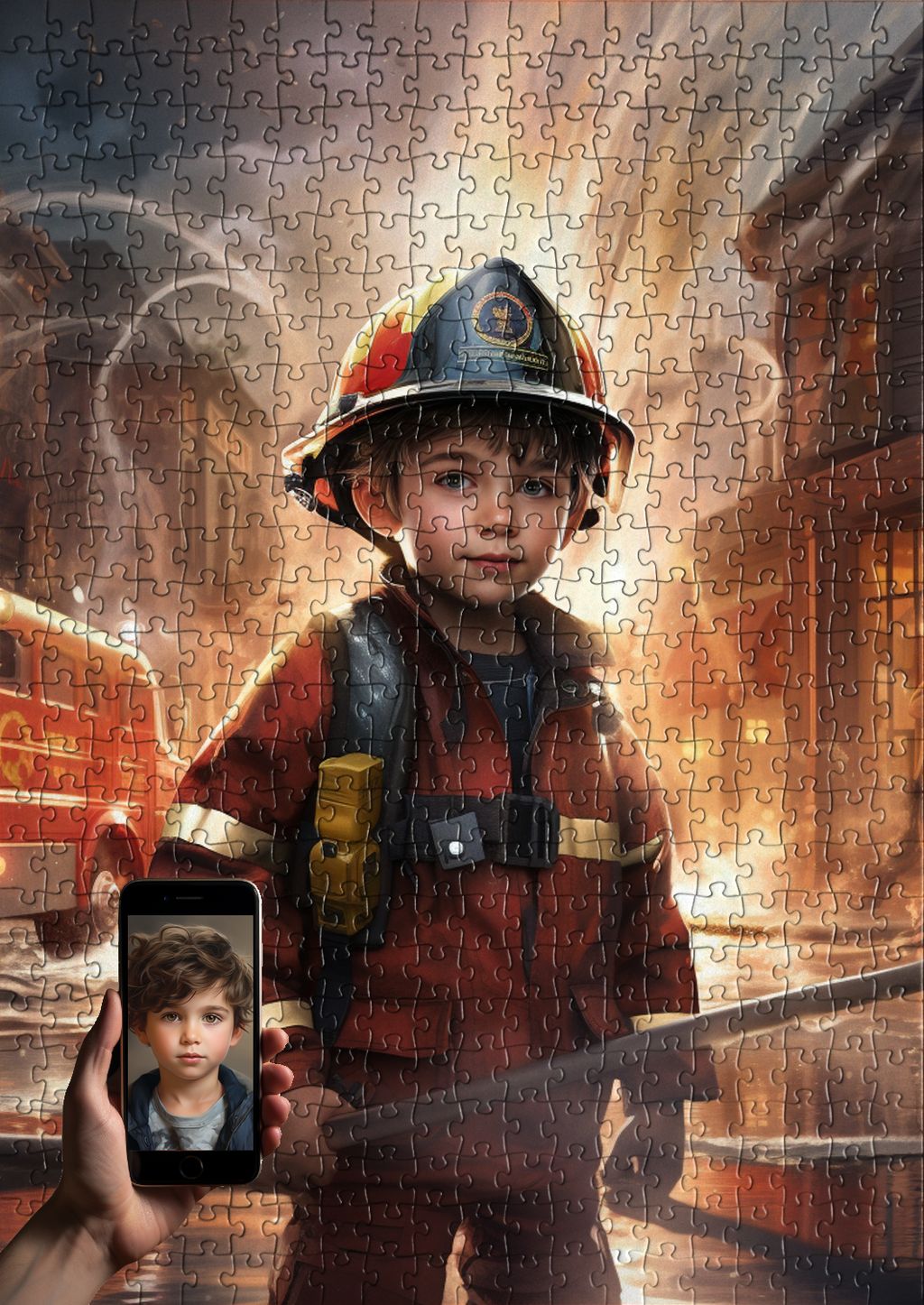
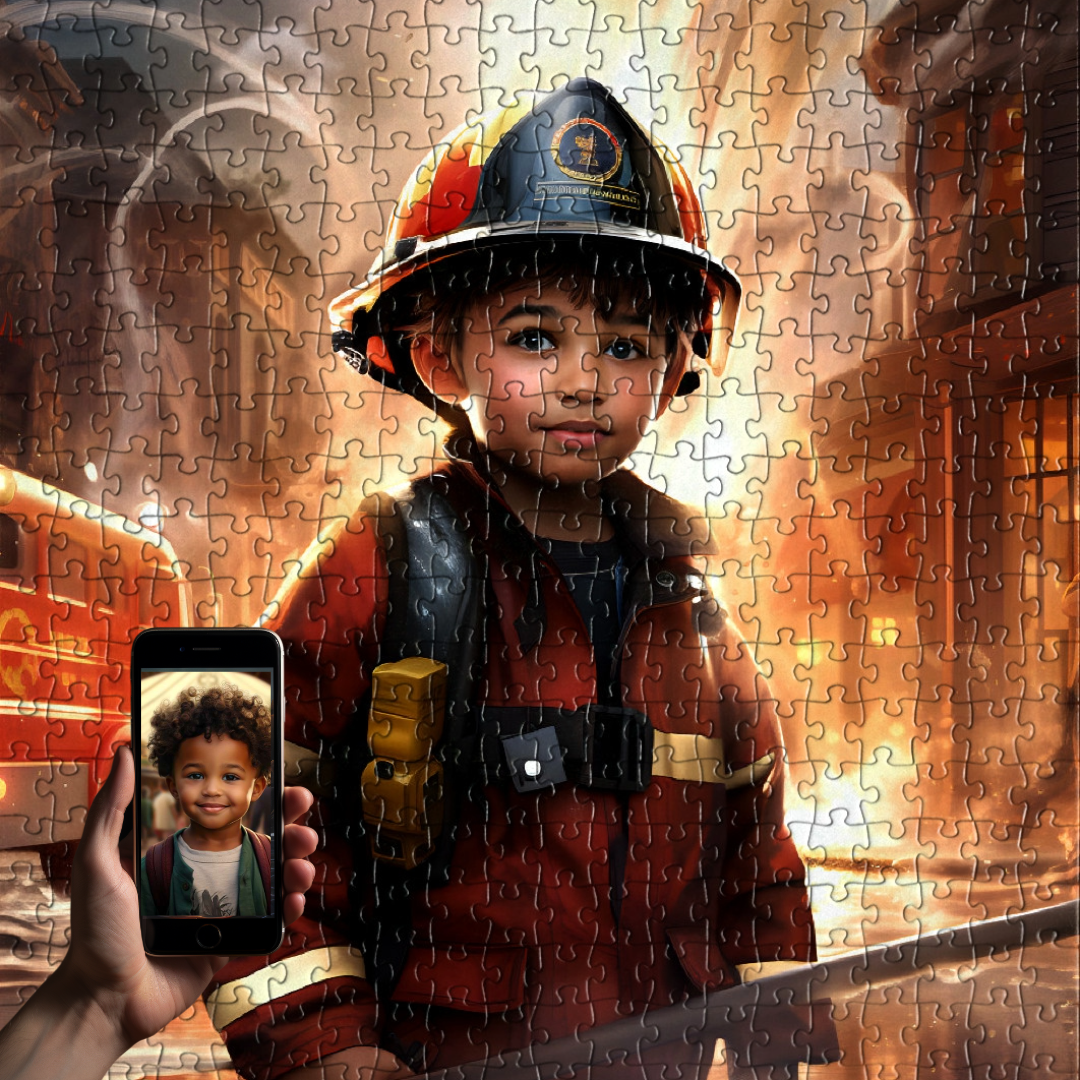
By age 4 or 5, children are also building their identity forward, not just backward. They imagine themselves as firefighters, astronauts, princesses, pirates, soccer players, paleontologists. This is not idle fantasy. It is possible-self exploration, a term from the psychologist Hazel Markus, and it helps children practice agency, courage, and competence in worlds where the stakes are safe.
Why Personalized Objects Help: Giving the Inner Story Something to Hold
If you put the pieces together, a picture emerges. A young child is doing three big things at once: recognizing themselves visually, finding their own face deeply rewarding, and beginning to weave a narrative about who they are and who they might become. Most of this happens invisibly, inside their head. But children think with their hands. They make abstract ideas concrete by playing with them.
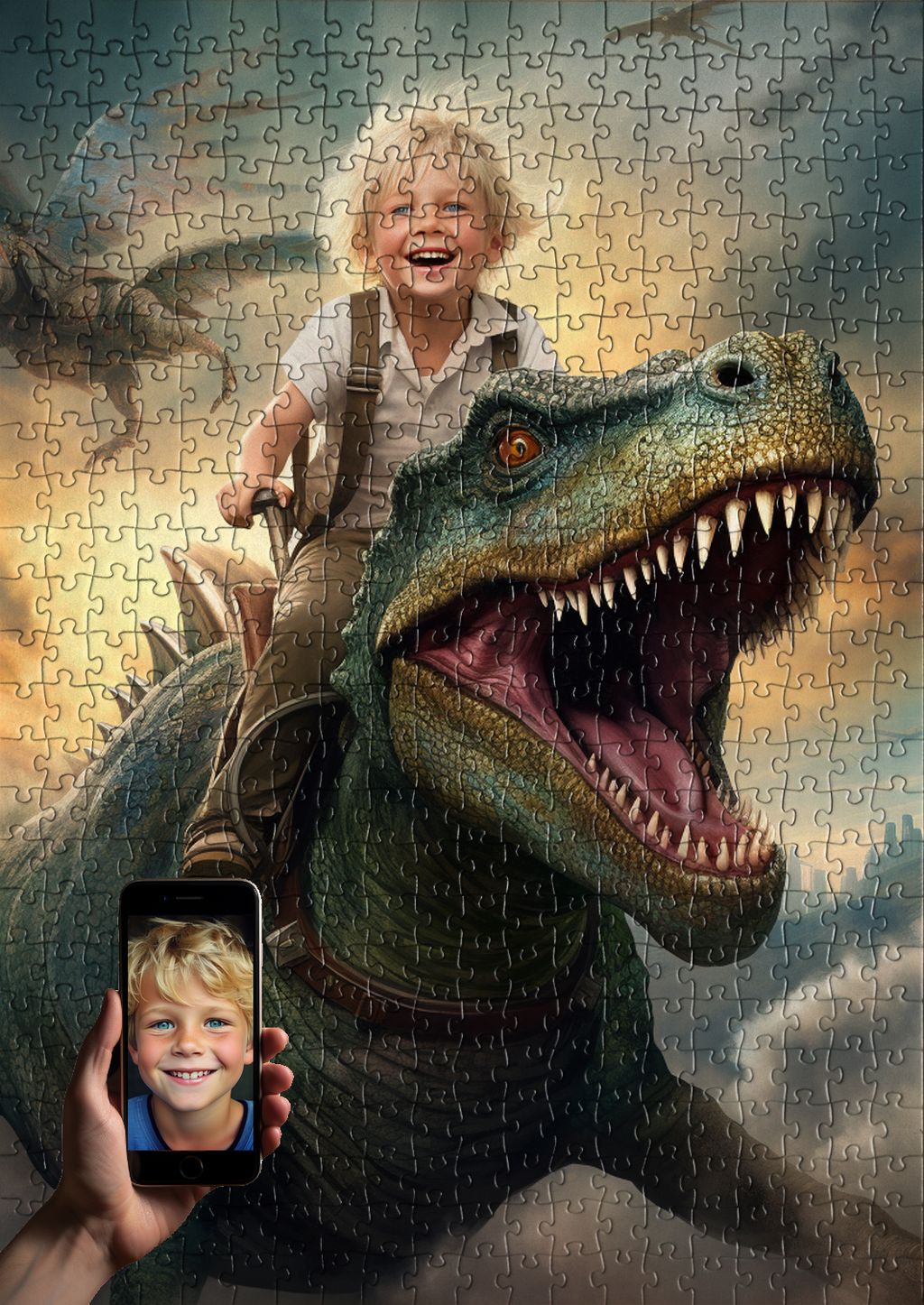
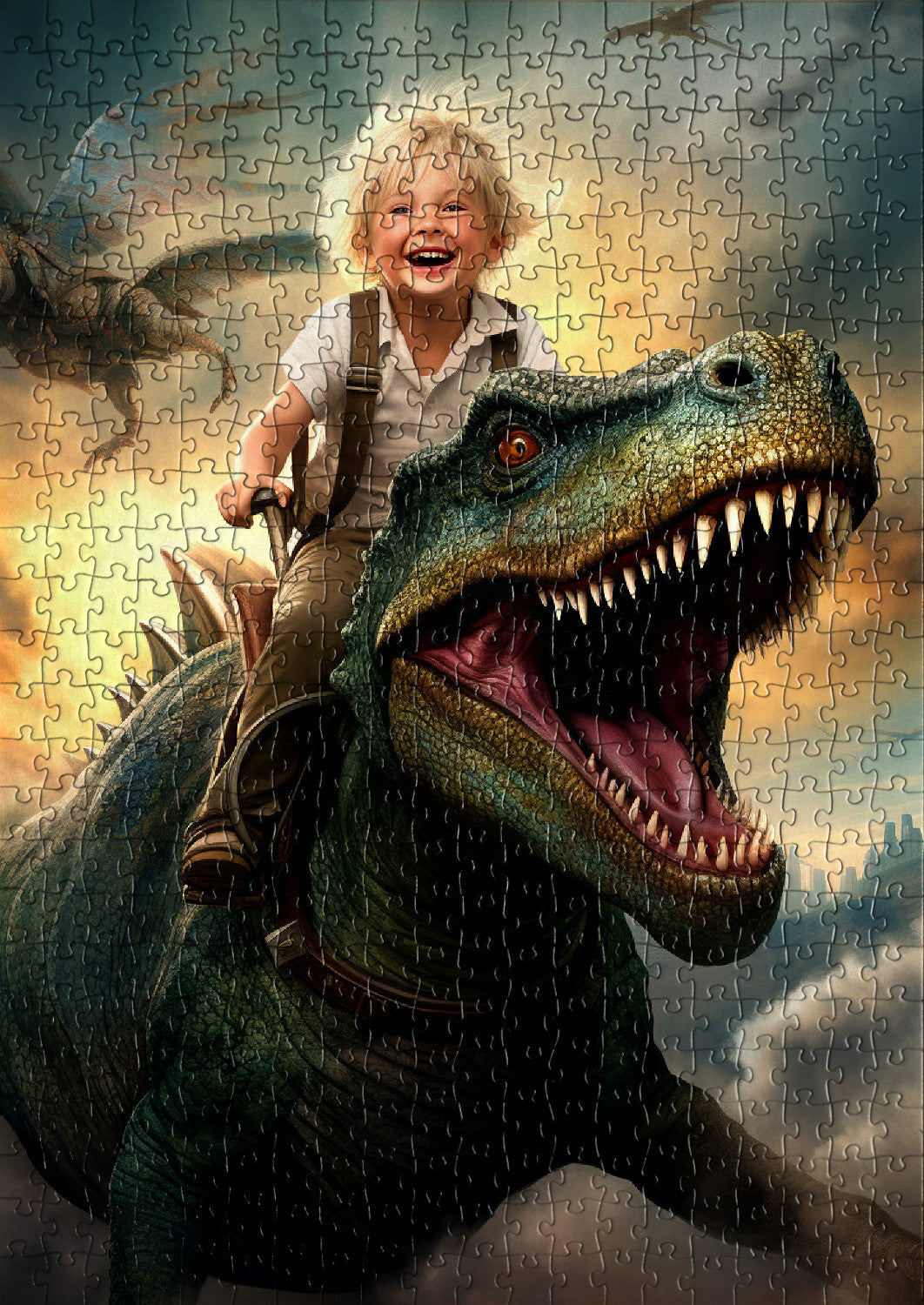
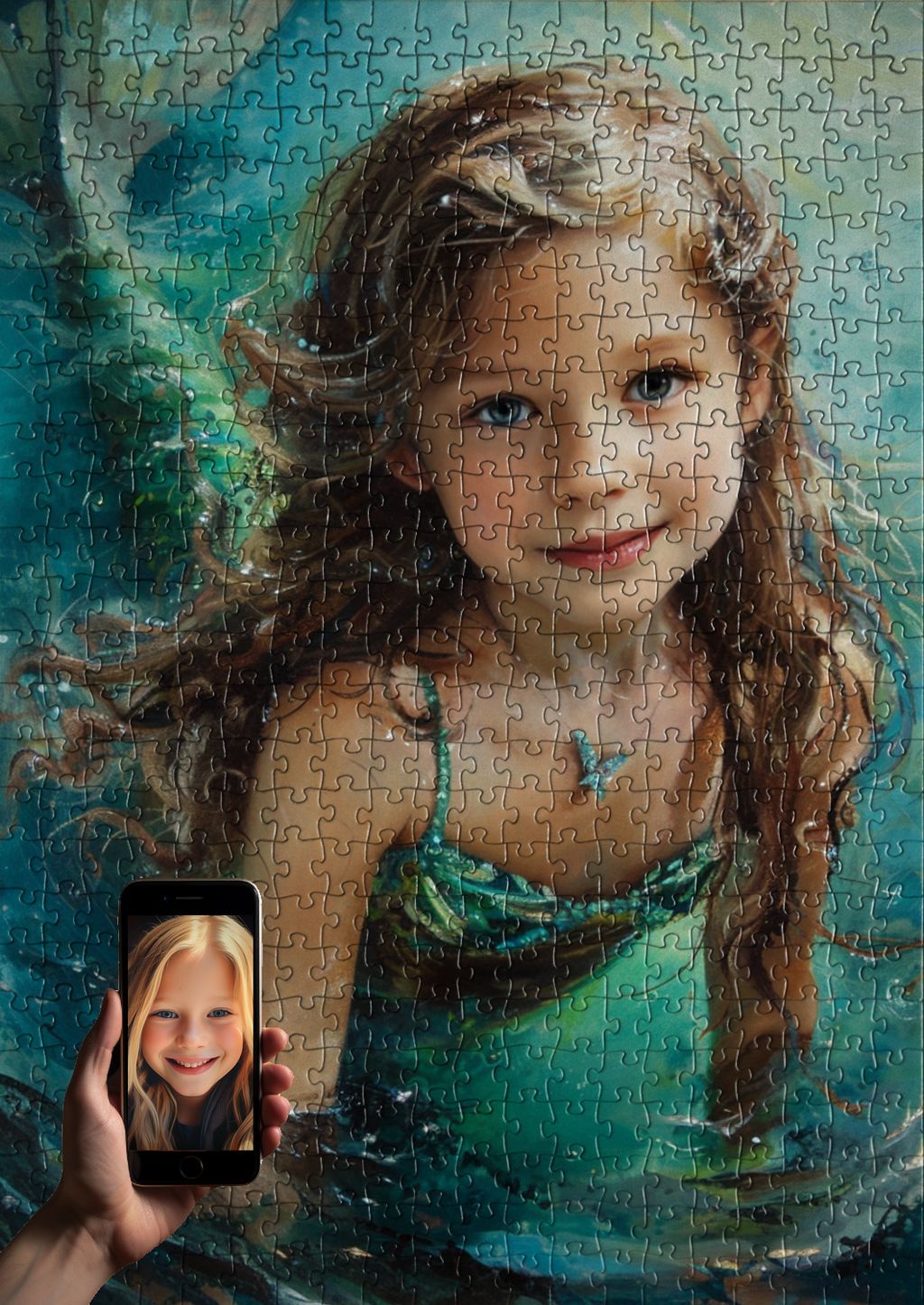
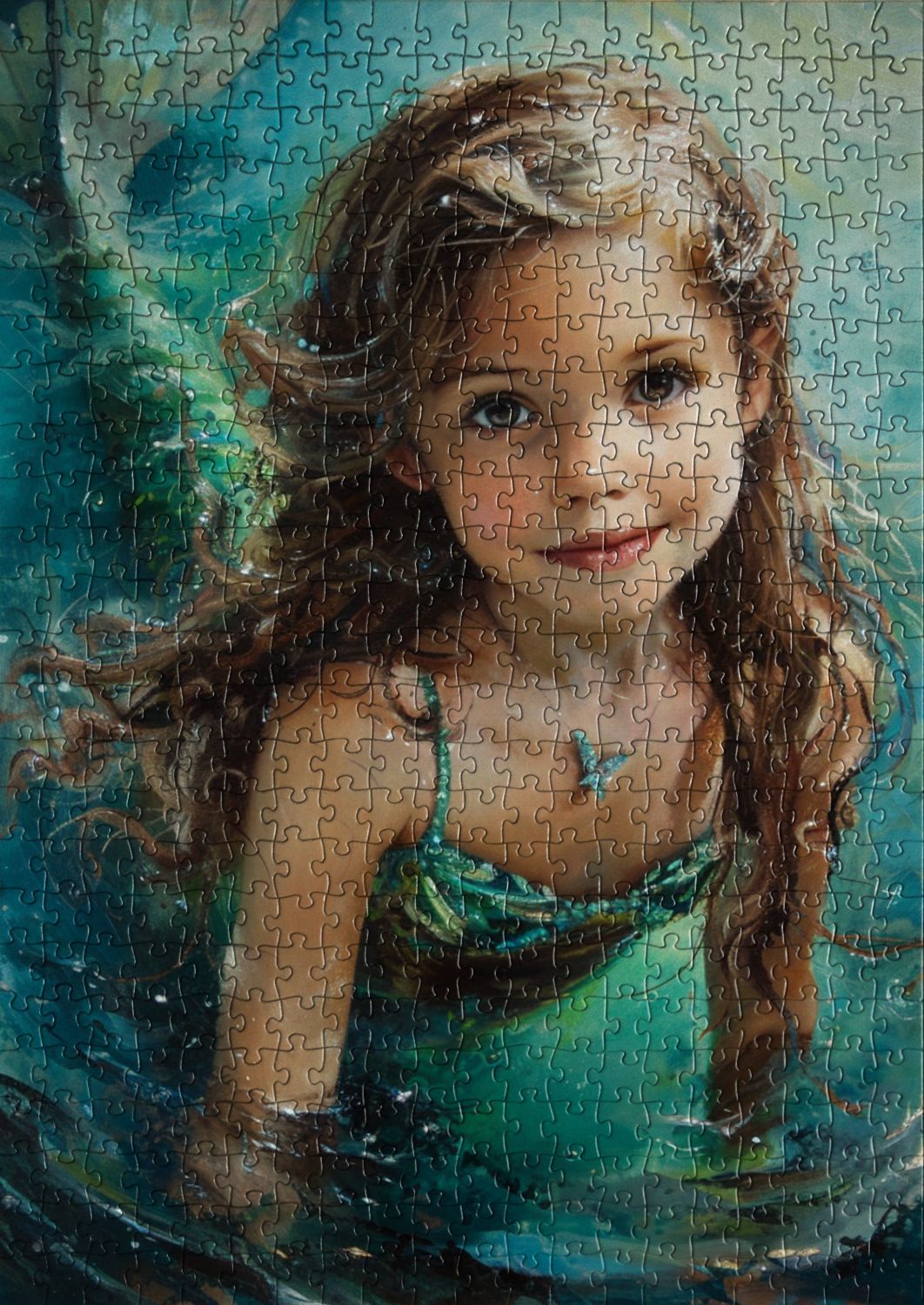
This is where personalized objects become quietly useful. A book with your child's name as the protagonist, a framed photo at their eye level, a puzzle where their own face appears inside a story (riding a dinosaur, exploring the moon, fighting fires), all of these give the inner narrative something tangible to attach to. The child can hold the story. They can take it apart and put it back together. They can show it to grandma.
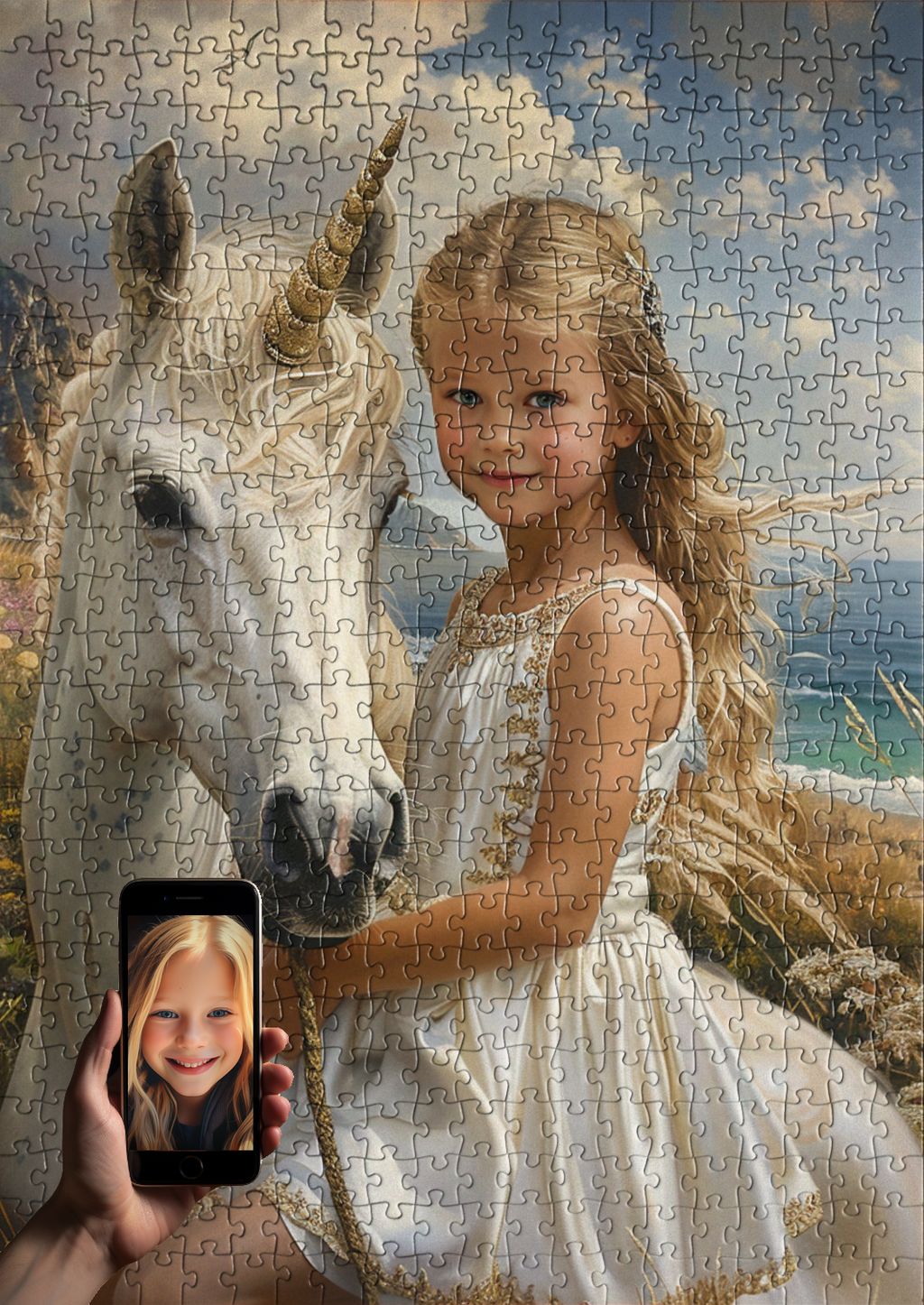
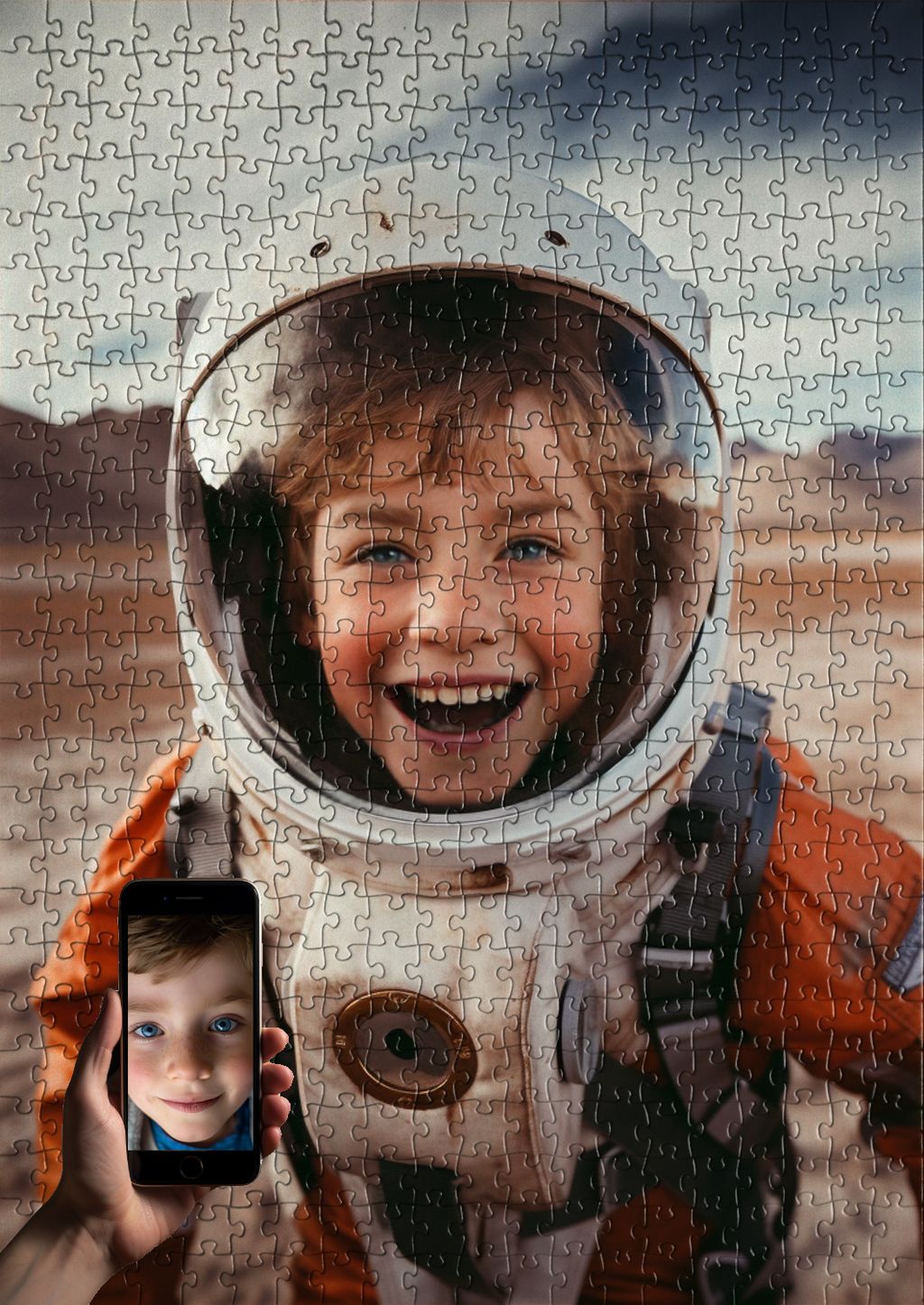
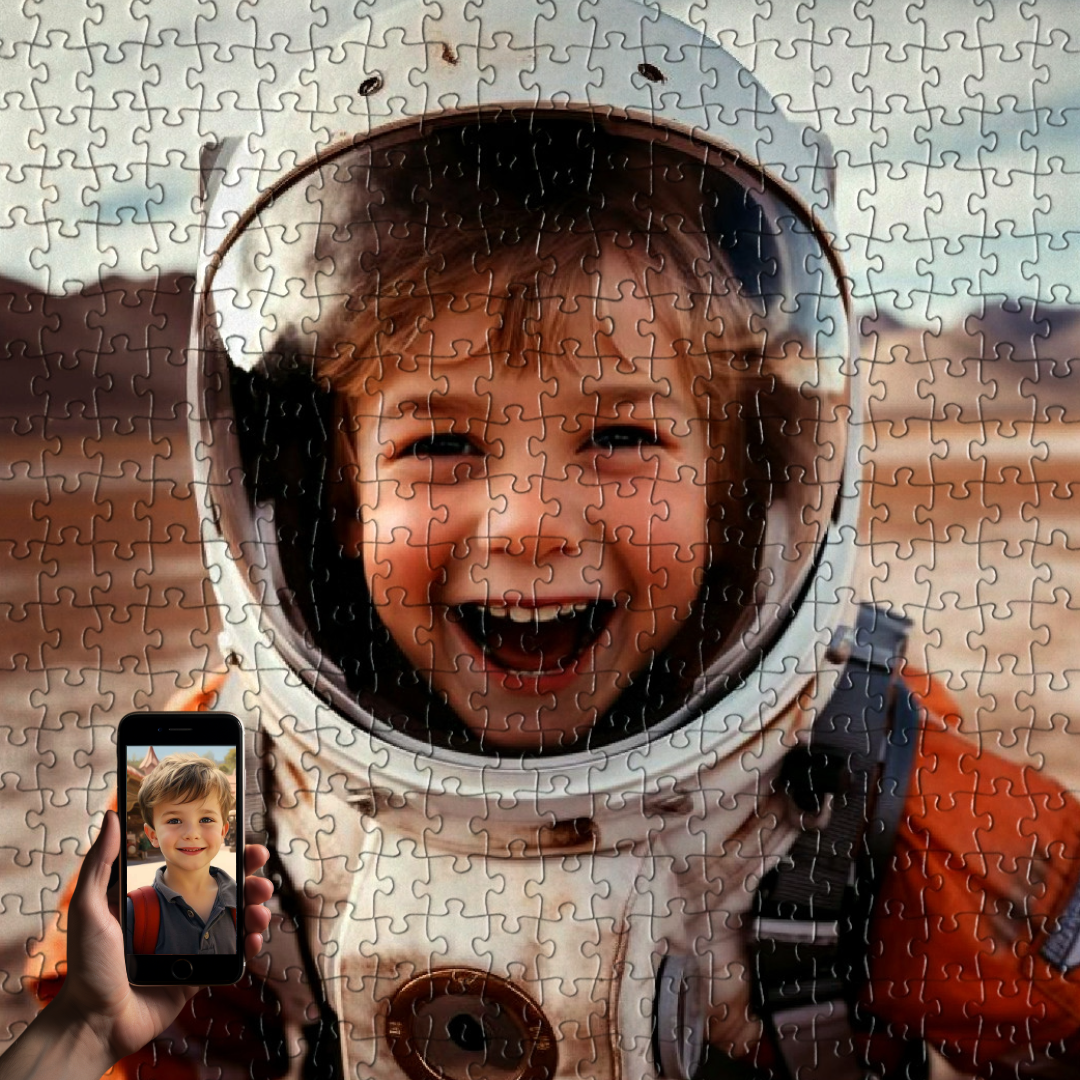
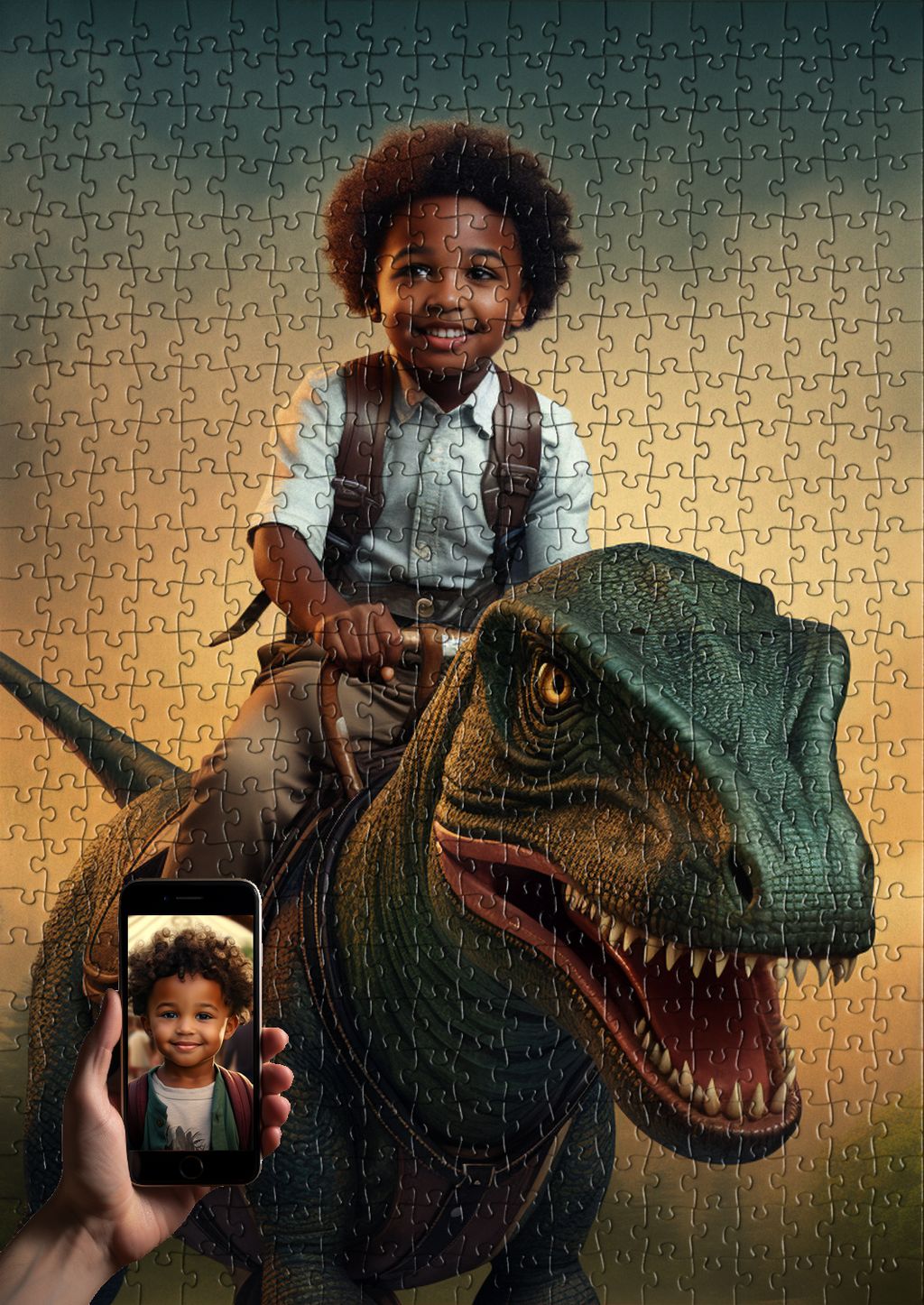
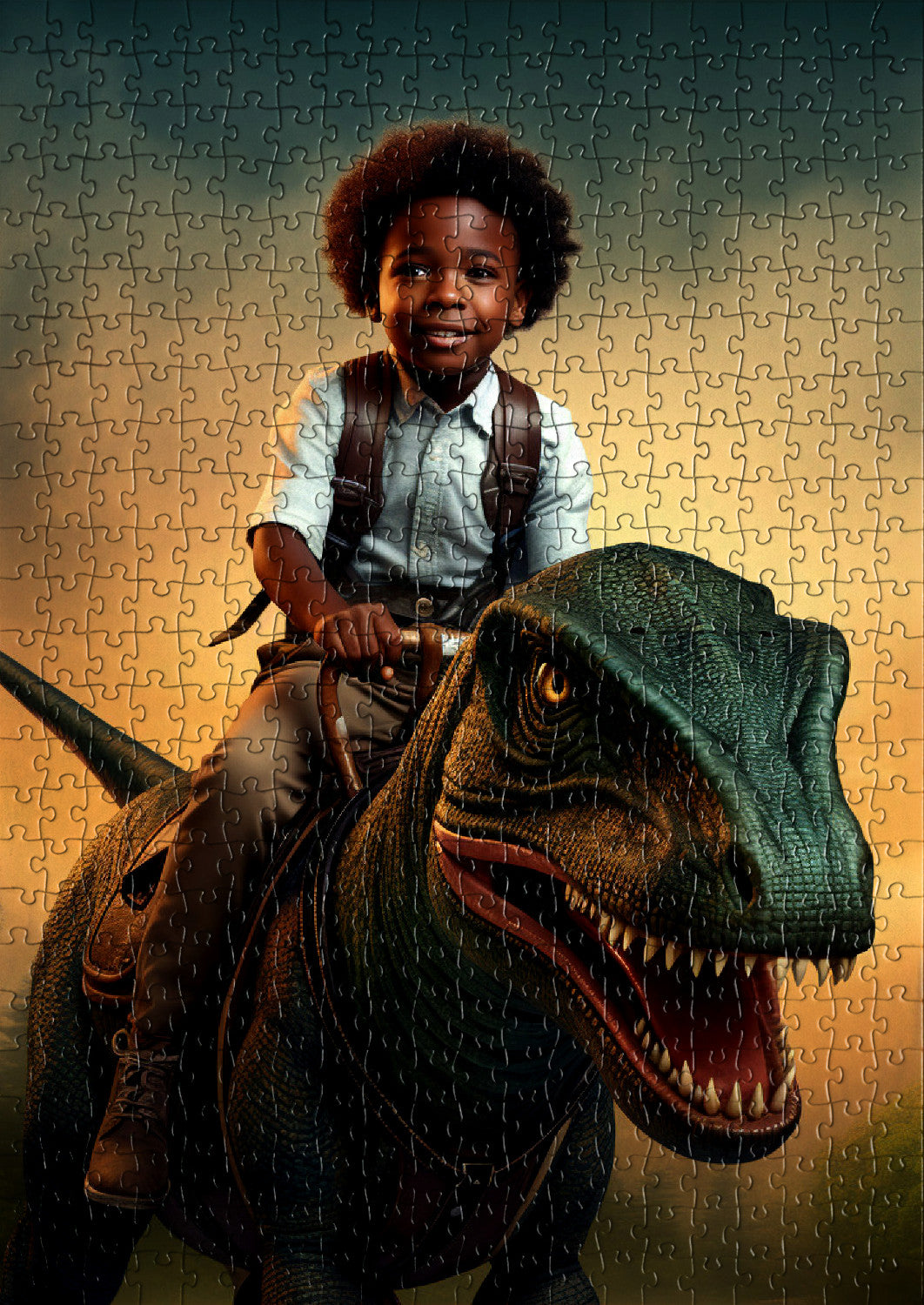
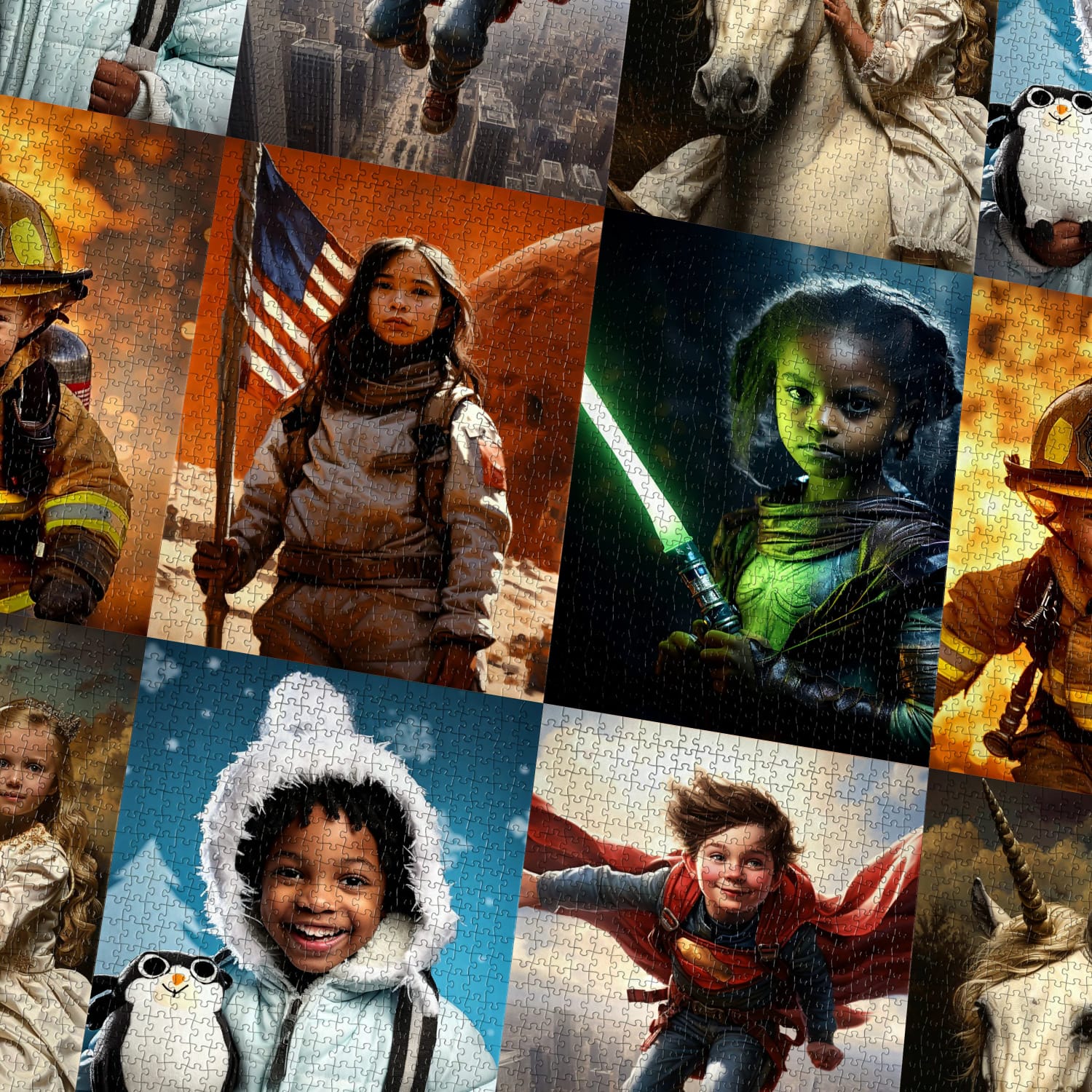
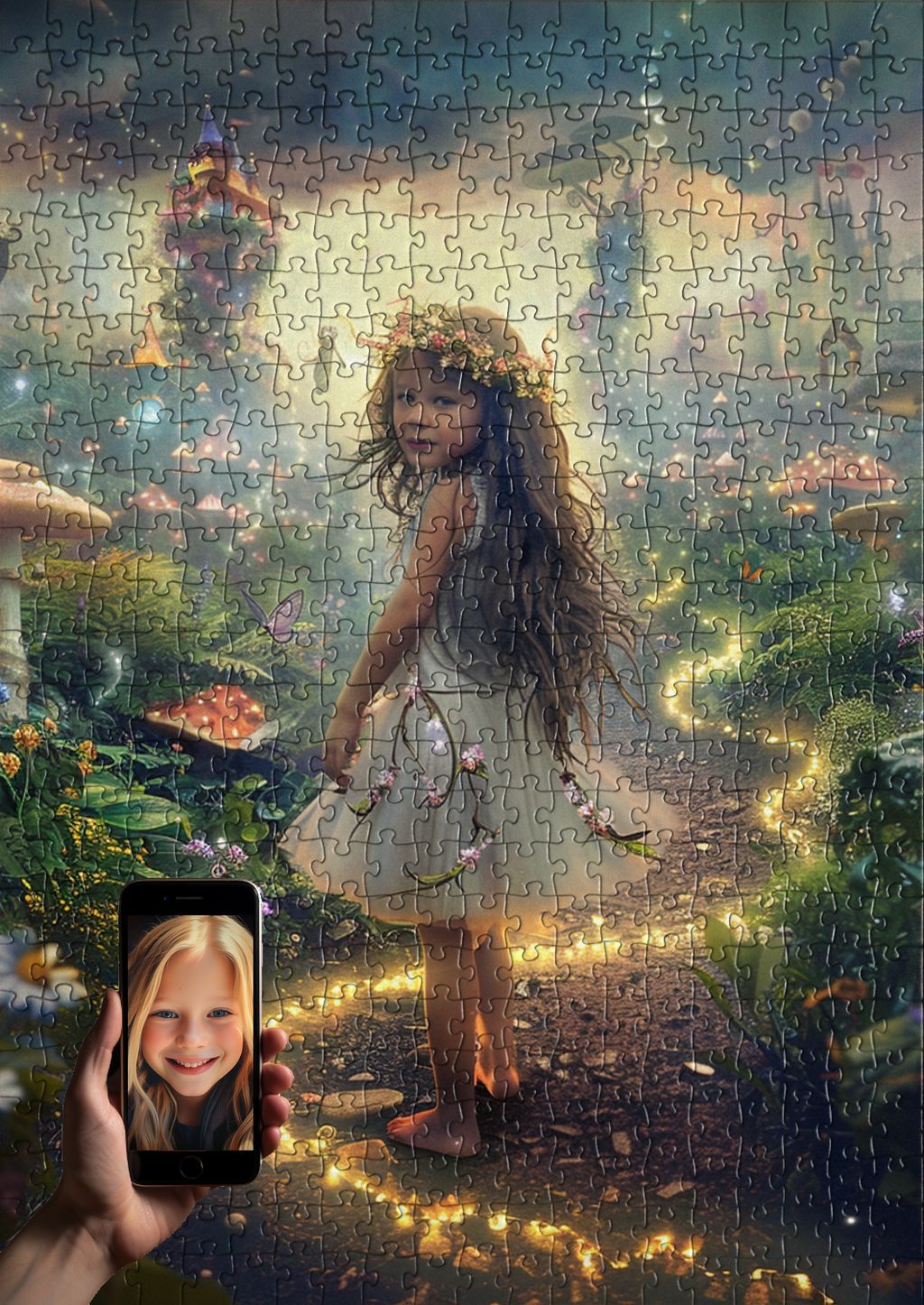
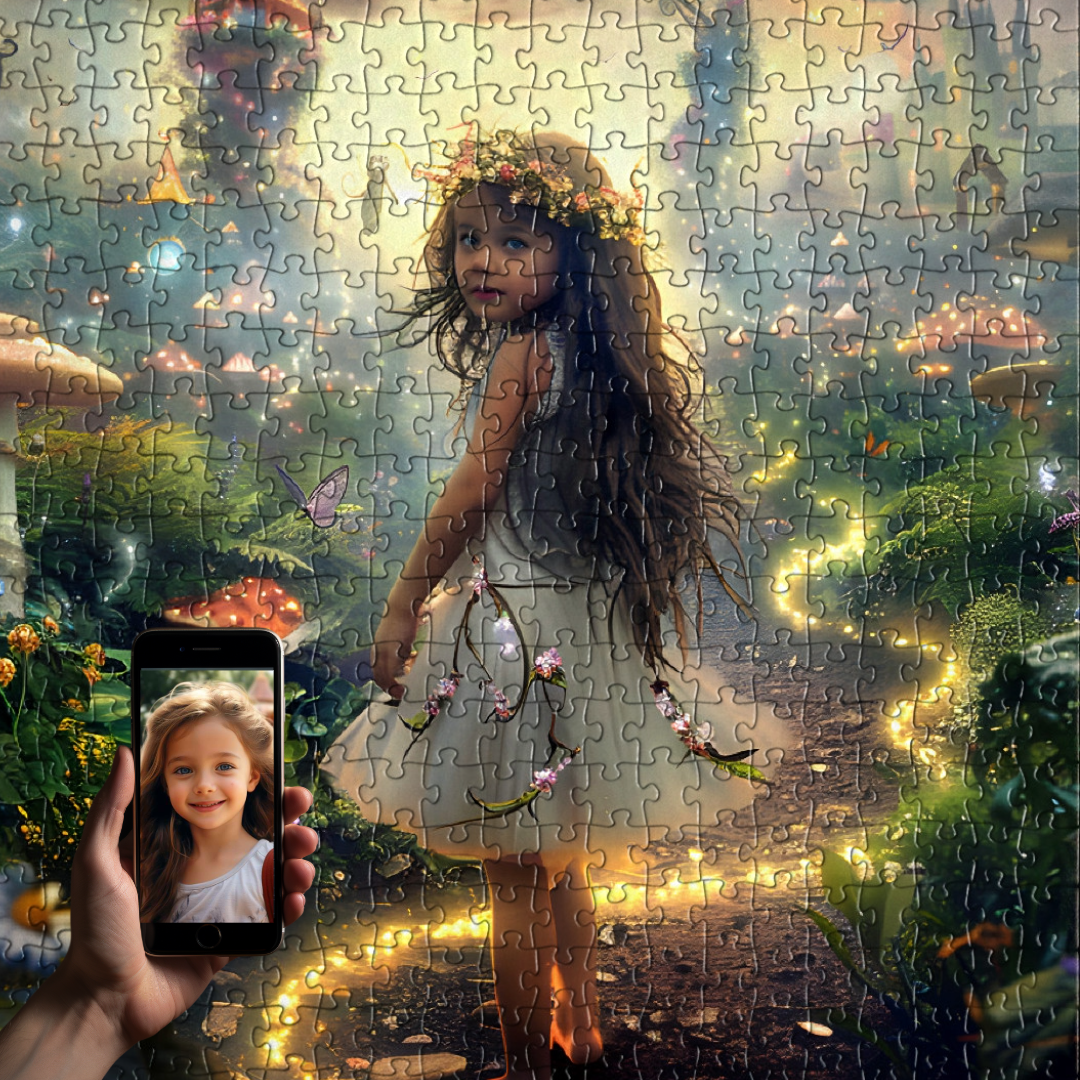
At SwappyPrint, this is the developmental logic behind what we make. A puzzle like First girl on the moon or Firefighter boy is not just a cute gift. When a child sees their own face inside the image, the reward circuitry we talked about earlier activates, attention deepens, and the work of fitting the pieces together becomes a quiet rehearsal of "I can do hard things, and the hero of this story is me." For families who want to start from an existing memory rather than a themed scene, our custom photo puzzle turns a favorite family photograph into the same kind of identity-anchoring object. The puzzle itself is just plywood and ink. What it carries is a small, repeatable encounter with the self.
Three Things You Can Do This Week
You do not need a degree in developmental psychology to support any of this. The science points to a few simple practices that any parent can fold into ordinary days.
1. Mirror Play, Especially Under Age 3
For toddlers, unhurried time in front of a mirror is genuine developmental work. You do not need to teach anything. Just be present.
- Sit beside your child at a low mirror and name what you both see: "There's your nose. There's mine."
- Make faces together: happy, sad, surprised. This links facial expressions to feelings, which supports emotional literacy.
- Resist the urge to fill the silence. Toddlers need long pauses to process.
2. Narrated Photo Time
Once a week, sit with your child and look through photos together, but tell the stories instead of just scrolling. Use the elaborative style Fivush's research highlights.
- Ask open questions: "What do you remember about that day?"
- Add sensory and emotional detail: "The sand was so hot we had to run to the water. You were brave."
- Connect it forward: "Next summer, we could go back. What would you want to do?"
This single habit, done regularly, has been linked in research to richer autobiographical memory and a stronger sense of self.
3. Personalized Books and Puzzles, Used Slowly
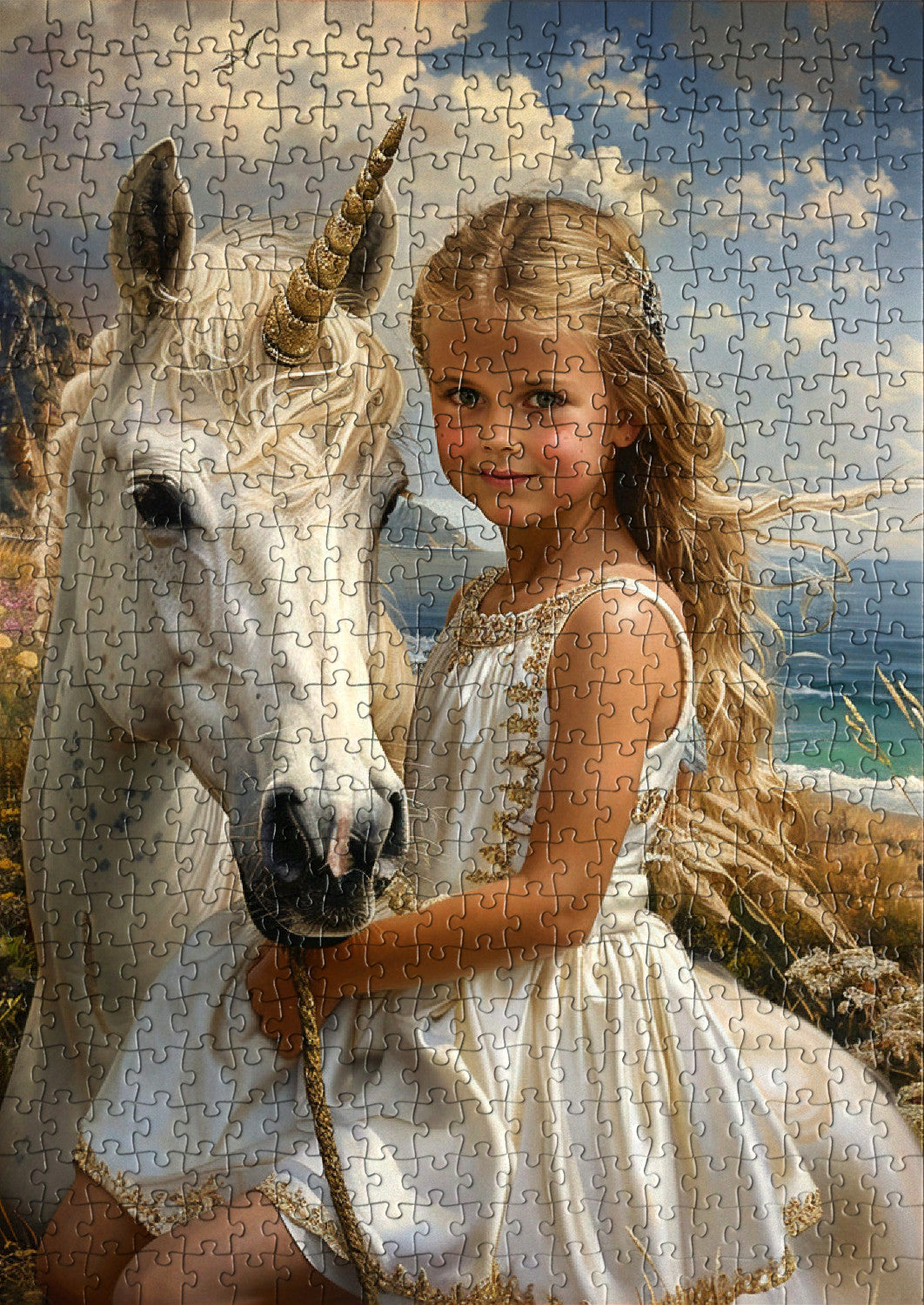
Personalized objects work best when they are used as anchors for conversation, not just as toys. When you assemble a puzzle that features your child as the hero, talk about the scene. What is the character doing? How does she feel? What did she do right before this picture? You are scaffolding narrative identity in real time. A scene like Beautiful young princess in a royal castle or Superhero kid with cape and mask gives a child a starting point for stories about courage, kindness, or leadership, themes they can carry into pretend play long after the puzzle is back in the box.
Frequently Asked Questions
At what age do children recognize themselves in a mirror?
Most children pass the classic mirror self-recognition test (the rouge test developed by Lewis and Brooks-Gunn) between 18 and 24 months. Some pass a little earlier, some a little later, and the timing does not predict later intelligence. What matters is that the milestone happens, usually accompanied around the same time by the emergence of self-conscious emotions like pride and embarrassment.
Is it healthy for my child to be so focused on themselves?
Yes, in the preschool years it is not only healthy but necessary. What looks like self-focus is really self-construction. Children who develop a secure, coherent sense of self in early childhood tend to have an easier time with empathy, friendships, and emotional regulation later on. The self comes first, and then the capacity to connect with others grows out of it.
Will personalized toys make my child vain or self-centered?
There is no research suggesting that personalized objects in early childhood produce vanity. The reward children get from seeing their own image is developmental, not egotistical. As children grow into the school years and their sense of self stabilizes, that intense pull toward their own face naturally fades. The window when personalization carries the most developmental weight is roughly 2 to 7.
What if my child does not seem interested in photos or mirrors?
Children vary enormously in temperament. Some are riveted by their own image, others are more interested in objects, animals, or movement. Lack of interest in photos by itself is not a concern. If you have broader worries about your child's social development, eye contact, or response to their own name, a conversation with your pediatrician is the right next step, not a comparison with other children.
Are mirror neurons real, or is that a pop-science myth?
Mirror neurons are real and were first described in macaque monkeys by Rizzolatti's team in the early 1990s. Where the science gets careful is in claims about exactly what they do in humans. The brain clearly has networks that respond to both observed and performed actions, but the popular idea that mirror neurons "cause" empathy is an oversimplification. The honest summary: imitation and observational learning are deeply built into the human brain, and that is part of why watching themselves matters so much to young children.
The Bigger Picture
When your three-year-old asks you, for the fortieth time, to tell the story of the day she was born, or insists on the bedtime book where her name is on every page, or carries a small puzzle of herself around the house like a treasure, she is not being self-absorbed. She is doing the most important work of early childhood. She is figuring out who she is.
The objects we surround children with in these years become small, repeated invitations to that work. A photo on the wall says "you were here, you mattered." A puzzle with their face inside a story says "you can be the hero." A book that uses their name says "this world has a place for you." None of these objects do the developmental work on their own. The parent and the conversation do. But the right object, used with attention, makes the conversation easier to start and easier to return to.
If you are looking for a small, meaningful way to support the story your child is writing about themselves this year, a personalized puzzle is one quiet option among many. Whatever you choose, the most powerful tool is already in the room: you, paying attention, telling them who they are by the way you talk about who they have been.
Share and get 15% off!
Simply share this product on one of the following social networks and you will unlock 15% off!