
Walk into any toy aisle marketed as "educational" and you will see the same message repeated in bright primary colors: count to ten, learn your numbers, master the alphabet. The implicit promise is that early math begins with digits. Flashcards, counting songs, and number tracing have become the parental shorthand for "getting ready for school." It is reassuring because it feels measurable. Your child either knows the number seven or they do not.
The research, however, tells a more interesting story. Over the past two decades, developmental psychologists at institutions like the University of Chicago and Temple University have followed children from toddlerhood into elementary school, tracking which early cognitive abilities actually predict later mathematical achievement. The strongest predictor is not rote counting. It is not even early number sense. It is something far less obvious and far more powerful: spatial reasoning. The ability to picture a shape in the mind, rotate it, fit it inside another shape, and understand how parts assemble into a whole turns out to be the bedrock on which arithmetic, geometry, algebra, physics, and engineering are built.
This matters because spatial reasoning is not something children are simply born with in fixed quantities. It is trainable. And one of the most studied, most accessible, and most enjoyable ways to train it is also one of the oldest: the humble jigsaw puzzle. Susan Levine's landmark research at the University of Chicago found that children between the ages of 2 and 4 who played with puzzles regularly developed measurably stronger spatial transformation skills than peers who did not, and those skills then correlated with stronger performance in mathematics years later. The puzzle on the living room rug is not just a quiet afternoon activity. It is, quietly, a piece of cognitive infrastructure.
In this article, we want to take you behind the curtain. We will unpack the three specific "math muscles" that puzzles train, explain why the visual quality of a puzzle matters enormously for that training to actually work, and give you practical, teacher-tested strategies for sitting alongside your child in a way that supports their thinking without taking over. Consider this less of a sales pitch and more of a parent-teacher conference: a careful look at what is really happening when small hands turn small pieces.
Why Spatial Reasoning, Not Counting, Predicts STEM Success
For a long time, educators assumed that math was essentially a language of symbols, and that fluency with those symbols (numerals, operators, equations) was the goal. Spatial thinking was treated as a separate, almost artistic concern. That assumption has aged poorly. Modern cognitive science views mathematical thinking as deeply spatial at its core. When a child compares quantities, they often visualize them on an internal number line. When they learn fractions, they picture pies, bars, and regions. When they study geometry, they manipulate figures in their mind. When they later approach algebra, they imagine balance and transformation. Physics is spatial. Chemistry is spatial. Engineering is, by definition, spatial.
The Temple University Spatial Intelligence and Learning Center (SILC) has been particularly clear on this point. Children with stronger spatial skills in preschool consistently outperform their peers on standardized math assessments in elementary and middle school, even after controlling for general intelligence and vocabulary. The relationship is not subtle. Spatial reasoning explains a meaningful and unique slice of mathematical success that nothing else explains.
The encouraging news for parents is that this is not a fixed trait. Spatial skill responds to practice. Children who manipulate shapes, build with blocks, fold paper, draw maps, and yes, complete puzzles, build the neural scaffolding for later abstract reasoning. Puzzles are particularly useful because they require all three of the cognitive moves that show up again and again in advanced STEM thinking. Let us look at each in turn.
The Three Hidden Math Muscles a Puzzle Trains
When a four-year-old picks up a piece, studies it, turns it around in her fingers, and tries it in two different spots before clicking it home, she is not just "playing." She is running a sophisticated cognitive routine. Three distinct skills are firing in sequence, and each of them maps directly onto a discipline she will encounter in school later.
1. Mental Rotation: The Geometry of the Mind's Eye
Mental rotation is the act of picturing an object and then flipping, turning, or tilting it inside your head before you move it in the real world. It is the cognitive sleight of hand that lets an architect imagine a building from a new angle, a surgeon picture an organ from the other side, or a chemist visualize a molecule. It is also exactly what your child does when she looks at a puzzle piece, glances at the empty slot, and thinks "if I turn this a quarter to the left, it will fit."
This skill is foundational for geometry. Children who can mentally rotate shapes have a much easier time understanding congruence, symmetry, and transformations later on. They also tend to do better with measurement, because measurement requires picturing units fitting inside larger shapes. The good news: mental rotation is one of the most trainable spatial skills we know of. Every puzzle session is a workout for it.
2. Pattern Logic: Decoding a Visual System
The second muscle is pattern logic, the ability to recognize that color, texture, line, and shape are not random but obey rules. A gradient of blue darkens in one direction. A brushstroke implies a particular curve continues. A repeating texture suggests "this piece belongs near the other pieces that look like fur, not sky."
This is the same cognitive move that underlies algebraic thinking. Algebra is, fundamentally, the study of patterns and the rules that govern them. Long before a child meets the letter "x," she can be developing the intuition that systems behave predictably and that you can use partial information to make confident guesses about the rest. When a child looks at a puzzle and reasons "this piece has a bit of crown on it, so it must go near the top of the princess's head," she is doing inductive reasoning. She is reading evidence and forming hypotheses.
3. Part-to-Whole Thinking: The Executive Function of Systems
The third muscle is the most quietly important: part-to-whole thinking. This is the executive function skill of holding the big picture in mind while working on small components, and understanding that those components are not random fragments but constituents of a unified system.
Part-to-whole thinking is everywhere in STEM. It is what allows a student to break a word problem into manageable steps without losing sight of the question. It is what makes a programmer organize code into functions. It is what lets a scientist see how one experiment fits into a larger theory. For a young child, the puzzle is one of the first concrete experiences of this idea. The piece in her hand looks like nothing on its own. It is a strange shape with an odd color smear. But she knows it belongs to a girl on a unicorn, and that knowledge, that mental scaffolding of the whole, is what tells her where to look. This is metacognition in miniature.
Why Illustrative Clarity Matters: The Problem of Visual Noise
Here is where many parents are quietly let down by the market. If puzzles train these muscles by giving children clean visual data to reason about, then the quality of the image matters enormously. A puzzle is a learning tool only as good as the picture printed on it. And not all pictures are created equal.
Think for a moment about what a child's brain needs in order to practice mental rotation and pattern logic. It needs clear geometric anchors: well-defined edges, distinct color regions, recognizable shapes, and consistent lighting. These are the visual landmarks the brain uses to form predictions. "This piece is mostly red with a curved black line, so it belongs to the dragon's wing." That kind of reasoning is only possible when the red is unambiguously red and the line is unambiguously a line.
Now contrast that with what we call visual noise. Visual noise is what you get from a blurry photograph, a poorly lit snapshot, a low-resolution scan, or an image with cluttered backgrounds and ambiguous color zones. When a child is confronted with a piece that could be "shadow on a couch" or "shadow on a wall" or "shadow on a sleeve," there is no clear geometric anchor. The brain cannot form a confident hypothesis. The child is not exercising spatial reasoning; she is guessing in the dark. The result, predictably, is frustration. She gives up not because puzzles are too hard, but because this particular puzzle has nothing useful to teach her brain.
The SwappyPrint Approach
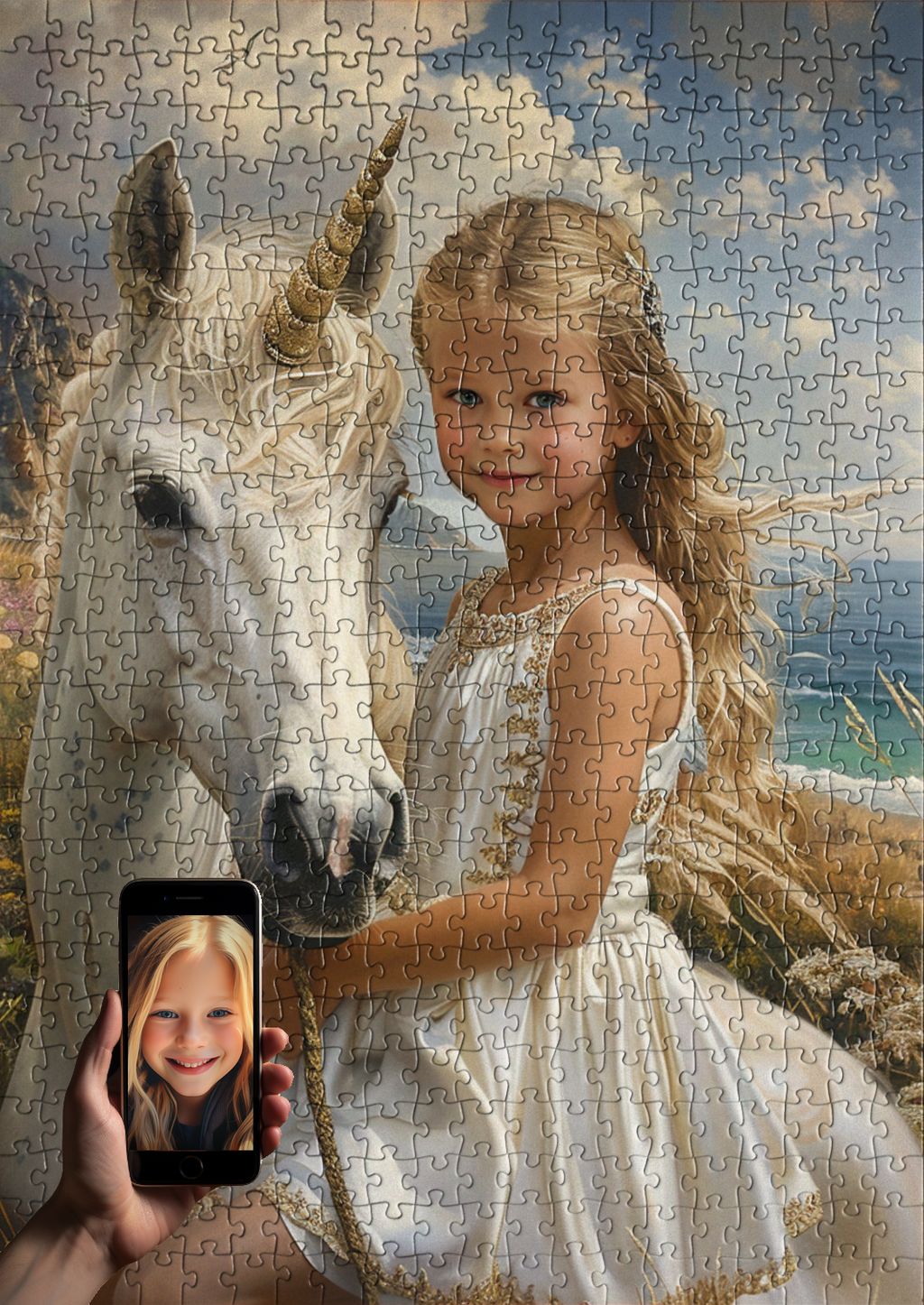
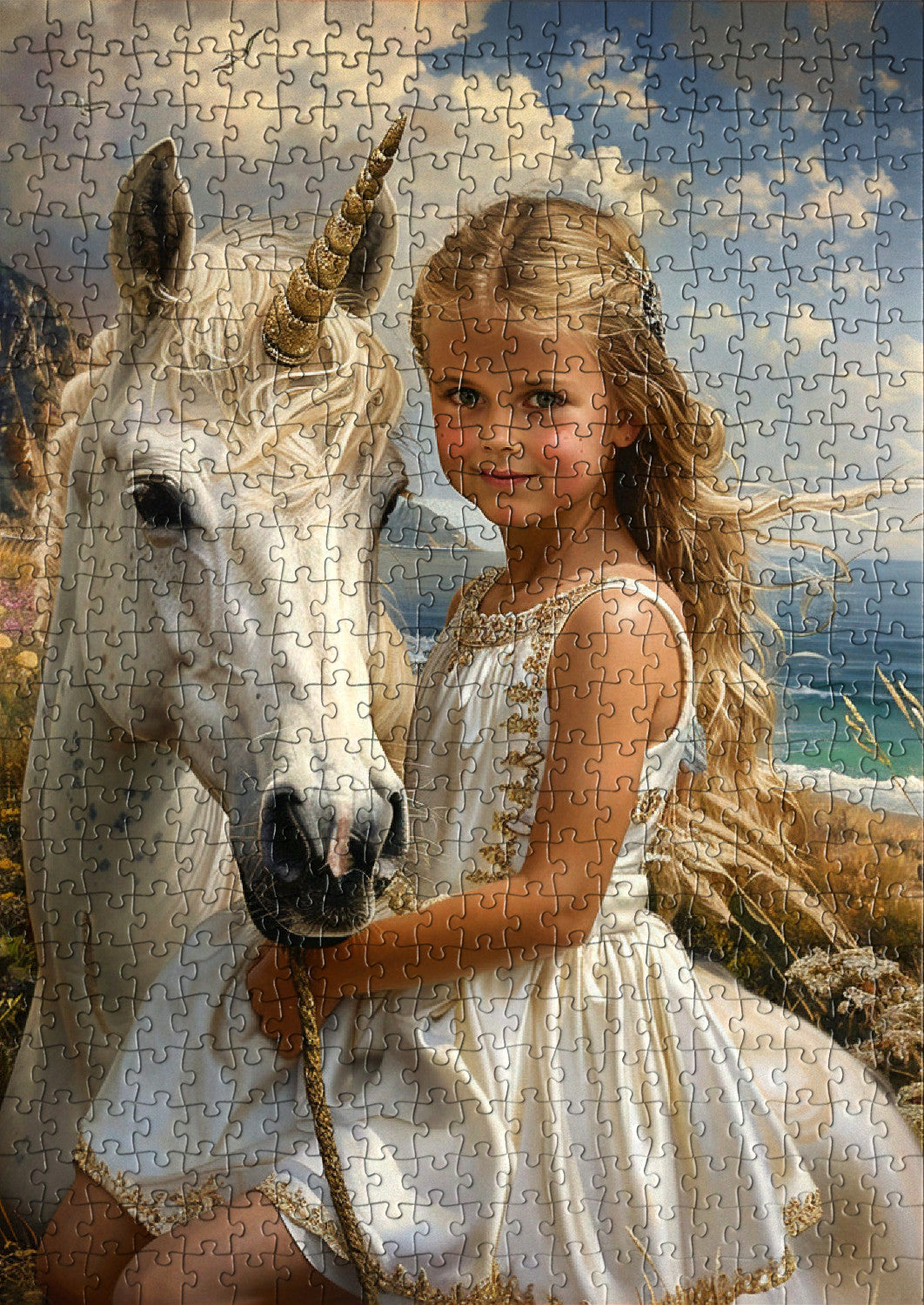
This is why we put so much weight on illustrative clarity. Our personalized puzzles are built from high-fidelity illustrations: clean line work, deliberate color palettes, distinct character silhouettes, and considered lighting that creates strong, readable shapes. A piece from the Girl with Unicorn 2 Puzzle, for example, gives a child unmistakable cues: the white of the unicorn's coat, the curve of the mane, the texture of grass, the warm tone of a dress. Each region is its own visual neighborhood. Each piece carries enough information to anchor a hypothesis.
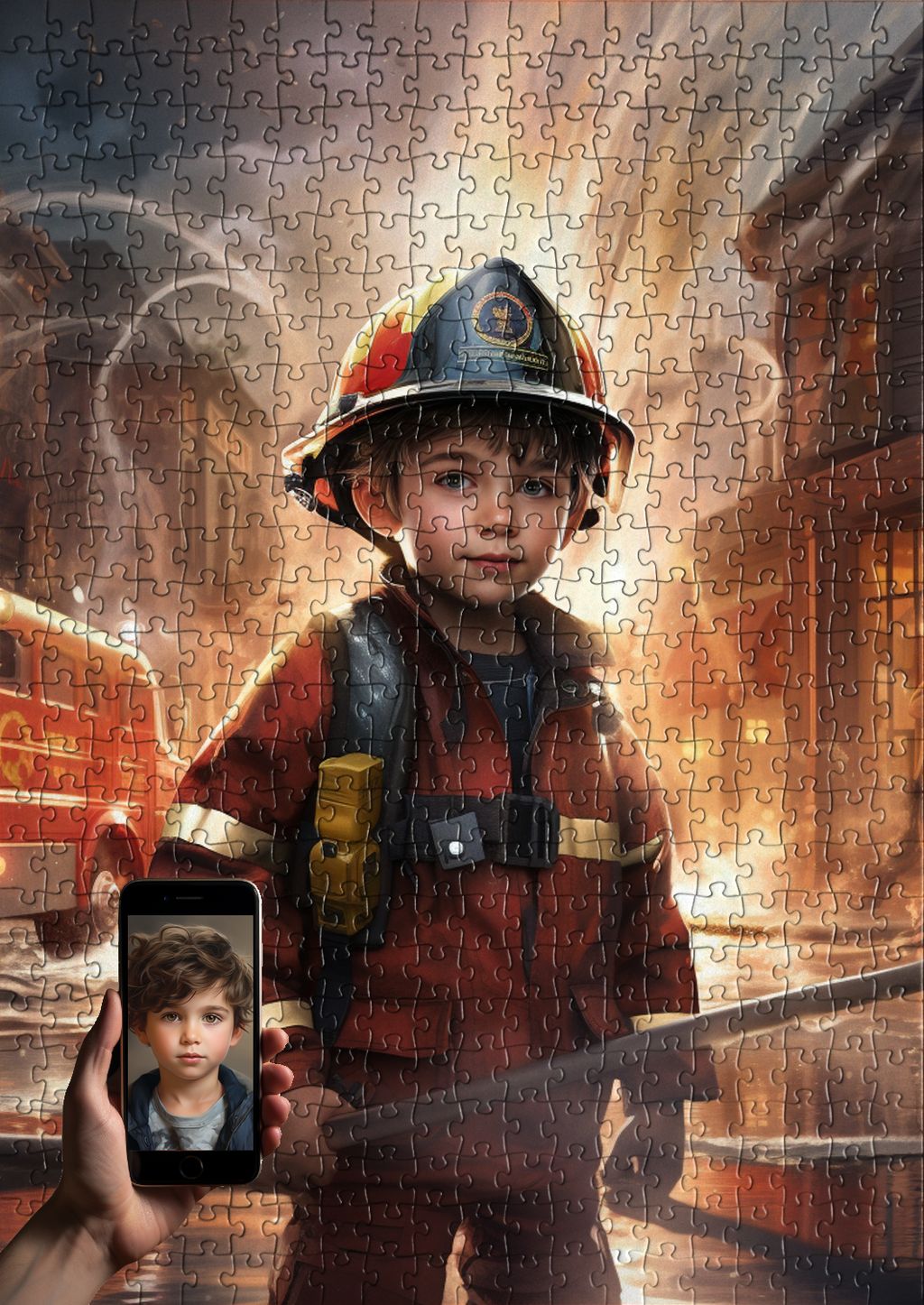
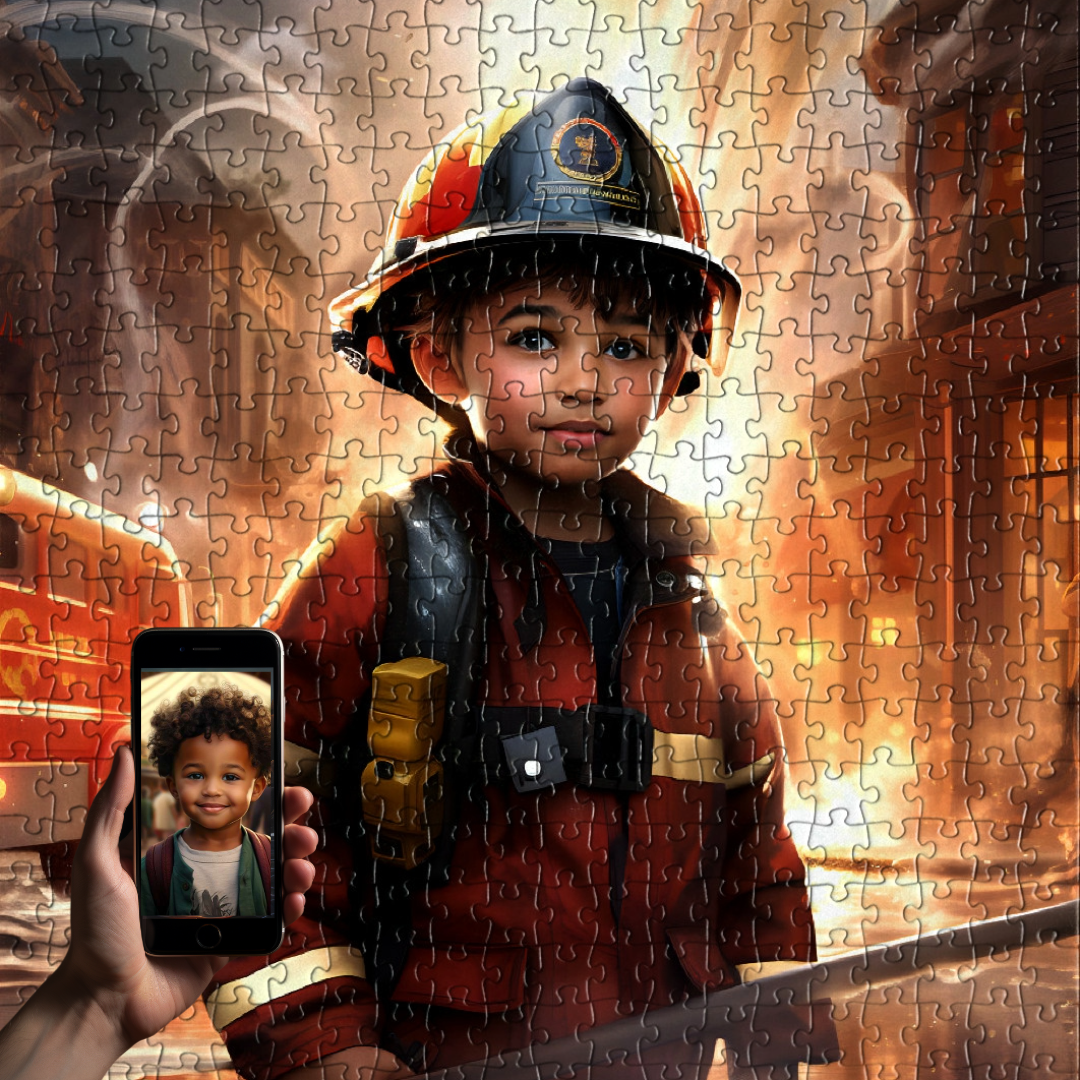
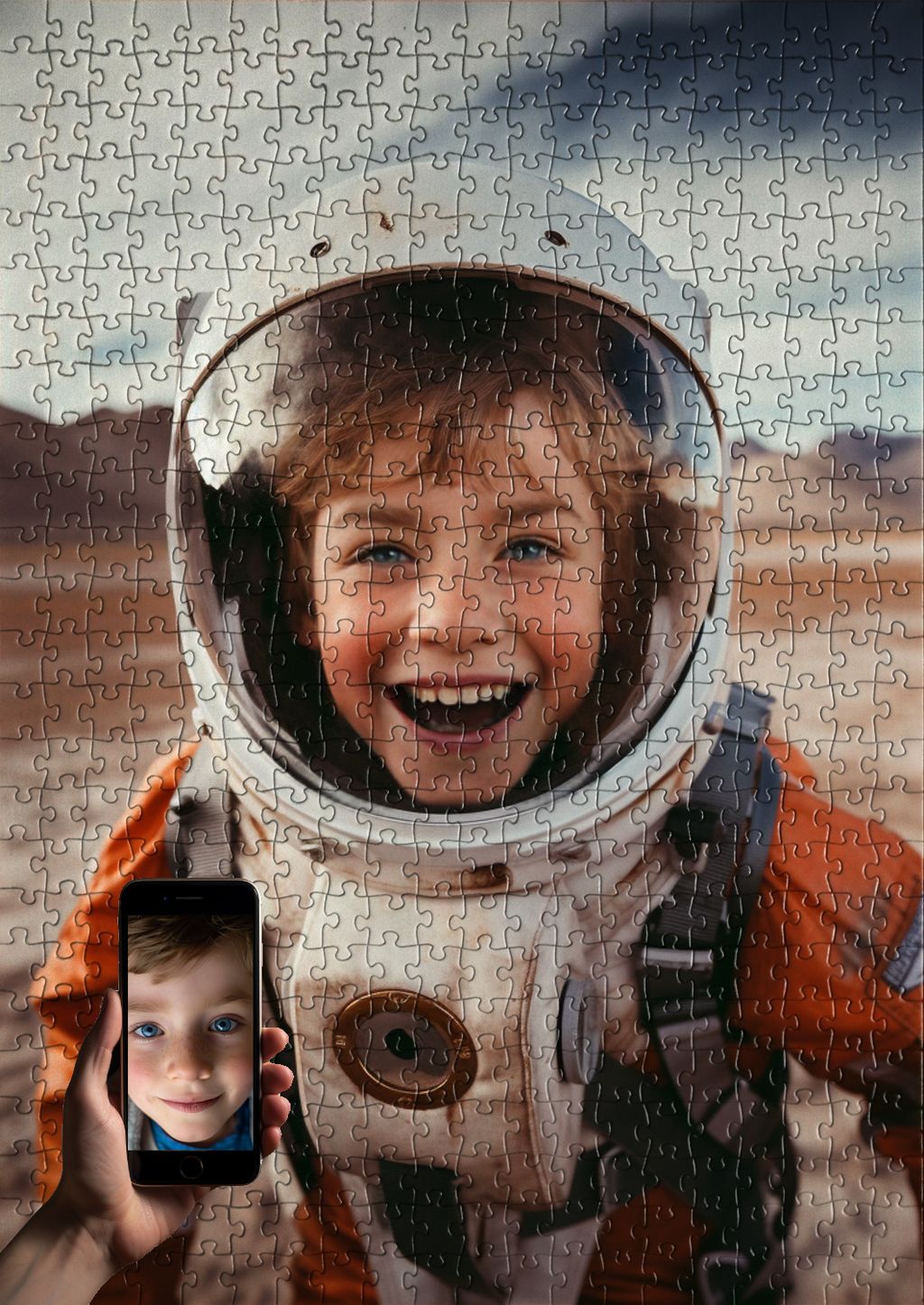
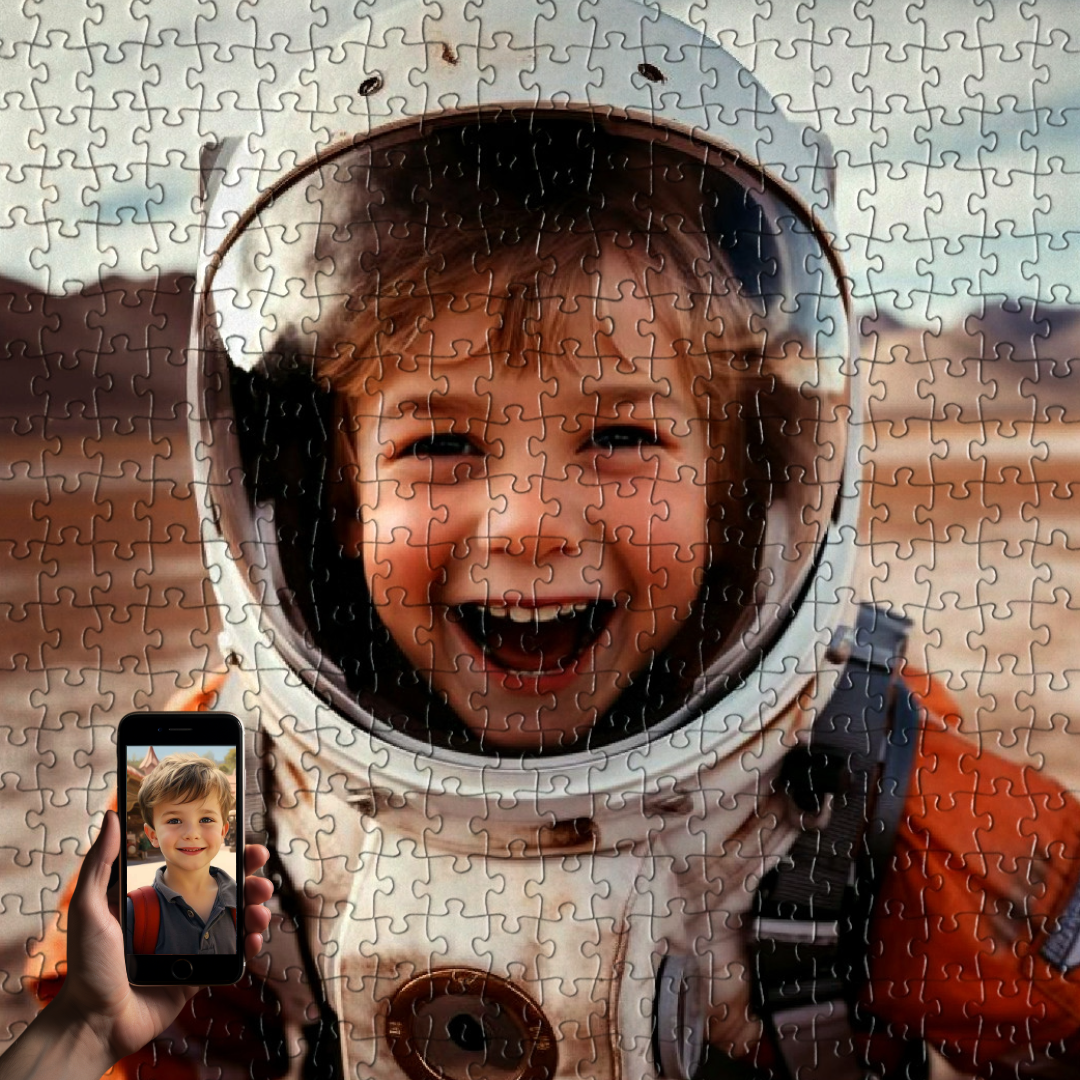
The same logic applies across our catalogue. Whether your child is piecing together the Astronaut Kid floating among stars or the bold reds and yellows of the Firefighter Girl Puzzle, the illustrative style is deliberate. We are not just decorating cardboard. We are giving the brain something worth reasoning about.
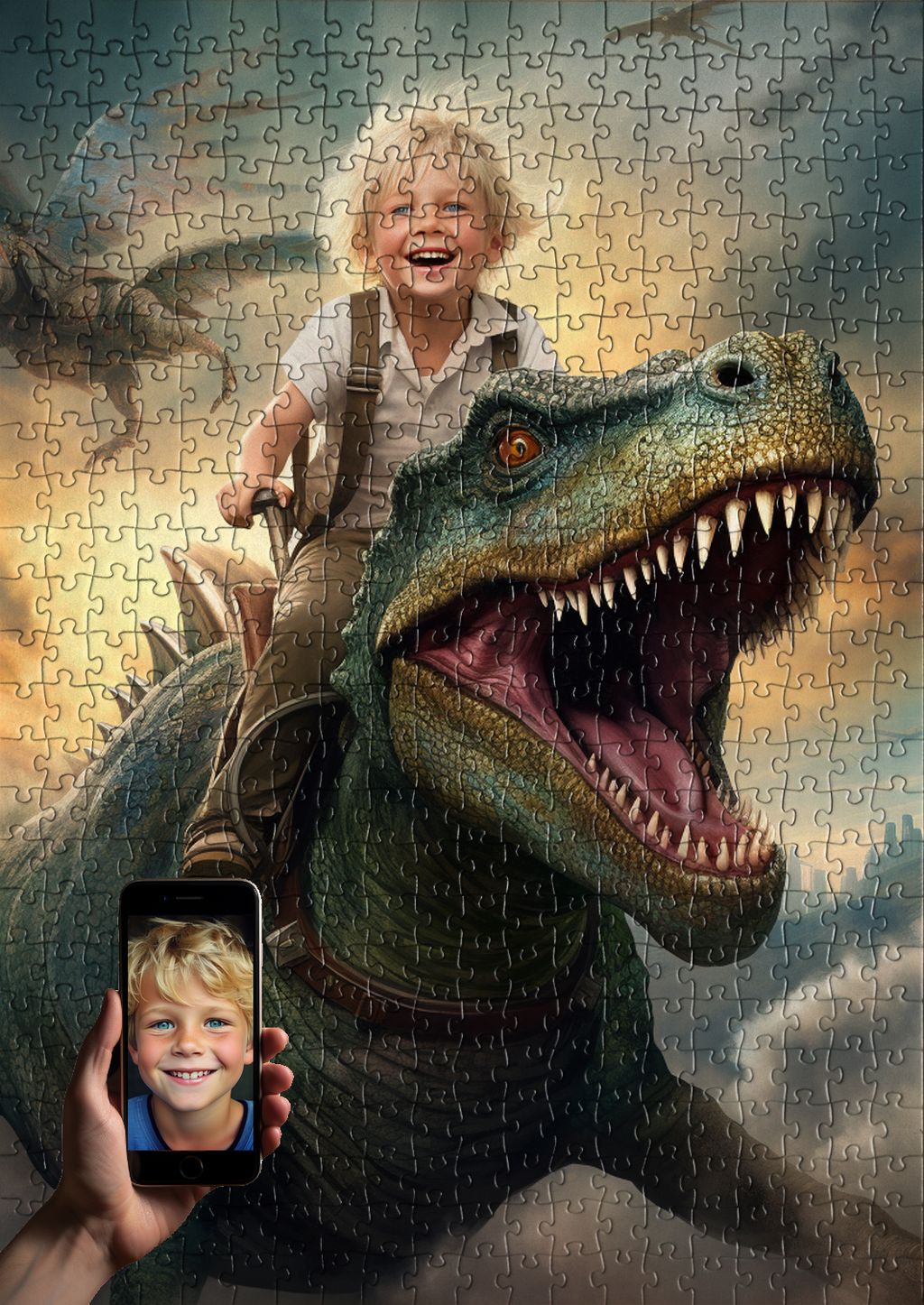
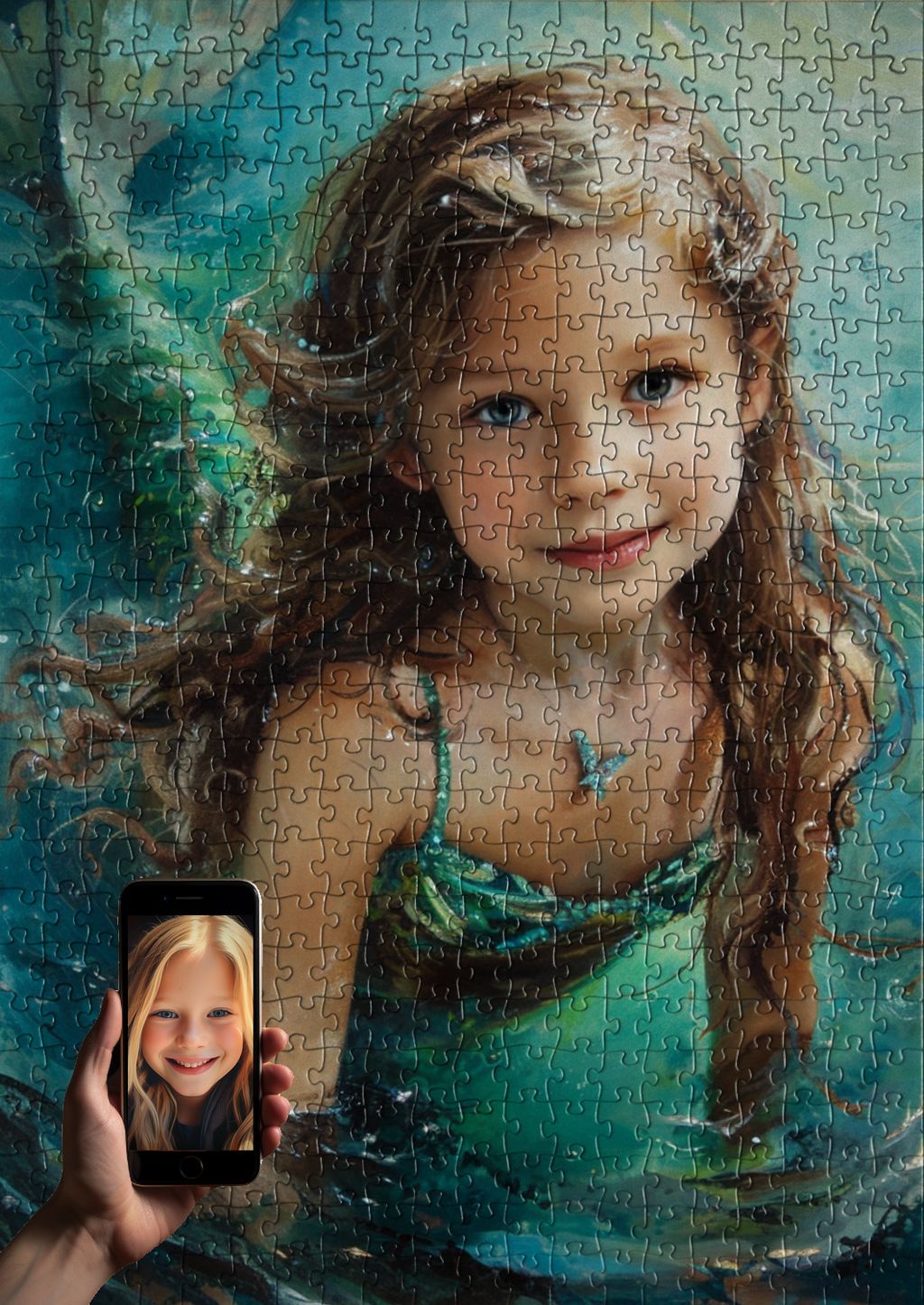
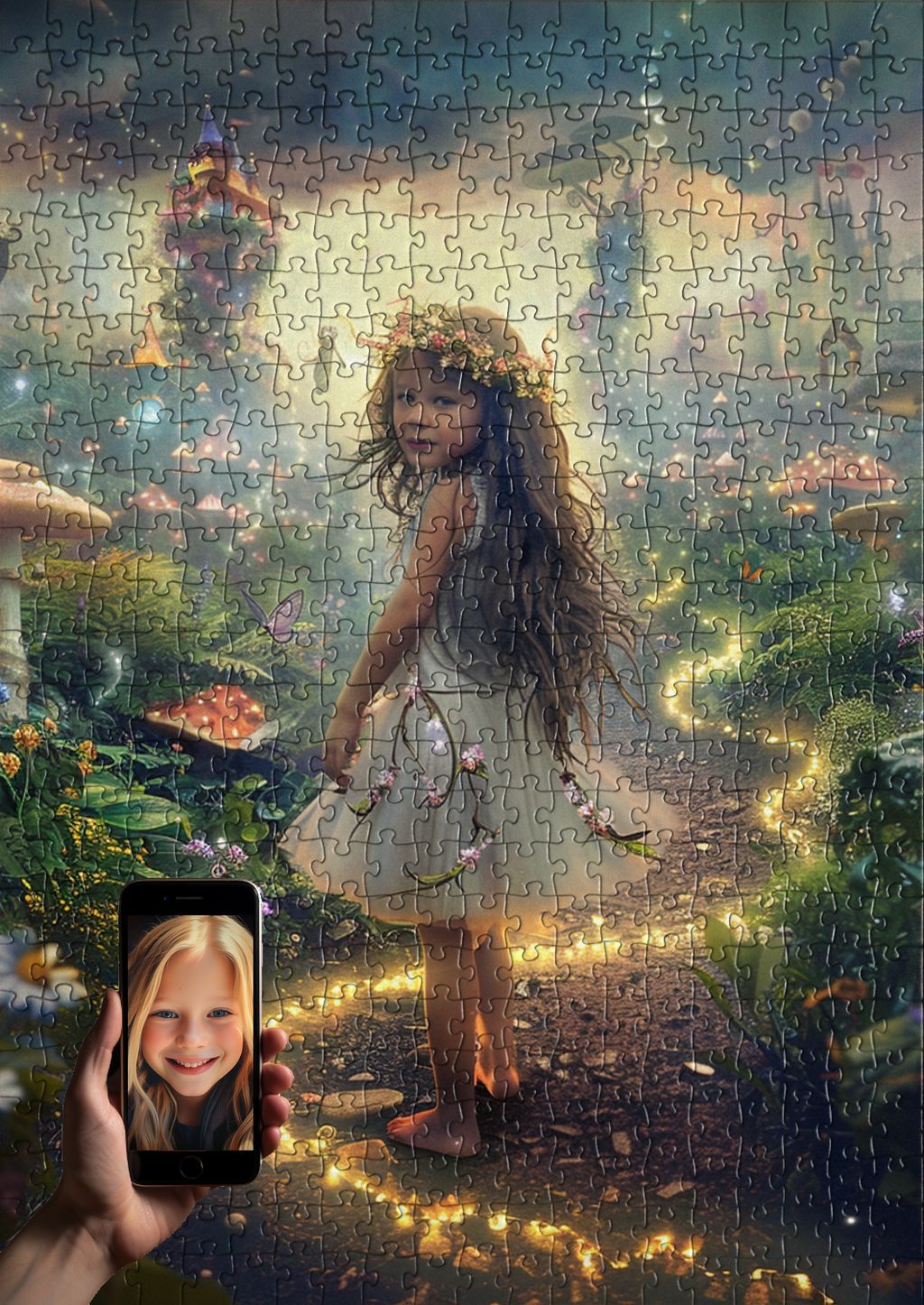
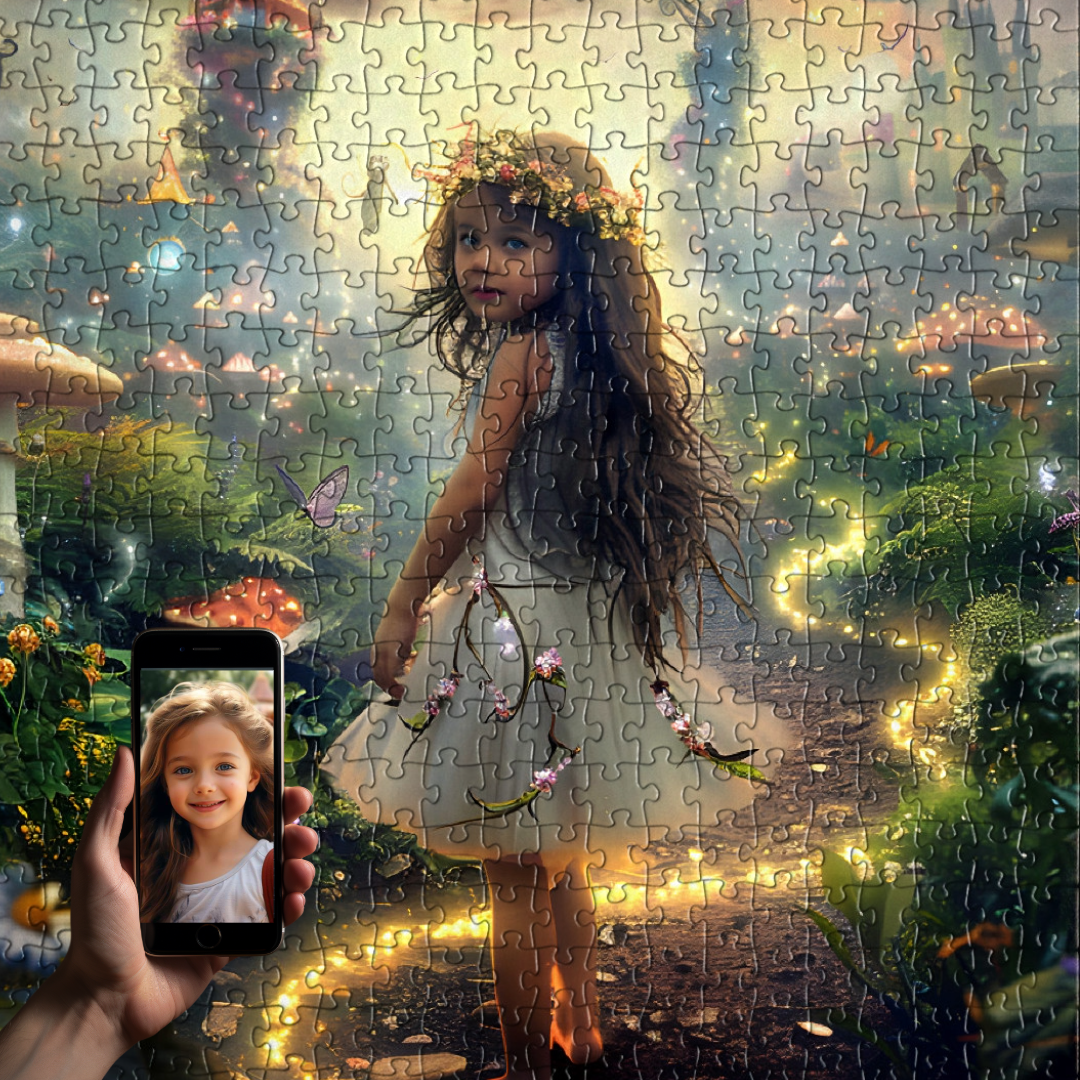
And there is a second benefit to high-fidelity illustration that is worth naming. When a child sees herself, her face, her likeness, integrated into a beautifully rendered scene, the motivation to persist is far higher. Persistence, what psychologists call task engagement, is the prerequisite for any cognitive growth. A child who quits after three pieces learns nothing. A child who stays at the table for thirty minutes because she is excited to "finish her own picture" is putting in the repetitions that actually rewire the brain.
Scaffolding: How to Help Without Doing the Work
One of the most important contributions of the Russian psychologist Lev Vygotsky was the idea of the Zone of Proximal Development, often abbreviated as ZPD. Vygotsky argued that the most powerful learning happens in the narrow band between "things the child can do alone" and "things the child cannot do at all." This is the zone where, with a small amount of well-placed support from a more skilled partner, a child can accomplish something just beyond her current independent ability. With repeated practice in this zone, what was once supported eventually becomes independent.
The practical art of providing that support is called scaffolding. Done well, scaffolding looks almost invisible. Done poorly, it looks like an adult finishing the puzzle while the child watches. Here are the principles we recommend.
Start with the frame, then the islands
If your child is new to a puzzle, gently suggest finding the edge pieces first. The frame creates a literal boundary for the problem space, which dramatically reduces cognitive load. Once the edges are in place, encourage her to find "islands" of pieces that clearly belong together, like all the pieces with crown on them, or all the pieces with grass. This teaches the part-to-whole habit in its most concrete form.
Ask questions instead of giving answers
When she is stuck, resist the urge to point at the correct spot. Instead, ask:
- "What color is on this piece? Where do you see that color in the picture?"
- "This piece has a straight edge. Where do straight edges go?"
- "Do you think this piece is part of the sky or part of the ground?"
- "What would happen if you turned it the other way?"
Each of these questions hands the cognitive work back to her while narrowing the search. You are not solving the puzzle. You are teaching her the questions a puzzler asks herself.
Name the strategy out loud
When she succeeds, briefly narrate what she did: "You noticed it had a bit of the unicorn's horn, so you knew where to look. That was smart." This kind of explicit naming, what teachers call metacognitive talk, helps her become aware of her own thinking strategies so she can deploy them deliberately next time.
Match the puzzle to the zone
A puzzle that is too easy bores. A puzzle that is too hard frustrates. The sweet spot is one where your child can mostly succeed but still has to genuinely think. As a rough guide:
- Ages 2 to 3: 6 to 24 large pieces with clear, simple imagery, such as our 3 Y/O Girl with Horse Puzzle designed specifically for this stage.
- Ages 3 to 4: 24 to 48 pieces with more visual complexity.
- Ages 4 to 5: 48 to 100 pieces, often with finer detail and richer scenes.
- Ages 5 to 6: 100+ pieces, where the child can begin to enjoy genuinely challenging compositions.
If your child completes a puzzle easily three times in a row, it is time to size up. Growth lives just beyond the comfortable.
Step back as soon as you can
The goal of scaffolding is to become unnecessary. The moment your child shows she has internalized a strategy, fade your support. Sit nearby, work on your own piece, hum along to music. Your presence still matters, but the cognitive lifting belongs to her. Independence is the prize.
Building a Spatial Reasoning Habit at Home
Spatial skill grows with frequency, not intensity. A child who completes one puzzle a week over a year will outpace a child who does a marathon puzzle session once a quarter. Here are some easy ways to weave the habit into family life.
- Keep a puzzle in rotation. Have one accessible at all times, on a tray or low table, where your child can return to it across several days.
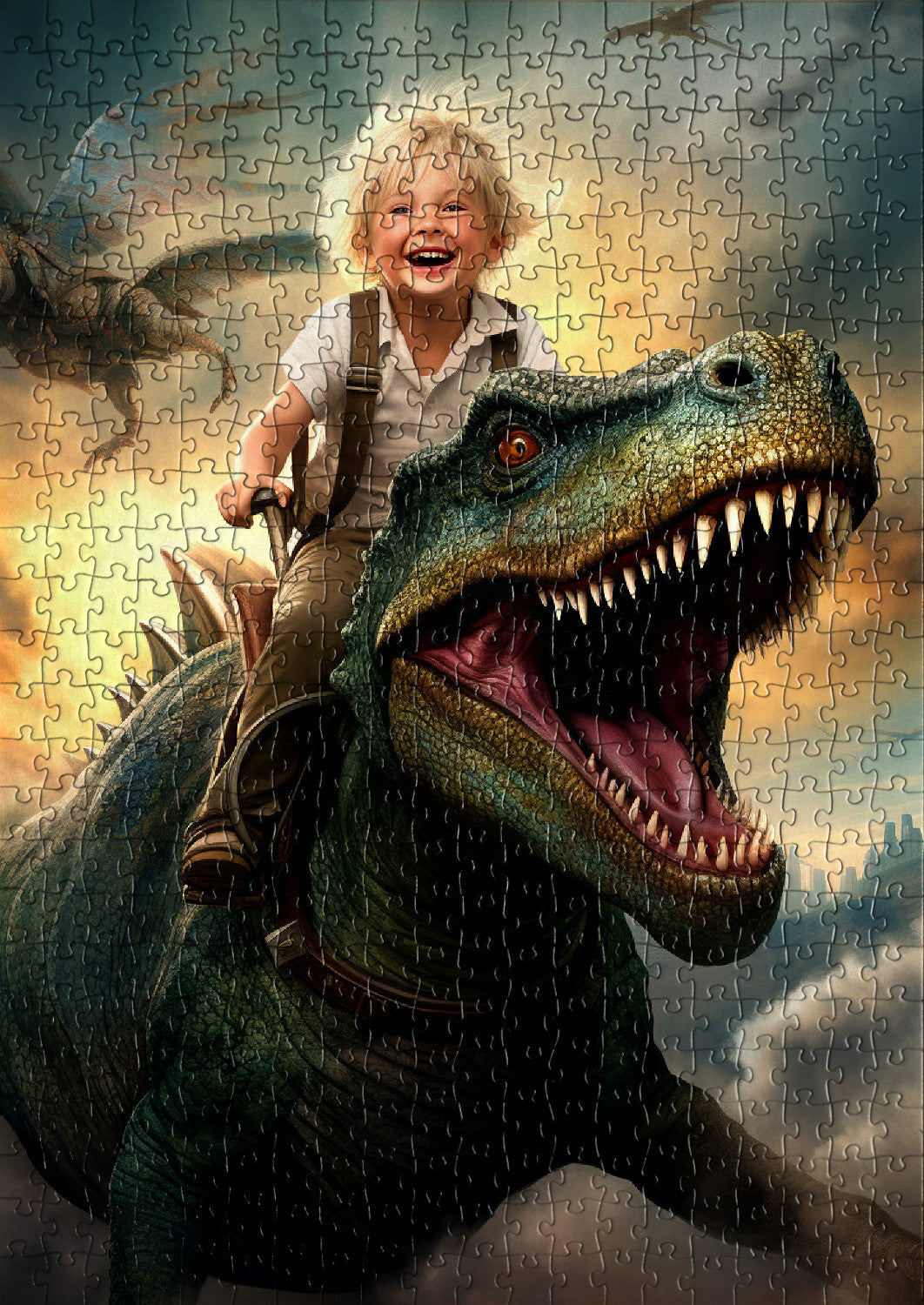
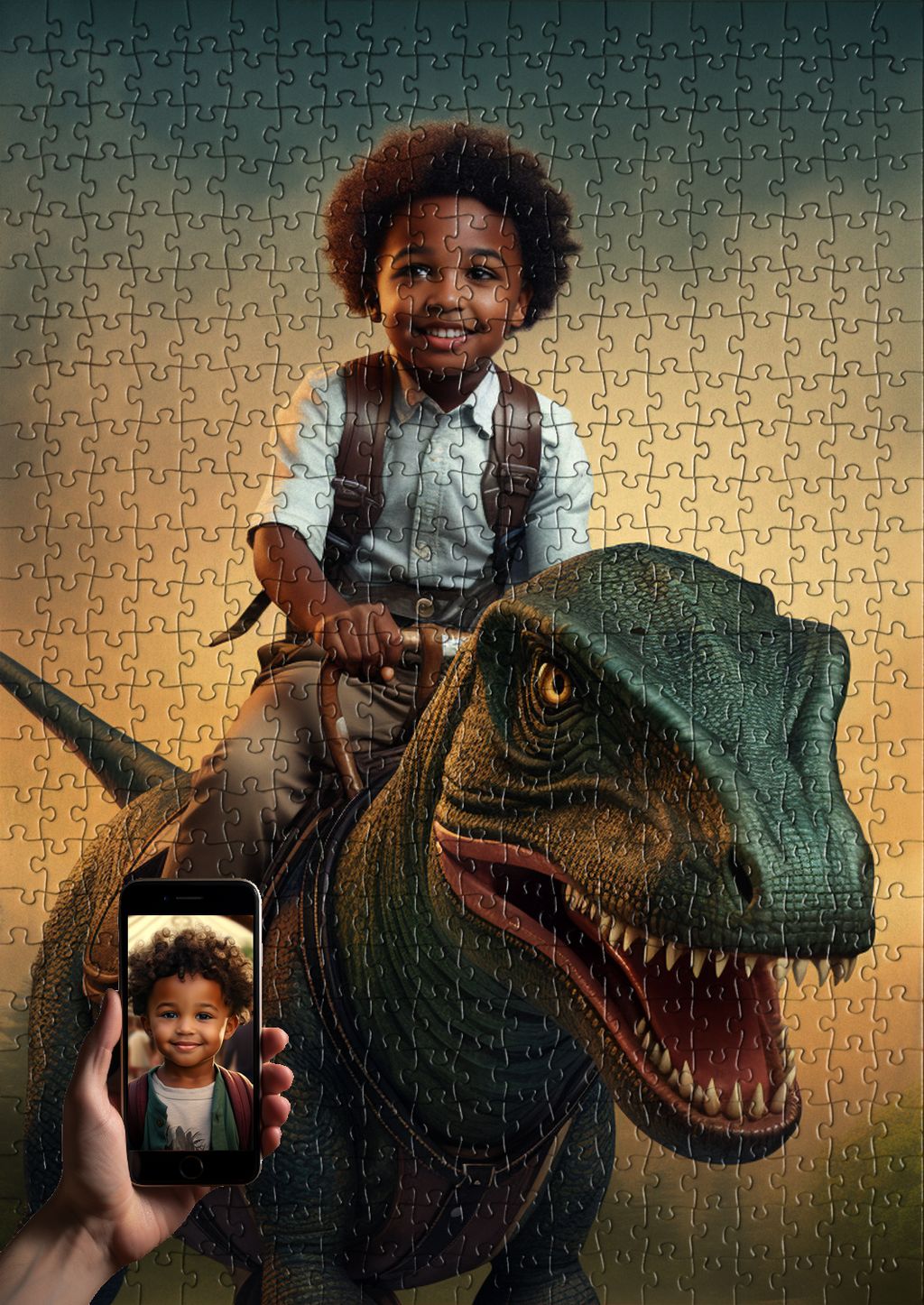
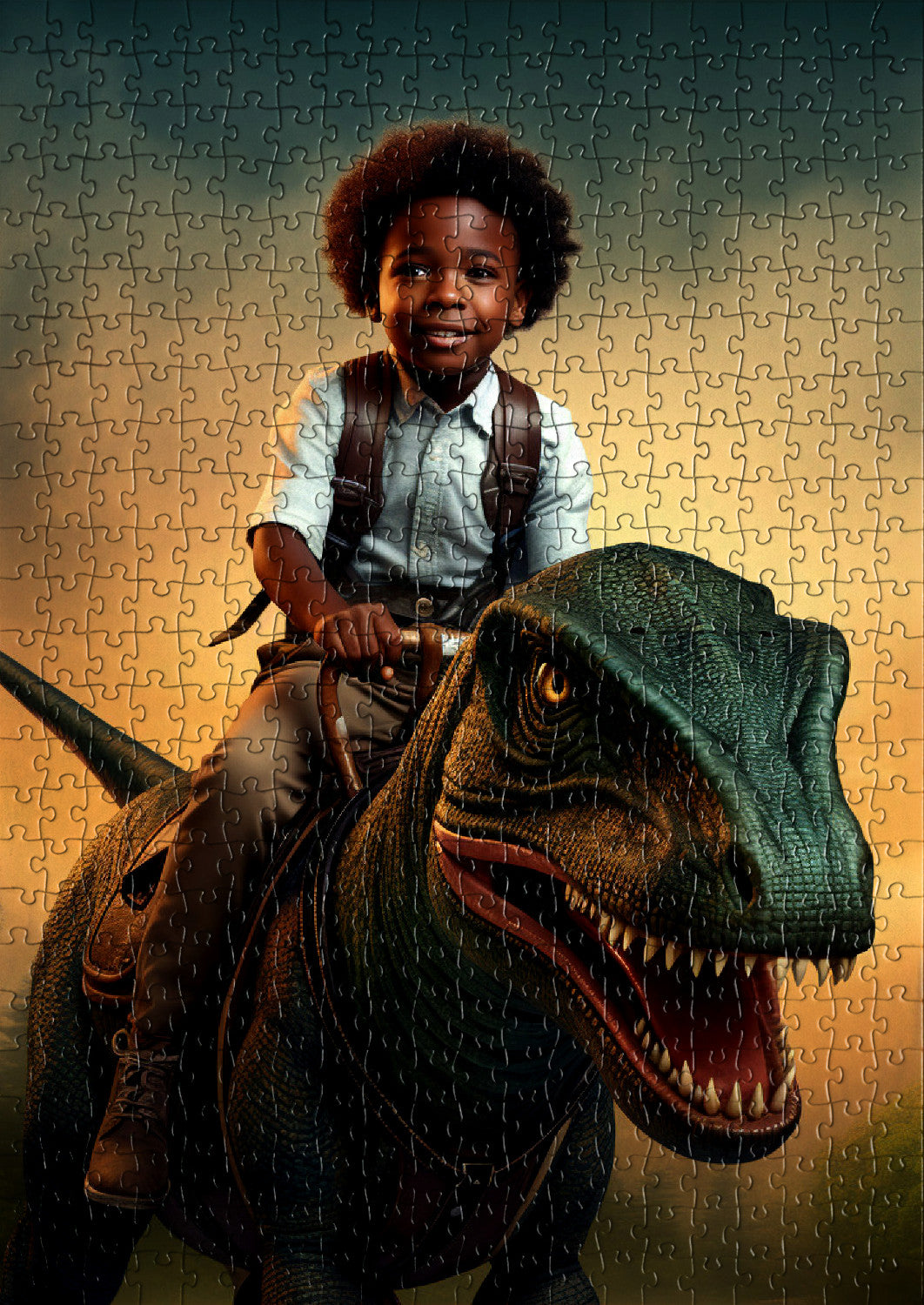
- Rotate themes with interests. A child who currently loves dinosaurs will sit longer with a Kid Riding Dinosaur puzzle than with something neutral. Motivation amplifies practice.
- Pair with vocabulary. Use spatial words liberally: above, below, beside, between, rotate, edge, corner, curve, inside, outside. Research shows that children whose parents use rich spatial language develop stronger spatial reasoning.
- Mix in other spatial play. Building blocks, paper folding, drawing maps of the living room, and tangrams all reinforce the same brain regions.
- Celebrate persistence, not speed. "You kept trying even when it was tricky" is a more useful compliment than "You're so fast."
Frequently Asked Questions
At what age should my child start doing puzzles?
Most children can engage meaningfully with chunky, large-piece puzzles from around 18 months, and the developmental window where puzzles seem to provide the strongest spatial reasoning benefits runs from roughly age 2 to age 4. That said, puzzles continue to provide cognitive benefits well into adolescence and adulthood. The right starting point depends less on age and more on your child's current ability to handle and orient pieces.
How long should a puzzle session last?
For children aged 3 to 6, sessions of 15 to 30 minutes are typically ideal. Younger children may engage for shorter bursts, perhaps 5 to 10 minutes at a time. The key is to stop while interest is still high, leaving the child eager to return rather than burned out. Puzzles can absolutely be returned to across multiple sittings; this is itself a useful exercise in working memory.
Are digital puzzles on tablets just as good?
Not quite. Digital puzzles can be entertaining and they do exercise pattern recognition, but they lack the tactile, three-dimensional manipulation that physical puzzles provide. The act of physically turning a piece in your hand recruits both visual and motor systems and seems to be especially powerful for building mental rotation skills. Screen-free puzzles also avoid the attention-fragmenting effects of digital interfaces. We recommend physical puzzles as the foundation, with digital as an occasional supplement at most.
What if my child gets frustrated and gives up quickly?
Frustration is usually a signal that the puzzle is slightly outside the Zone of Proximal Development, either too hard or too unclear. First, check the difficulty level and consider stepping down to fewer pieces. Second, check the image quality; remember that visual noise causes frustration that has nothing to do with the child's ability. Third, increase your scaffolding temporarily by asking guiding questions and praising effort. Frustration is not a verdict on your child; it is information about the puzzle.
Does personalizing the puzzle really make a difference?
In our experience and in the broader research on intrinsic motivation, yes. When children see themselves represented in their materials, engagement and persistence rise significantly. Since persistence is the engine that drives all cognitive gain, anything that keeps a child happily working in the Zone of Proximal Development for longer will compound into measurable skill growth over time. A personalized puzzle is not just a sweet keepsake. It is a motivation amplifier.
A Closing Thought
The most meaningful gifts we give our children are rarely the loud ones. They are the small, considered choices that quietly compound: a book read together, a question asked instead of answered, a puzzle laid out on a rainy Saturday morning. When you sit beside your child and watch her work through a tricky piece, you are not just passing an afternoon. You are helping her build the cognitive architecture she will lean on when, years from now, she stares down a geometry proof, sketches a circuit, or imagines a structure that does not yet exist. Choosing a puzzle that is clear, beautiful, and worthy of her attention is a small act of belief in who she is becoming. That, more than any flashcard, is how STEM thinking begins.

Share and get 15% off!
Simply share this product on one of the following social networks and you will unlock 15% off!