
Somewhere between the sixth and seventh birthday, something shifts. The puzzles that used to delight your child, the 48-piece woodland scene, the 60-piece farm, suddenly get a flat look and a polite "that's for little kids." Seven-year-olds want to feel capable. They want a challenge that takes real work, that doesn't surrender on the first try, that earns them genuine pride when the last piece clicks into place. And as a parent, you are standing in the puzzle aisle (or scrolling through a shop online) trying to figure out the right number of pieces. Too few, and your child rolls their eyes. Too many, and the box ends up shoved under the couch with half the pieces missing and a lot of bruised feelings.
This is one of the trickier ages to shop for, because seven sits right on the edge. Some children at this age are still working their way up from 60-piece puzzles. Others, especially kids who have been puzzling steadily since age four or five, are already eyeing the 500-piece boxes their parents work on. The cognitive leap that happens around six and seven is real: attention spans stretch to twenty or thirty minutes of focused work, sorting strategies become genuinely strategic, and the satisfaction of completing something hard becomes a feeling kids actively chase.
So how many pieces should a puzzle for a 7-year-old actually have? The short answer is somewhere between 100 and 252, with most kids landing happily at around 110 pieces. The longer answer (which is what this article is for) covers how to read your individual child, which themes will hold their interest, how to manage the inevitable moment when they hit the "I can't do this" wall, and why doing puzzles together at this age is one of the best parent-child rituals you can build. By the end, you will know exactly what to look for, what to skip, and how to set your child up to feel like the capable problem-solver they are becoming.
The 7-Year-Old Brain: What Changed Since Last Year
The jump from six to seven is one of the most underrated developmental shifts in childhood. At this age, children move from what psychologists call concrete operational thinking, meaning they can hold multiple categories in mind at once, plan ahead, and reason about cause and effect with real sophistication. For puzzles, that translates into three concrete abilities you can count on.
- Sustained focus: Most 7-year-olds can stay with a single activity for 20 to 30 minutes, sometimes longer if they are genuinely absorbed. This is a meaningful change from age five, when ten minutes was an achievement.
- Strategic sorting: Seven-year-olds can plan their approach. They will instinctively pull out the edge pieces first, group pieces by color, or set aside the obvious clusters (the dinosaur's head, the spaceship, the dog's tail) before tackling the harder middle.
- Persistence across sessions: This is the big one. A 7-year-old can leave a partly-finished puzzle on the table, walk away, and come back the next day ready to keep going. That ability to hold a goal across time is a real cognitive milestone.
You can read more about how puzzles support these skills in our broader piece on the benefits of puzzles for child development. The short version: at seven, a well-chosen puzzle is no longer just play. It is concentrated practice in patience, planning, and self-regulation, all dressed up as fun.
So, How Many Pieces? The Honest Answer
Here is the framework we use when parents ask us this question directly.
100 to 110 pieces: the sweet spot for most 7-year-olds
For the average 7-year-old who enjoys puzzles but does not do them every week, a 110-piece puzzle is the right level of challenge. It is substantial enough that finishing it feels like an achievement, but small enough to complete in one or two sittings without losing momentum. SwappyPrint's 110-piece format was designed precisely for this age. It gives a child enough complexity to use real sorting strategy without overwhelming them on a tough day.
252 pieces: for the advanced puzzler
If your child has been puzzling regularly since age four or five and routinely finishes 100-piece puzzles in under an hour with obvious ease, it is time to step up. A 252-piece puzzle is the natural next level. It will take multiple sessions, usually spread across two or three afternoons, and it teaches a different skill: the patience to come back to something unfinished. This is the puzzle count where children start to feel like "real" puzzlers, the kind who keep a board going on the dining table for days.
Signs your child is ready for 252
- They finish a 100-piece puzzle without asking for help.
- They sort pieces strategically (edges, colors, patterns) without being prompted.
- They have asked for "a harder one" or commented that their current puzzles are "too easy."
- They can stay focused for 30 minutes or more on something they enjoy.
- They are not frustrated by the idea of not finishing in one sitting.
If three or more of these are true, your child is ready. If you are still building up from the 60-piece range, check our 5-year-old gift guide for the lower piece counts that bridge into the 7-year-old range.
Themes That Actually Resonate at Seven
Piece count is half the equation. The other half is the image on the box. A 7-year-old will push through a hard puzzle if the theme genuinely matters to them, and will abandon an easy puzzle if the picture feels babyish. Here are the themes that consistently work for this age group.
Dinosaurs and prehistoric worlds
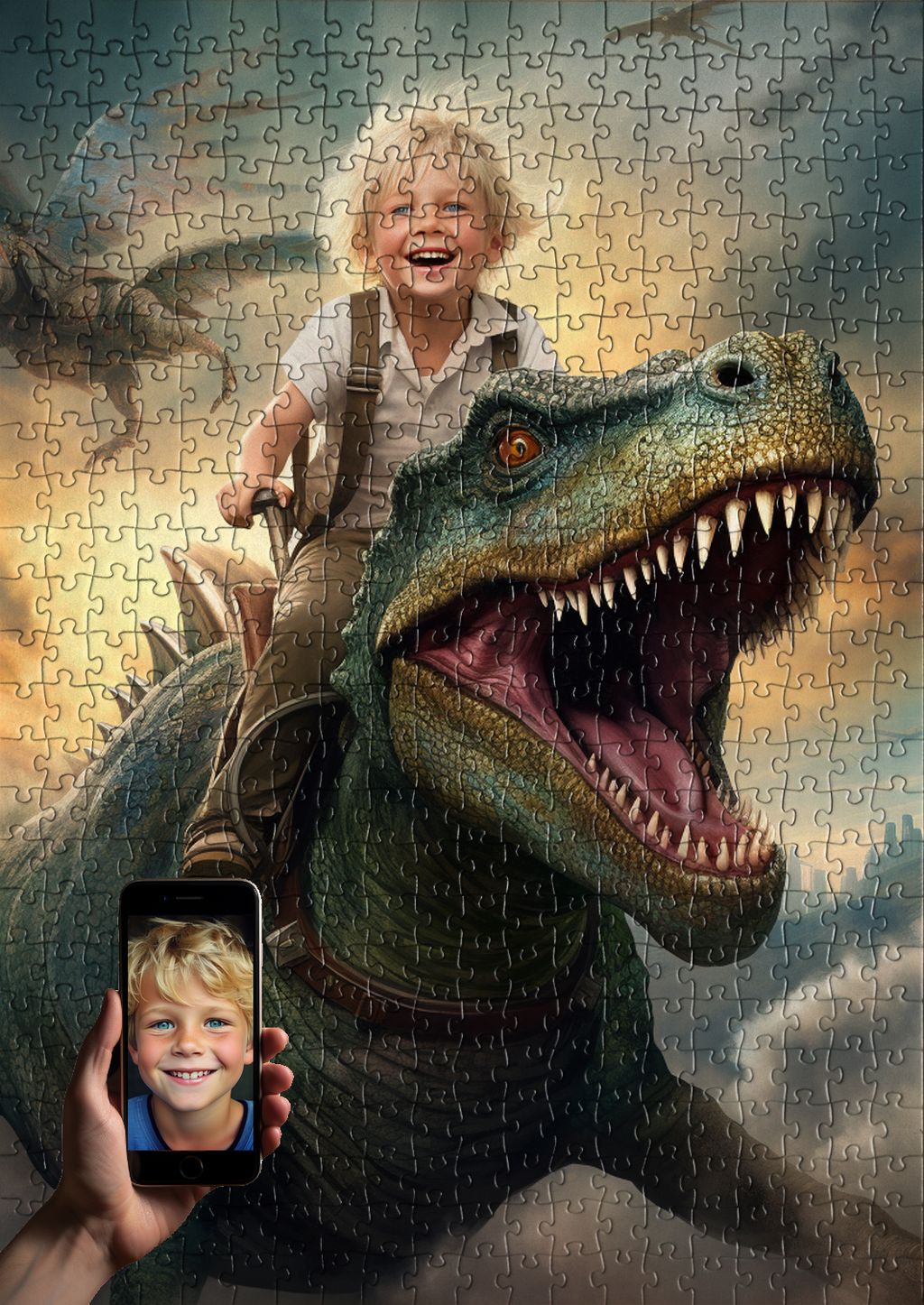
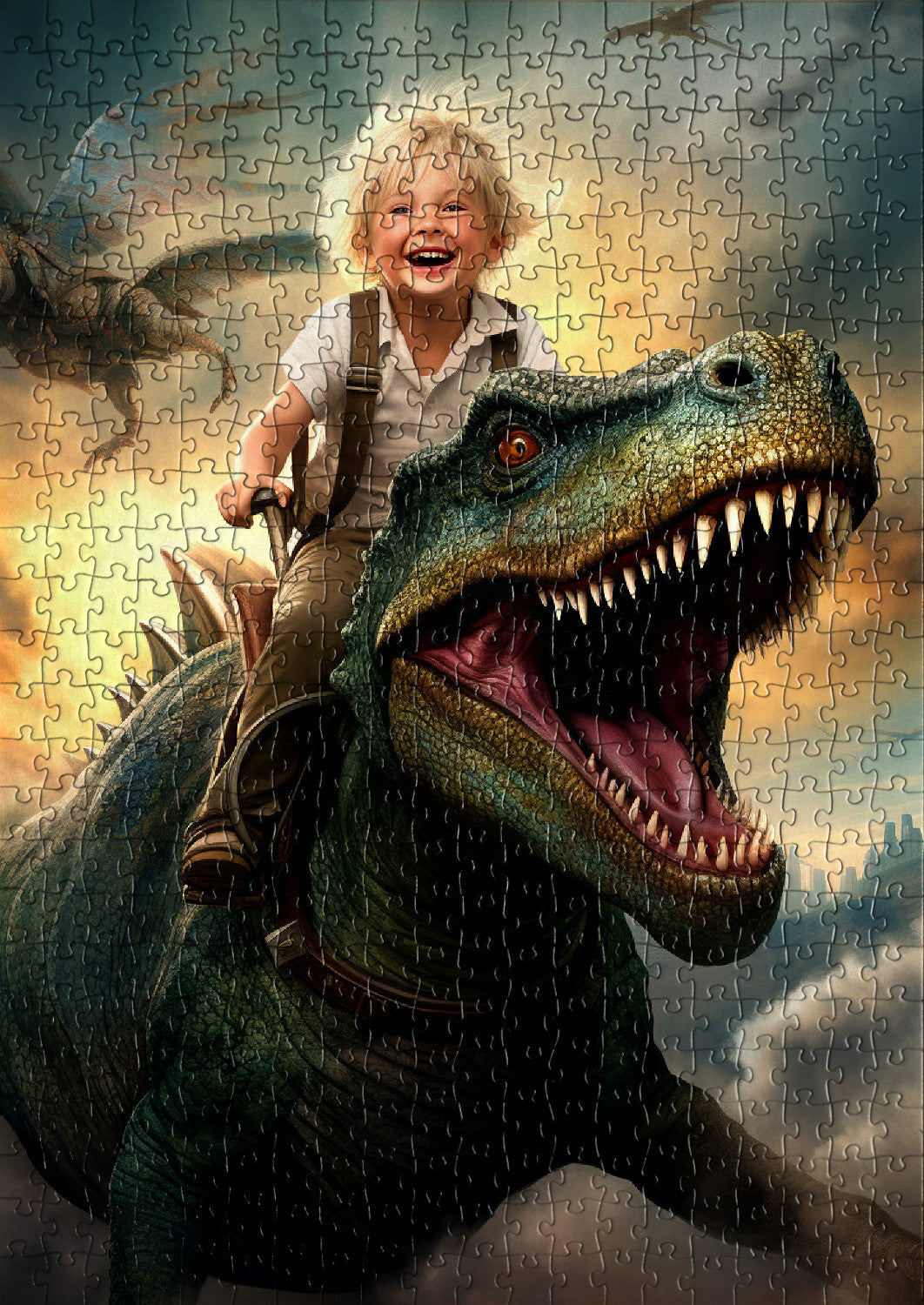
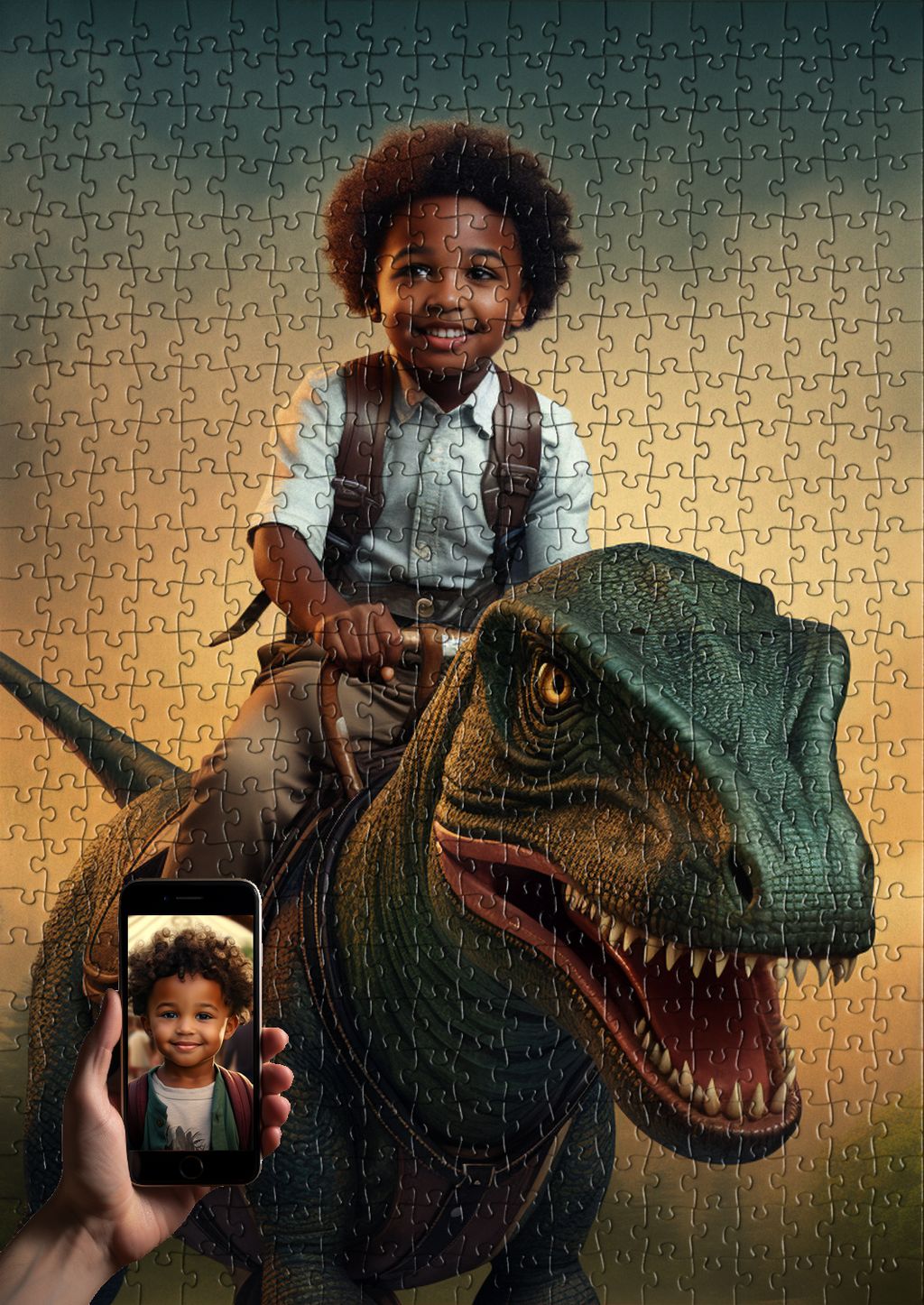
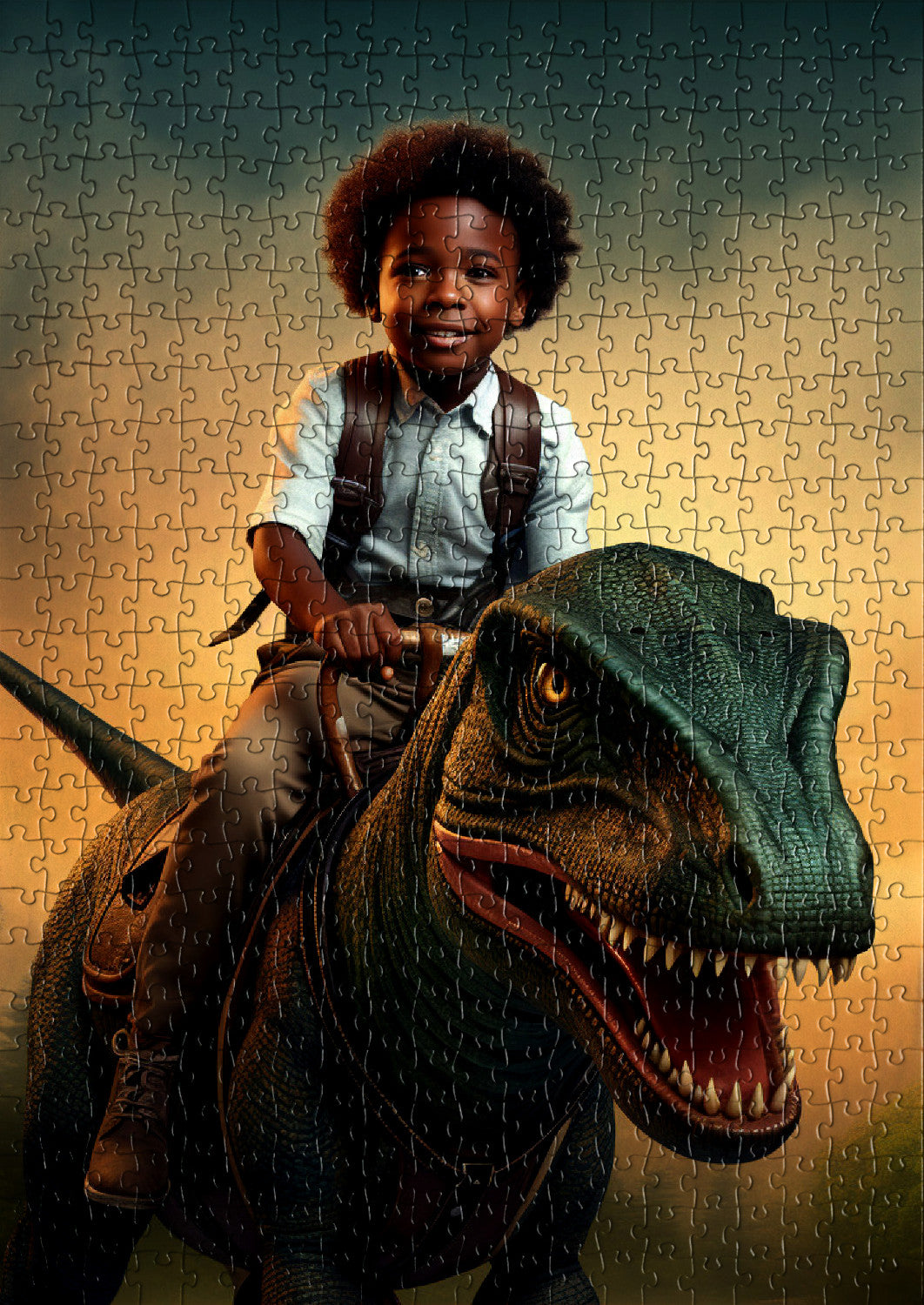
Dinosaurs hit differently at seven. By this age, kids know the difference between a Triceratops and a Stegosaurus, they have opinions about which predator was scarier, and they want artwork that respects their growing expertise. A puzzle like Child riding a dinosaur in a fantasy world works because it combines the prehistoric appeal with the imaginative leap of being the hero of the scene.
Space and astronauts
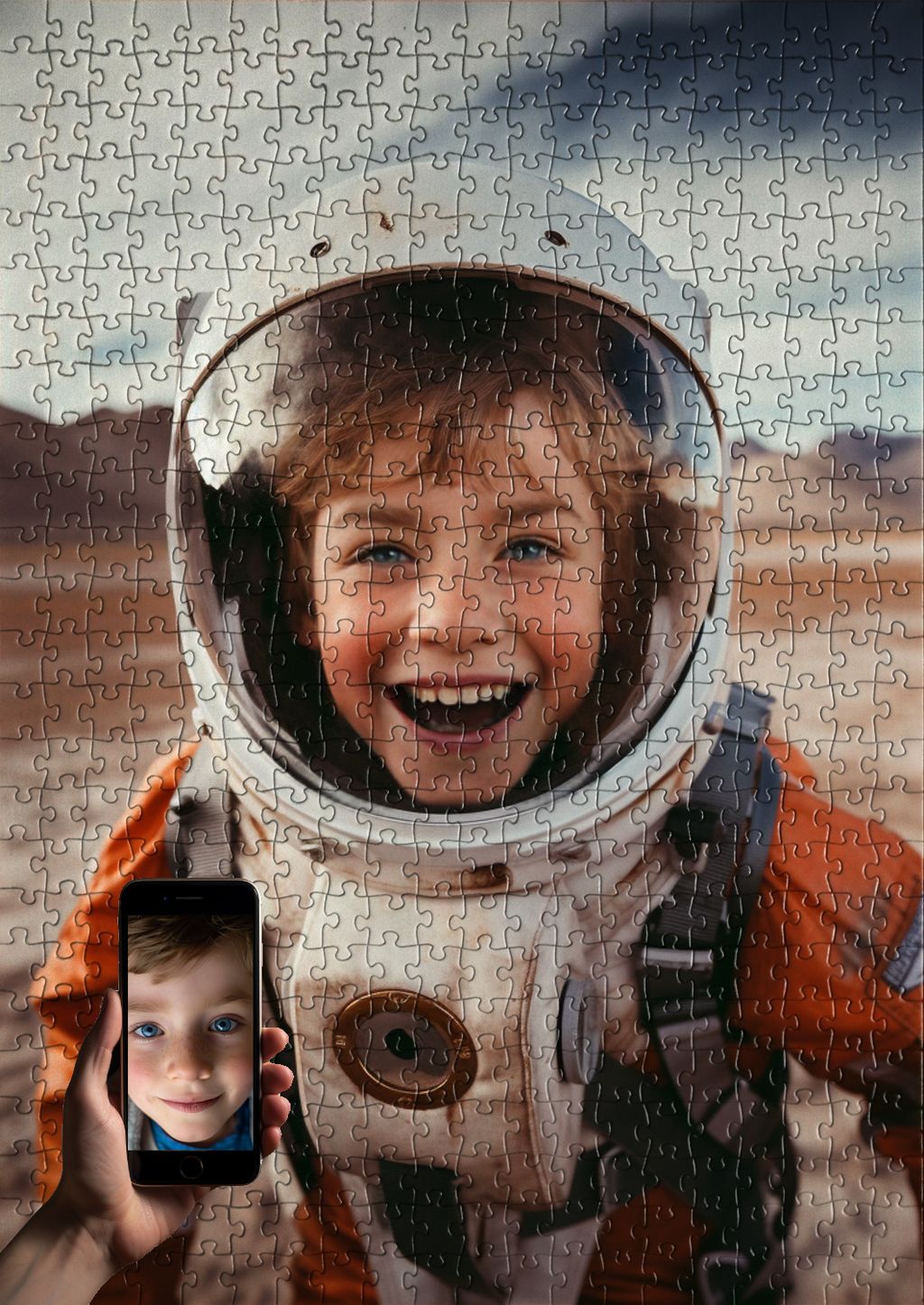
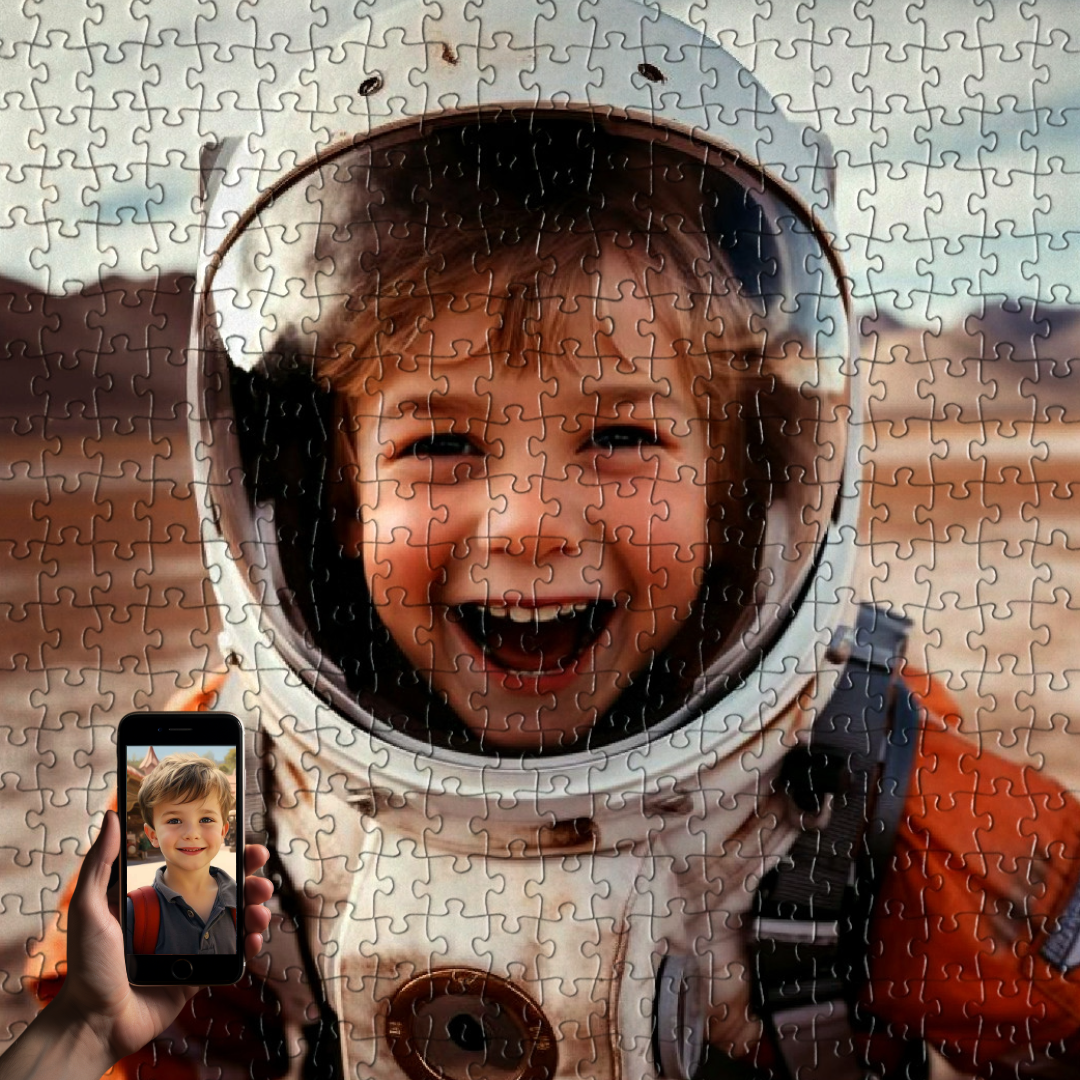
Space is a perennial winner at seven, particularly for kids starting to learn about the solar system in school. Personalized astronaut puzzles let your child literally see themselves on the moon, which is a powerful image for a child whose ambitions are starting to take shape.
Fantasy worlds: unicorns, mermaids, princesses, pirates
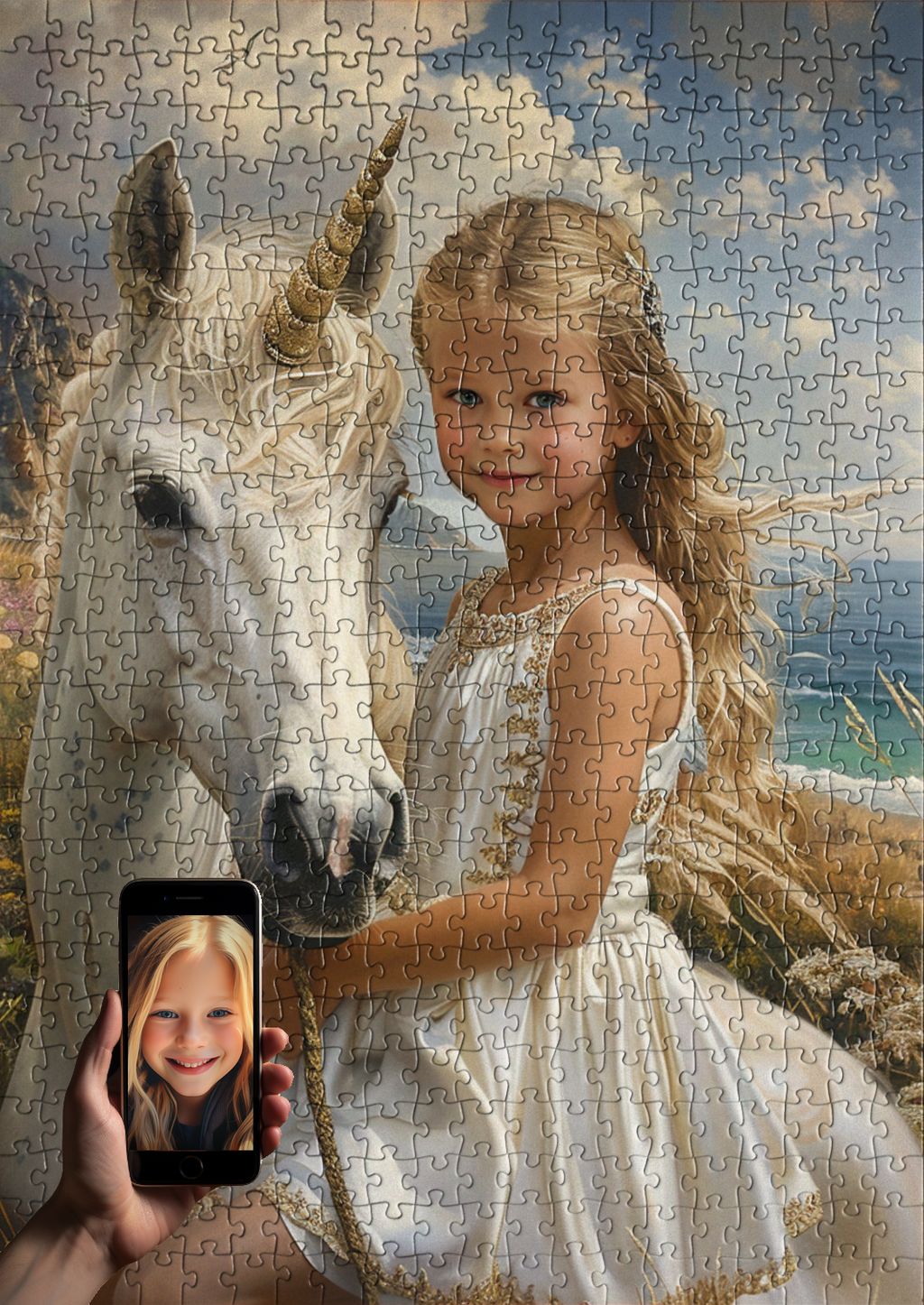
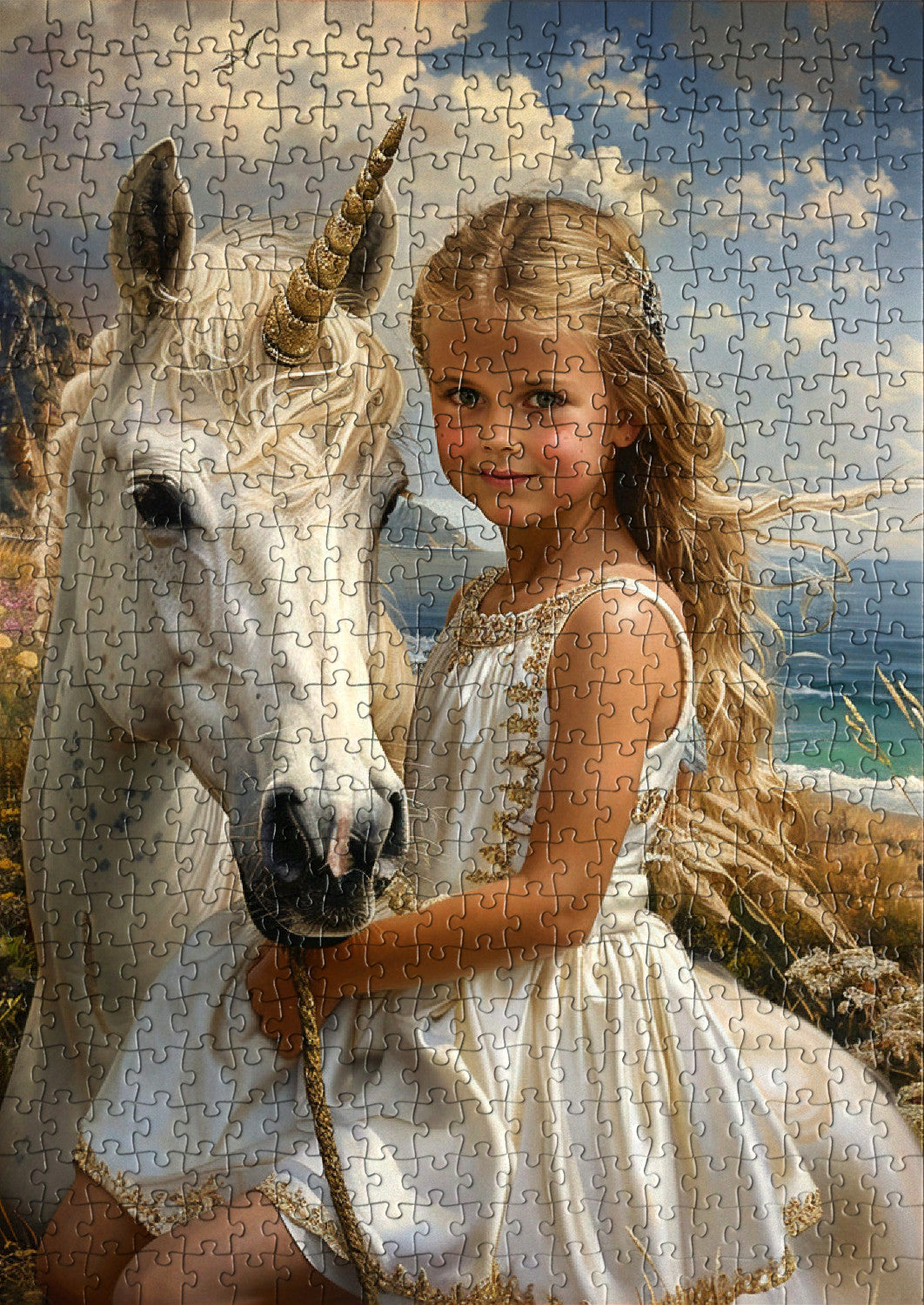
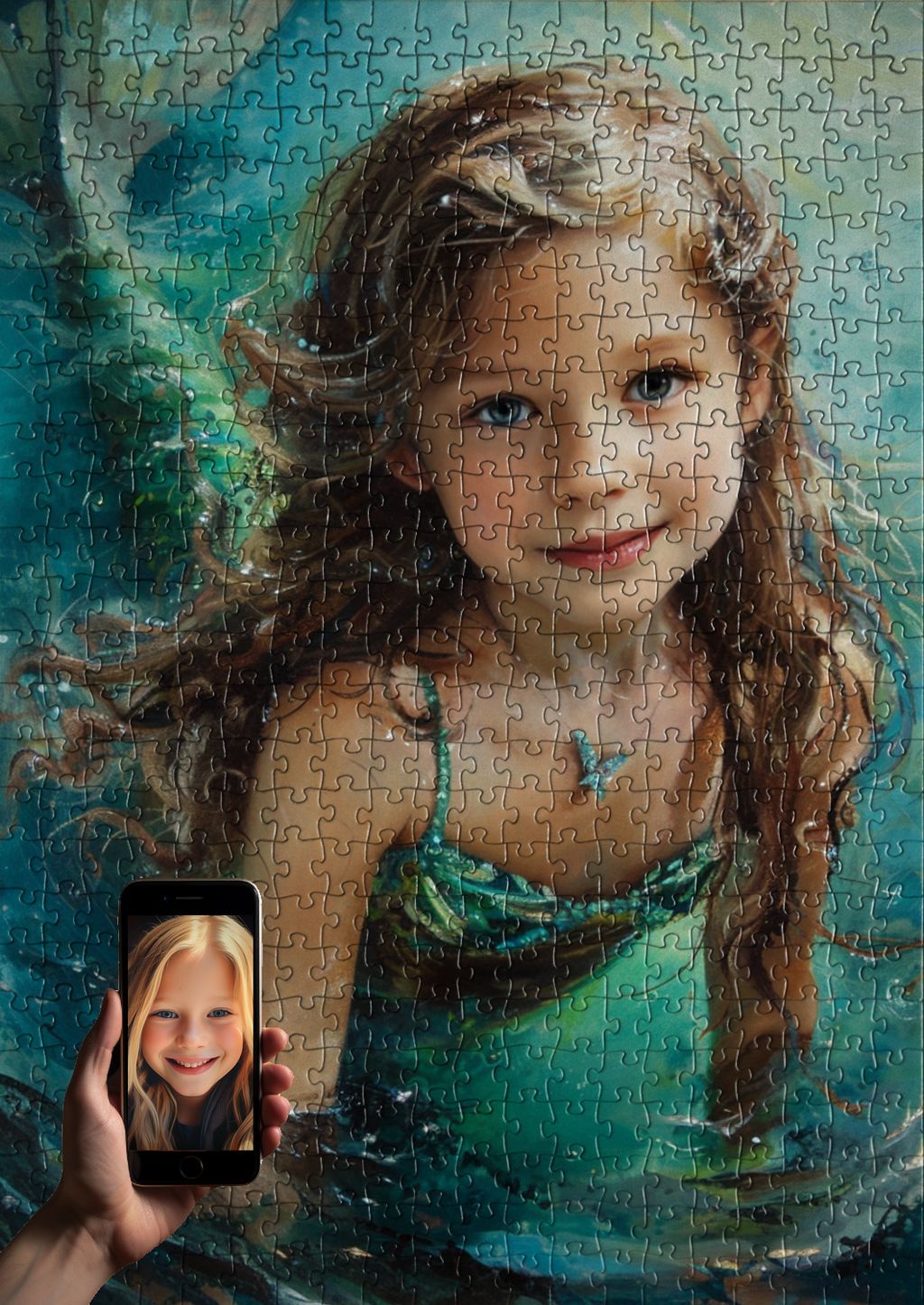
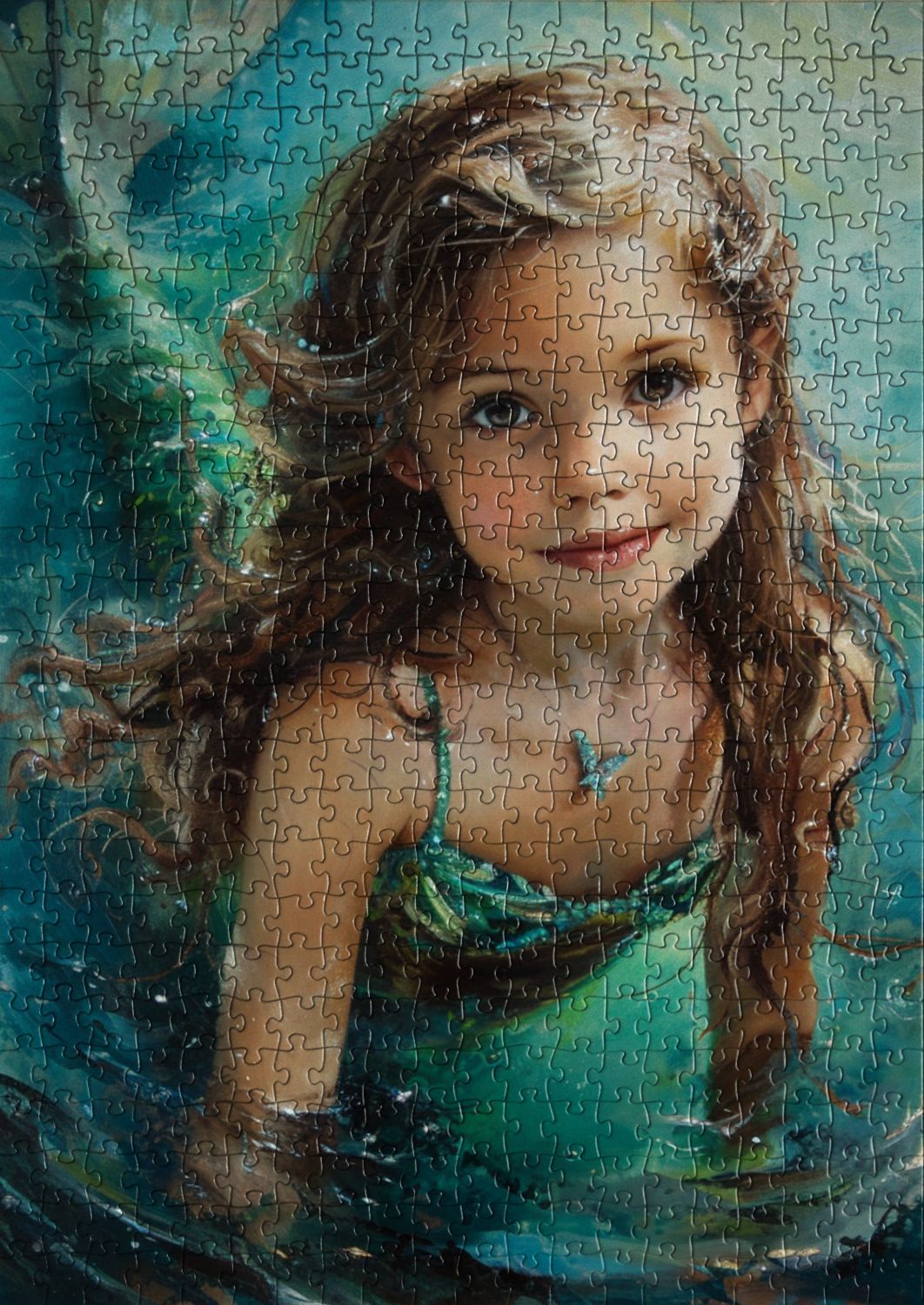
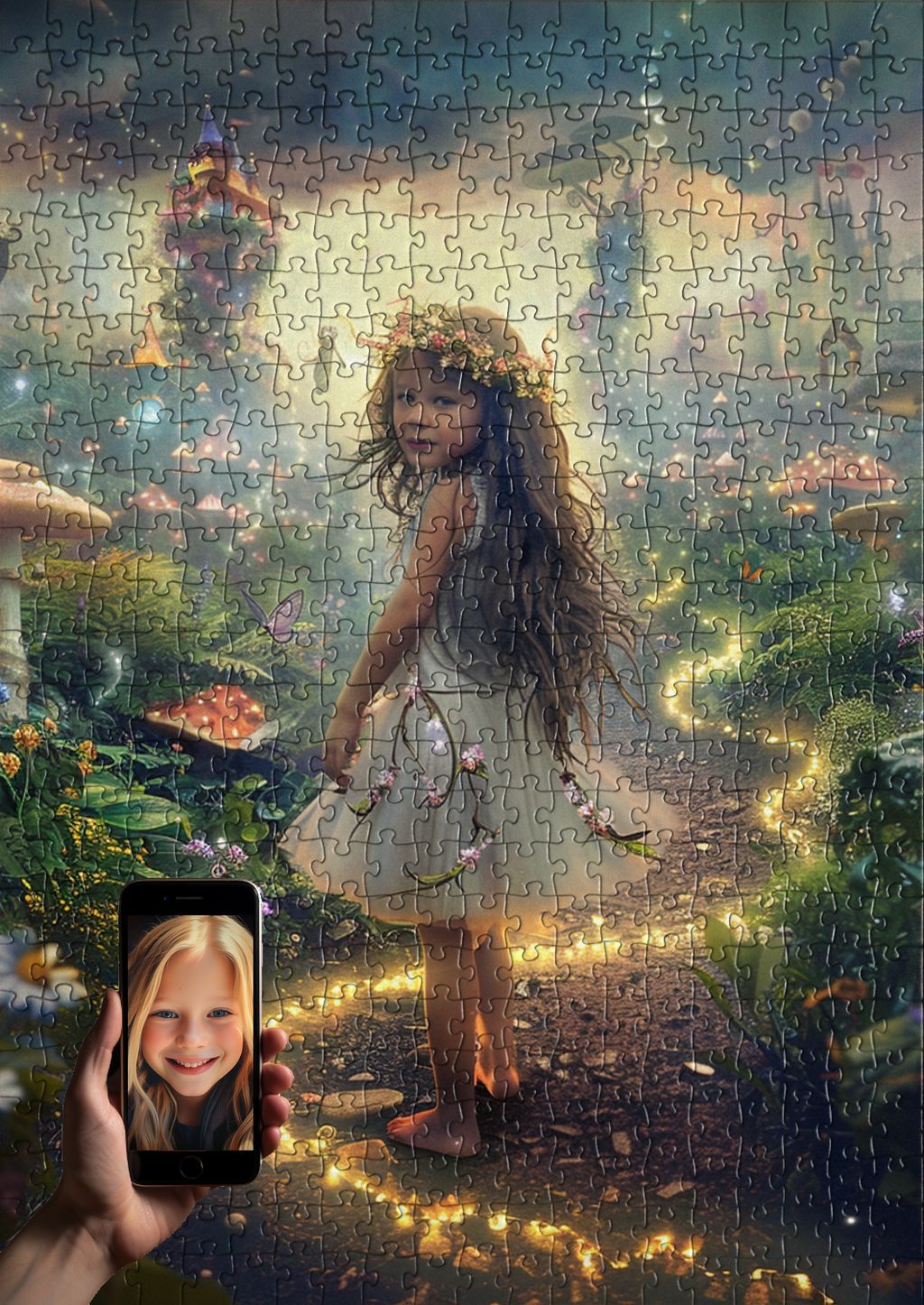
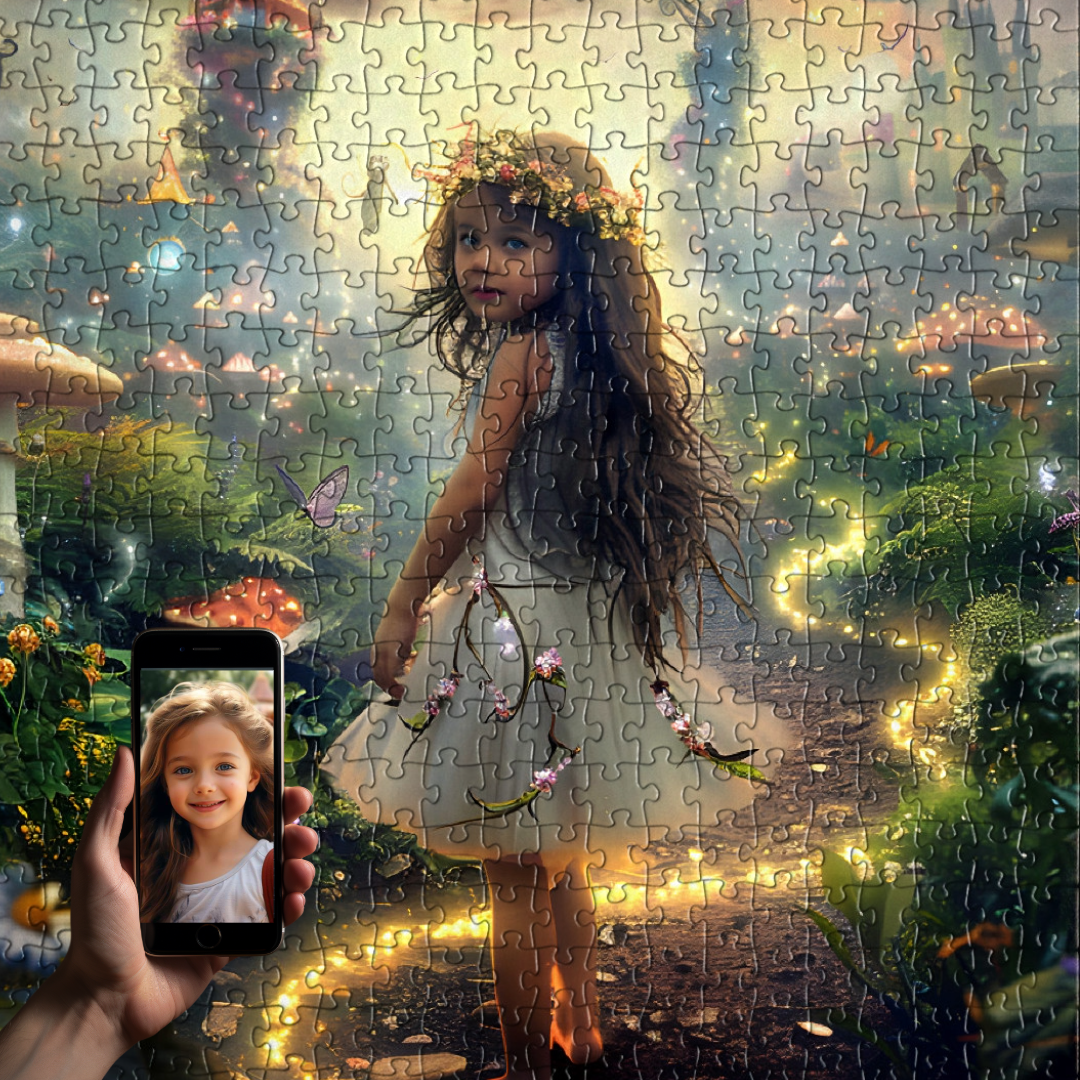
Fantasy themes still hold strong at seven, but with more sophistication. The artwork needs to feel a little older, a little more cinematic. A puzzle like the Girl with her unicorn design has the kind of detailed, painterly composition that rewards a child's longer attention span and gives them visual richness to work through, piece by piece.
Sports teams and favorite activities
Seven is often the age where a child's identity starts to consolidate around an activity: soccer, ballet, gymnastics, skateboarding. Personalized sports puzzles tap directly into that emerging identity. Animals, both realistic and fantastical, also remain hugely popular.
Custom photo puzzles
One option many parents overlook: turning a meaningful photo into a puzzle. A picture from a family trip, a beloved pet, a grandparent's house. At seven, kids are old enough to feel real nostalgia, and a custom photo puzzle at 110 or 252 pieces becomes a keepsake as well as a challenge.
The "I Can't Do This" Wall: How to Handle Frustration
Here is the moment every parent of a 7-year-old puzzler will face. Forty minutes in, your child is staring at a pile of nearly-identical blue sky pieces, and the dam breaks. "I can't do this. It's stupid. I'm not doing it anymore." This is not a sign you picked the wrong puzzle. It is a sign you picked the right one, and your child has hit the productive struggle that real challenge requires.
What helps in that moment:
- Validate the feeling, not the conclusion. "Yeah, that part is genuinely hard. The sky pieces all look the same. That is the hardest section." You are agreeing that it is difficult without agreeing that they should quit.
- Suggest a micro-strategy, not a rescue. Instead of solving it for them, offer one small tactic: "What if we sort just the sky pieces by which ones have a tiny cloud edge?" That gives them a new entry point without taking over.
- Offer a break, not an exit. "Let's leave it on the table and come back after dinner." Walking away is not quitting. It is a strategy that real puzzlers use all the time.
- Name the feeling of finishing. "Remember how good it felt when you finished the dinosaur one? That feeling is on the other side of this." You are pointing to a future emotional reward, not pressuring them now.
The most important thing to avoid is taking over and finishing the puzzle yourself, or letting them abandon it permanently after the first wave of frustration. The growth in a 7-year-old happens precisely in the gap between "this is too hard" and "I did it."
Puzzles as Parent-Child Bonding Time
Something important is happening at seven: your child is starting to want independence. They close their bedroom door more. They want to walk a little ahead of you. They have inside jokes with friends you do not get. And yet, they still crave shared focus time with you, just on different terms than when they were four.
Puzzles are uniquely suited to this moment because they offer what we might call parallel-collaborative activity. You are working on the same goal, side by side, but you are each absorbed in your own piece of it. There is no eye contact required. No agenda. Just two people in the same orbit, occasionally pointing something out, occasionally laughing when a piece you have been hunting for the last ten minutes turns out to be right under the box.
Some of the best parent-child conversations happen over puzzles, precisely because the puzzle takes the social pressure off. Your seven-year-old will tell you about something that happened at recess while staring at a piece of cardboard, in a way they never would across a dinner table.
How to set up puzzle time well
- Pick a low-traffic surface where the puzzle can stay out for a few days.
- Start it together, but let your child take the lead on strategy.
- Resist the urge to find pieces for them, even when you spot one.
- Treat the unfinished puzzle as a normal part of the room, not a chore to be cleared.
- Celebrate completion with a small ritual: a photo of the finished puzzle, putting it on display for a day before it gets boxed up.
Building a Puzzle Habit That Lasts
A 7-year-old who finds their puzzle groove will often keep the habit through age ten and beyond. That is genuinely worth building for. Reading the cognitive benefits aside, having a quiet, screen-free, completable activity in your child's back pocket is a gift that pays off on rainy Sundays and tired Wednesdays for years to come.
Practical ways to build the habit:
- Rotate two or three puzzles at a time so there is always one in progress and one waiting.
- Trade puzzles with friends or cousins once finished. Variety extends interest.
- Frame favorite completed puzzles. Some parents glue and mount a particularly beloved one as wall art.
- Let your child pick the next puzzle themselves. Ownership over the choice matters.
- Use puzzles as a Sunday afternoon ritual rather than a one-off rainy-day rescue.
Frequently Asked Questions
Is 100 pieces too easy for a 7-year-old?
For most 7-year-olds, 100 to 110 pieces is right on the edge of comfortably challenging. If your child finishes a 100-piece puzzle in under thirty minutes with no help, then yes, it is probably time to move up. If it takes them an hour or two and feels like a real accomplishment, you have found the sweet spot.
When should my child move from 110 to 252 pieces?
Look for three signals: they finish 100-piece puzzles solo and quickly, they ask for harder ones, and they can comfortably leave a puzzle unfinished overnight without losing interest. Most kids who started puzzling at four or five are ready for 252 around their seventh birthday. Kids newer to puzzling may need another six to twelve months at 110 pieces first.
What if my 7-year-old refuses to puzzle at all?
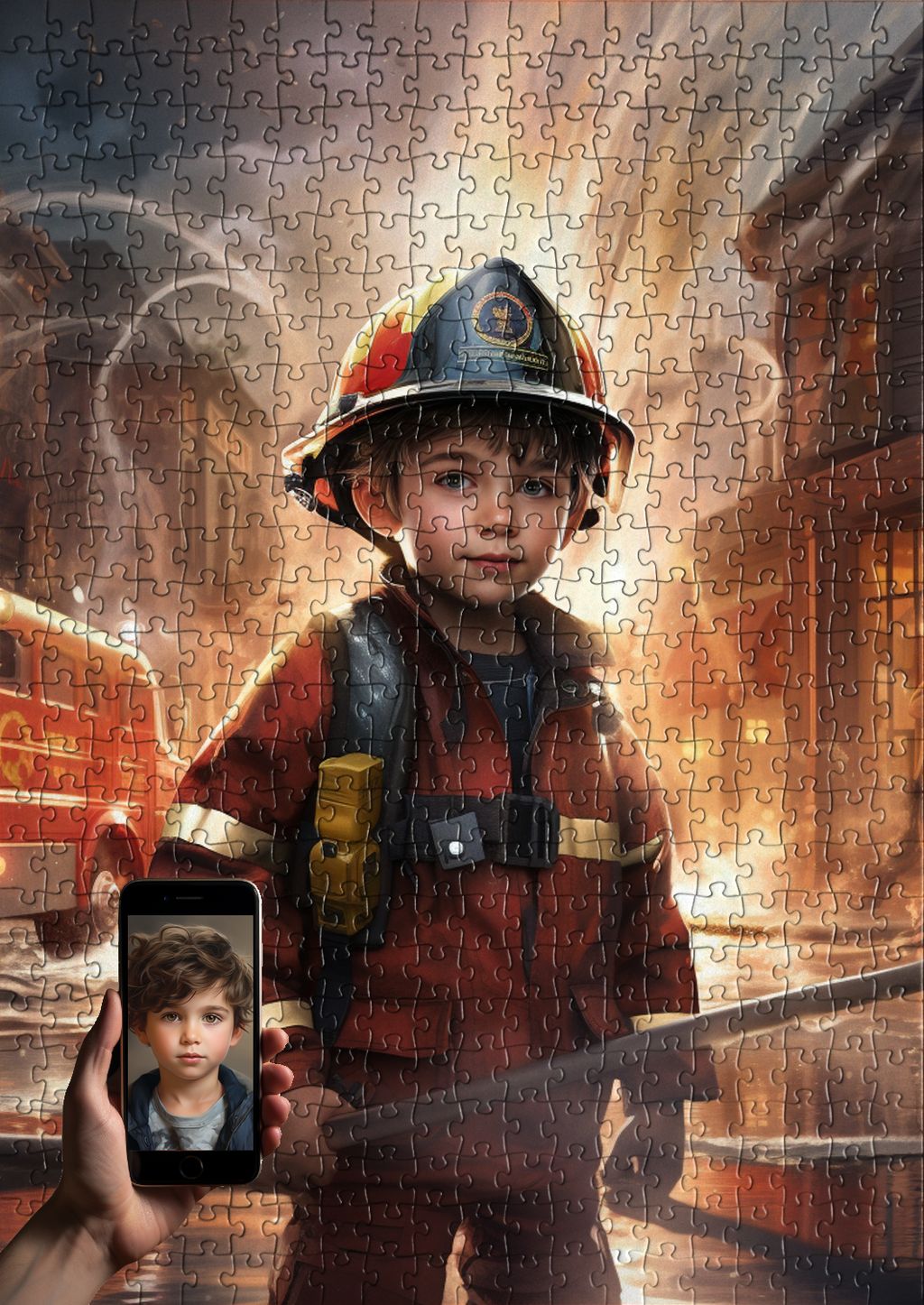
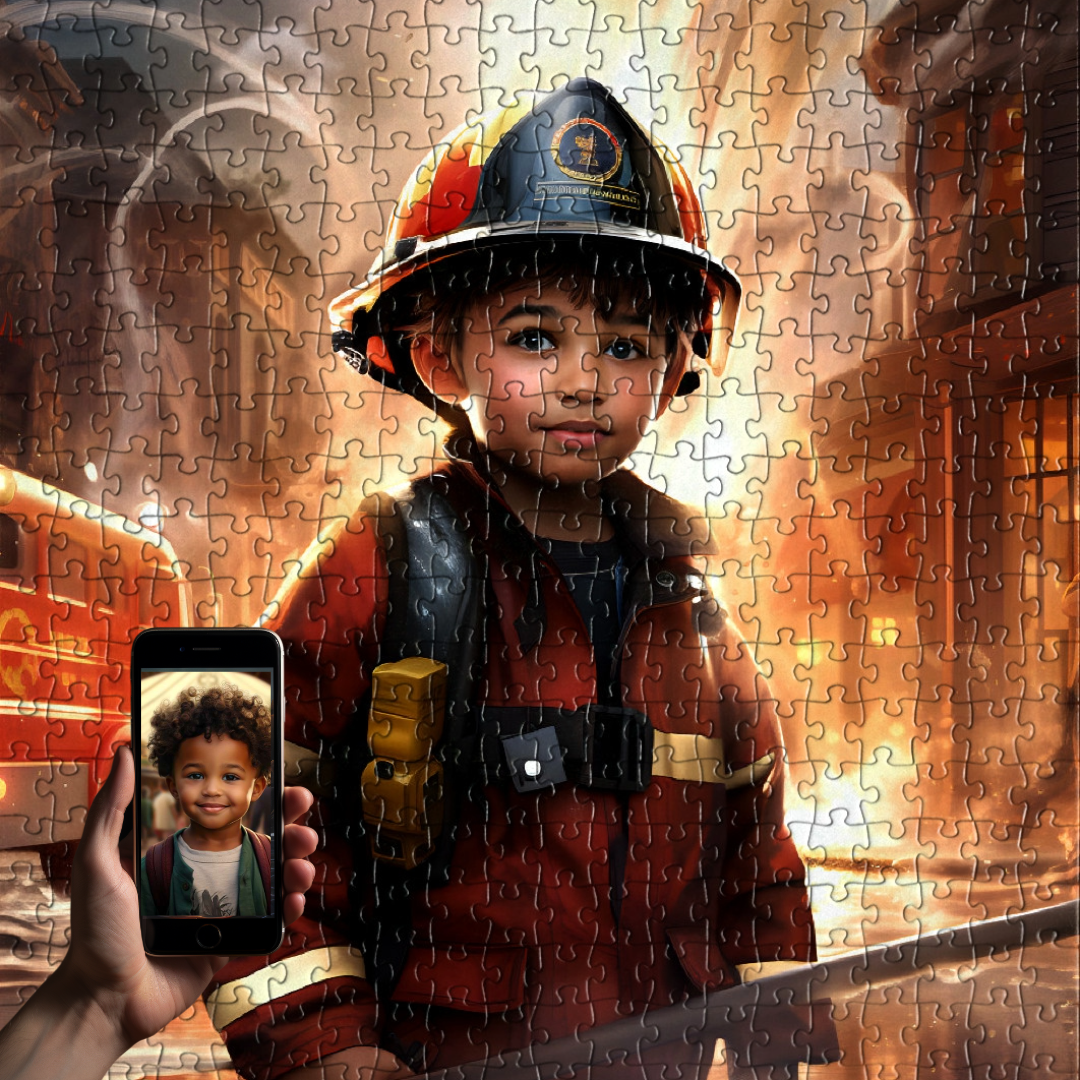
Try changing the theme rather than the piece count. A child who shrugs at generic animal puzzles often lights up when they see themselves as the astronaut, soccer player, or pirate on the box. Personalization tends to break through indifference because it makes the puzzle feel personal rather than generic.
Should I help, or let them struggle?
Let them struggle, but stay nearby. The growth happens in the productive frustration zone, where it is hard but not hopeless. Offer strategy hints, not solutions. The goal is for them to feel they finished it, not that you did.
How long should a 252-piece puzzle take a 7-year-old?
Expect two to four sessions spread over a few days, with total work time of roughly two to four hours depending on the complexity of the image and your child's experience. The fact that it takes multiple sittings is a feature, not a bug. That is precisely the persistence skill being built.
Choosing What Comes Next
Seven is a wonderful age to puzzle with, because your child has just become a real thinking partner. They have strategies, opinions, preferences, and the stamina to see something difficult through to the end. Whether you land on a 110-piece dinosaur scene that takes a focused afternoon or a 252-piece personalized adventure that lives on the dining table for a week, the right puzzle at this age does more than fill an hour. It tells your child: you are capable of hard things, and I am here next to you while you do them. That message, repeated quietly over many afternoons, is one of the best things a puzzle can give.

Share and get 15% off!
Simply share this product on one of the following social networks and you will unlock 15% off!