
You are standing in the toy aisle, or scrolling through a puzzle shop online, holding your breath at the age recommendations. Your child just turned two. The box says "ages 3+". Another says "ages 2-4" but has 30 small cardboard pieces that look impossibly fiddly for the chubby little fingers you know so well. A third has just four chunky wooden shapes and feels almost too easy. So how many pieces does a 2-year-old really need, and what actually fits their stage?
This is the question we hear most often from parents of toddlers, and it deserves a straight answer rather than a sales pitch. The honest truth is that most 2-year-olds are not ready for a 30-piece puzzle, and any shop that tells you otherwise is doing you a disservice. At age two, children are still building the foundations: grip strength, the pincer grasp, the ability to rotate a shape in their hand, and the patience to sit with a single task for more than a few minutes. Pieces need to be big, chunky, and few.
That said, a slightly more advanced puzzle can be a wonderful "grow-into-it" gift if you approach it the right way. It becomes a shared activity now and an independent triumph six to twelve months later. Below, we walk through what 2-year-olds can genuinely handle, the formats that work best at this age, the safety points that still matter, and how to introduce a more ambitious puzzle without frustrating your child or yourself. Our smallest SwappyPrint puzzle is 30 pieces, which sits right at the upper edge for a toddler, so we'll be transparent about when it makes sense and when to wait. The goal here is not to push a product but to help you choose well, because a puzzle that matches a child's stage is one of the most quietly powerful toys you can put in front of them.
The honest answer: 4 to 12 pieces at age two
If you want a simple rule of thumb, here it is. A typical 2-year-old does best with chunky wooden puzzles of 4 to 12 pieces. Many children at the younger end of the year (24 to 30 months) are happiest with just 4 to 6 large pieces or knobbed shapes. By the time they approach their third birthday, 8 to 12 pieces becomes very achievable, and some children are ready for more.
This is not us being cautious for the sake of it. It reflects the developmental reality of the age:
- Gross motor still leads fine motor. Two-year-olds run, climb, and throw before they can precisely pinch and place. Small cardboard tabs are genuinely hard for them.
- Attention spans are short. Expect 2 to 5 minutes of focused engagement, sometimes a little more if the puzzle is a strong favourite. A 30-piece puzzle simply takes longer than that to complete unassisted.
- Mouth exploration has not fully ended. Many 2-year-olds still put small objects in their mouths when tired or distracted. Pieces need to pass the choke test.
- Spatial reasoning is emerging, not mature. Recognising that a shape needs to be rotated to fit is a skill children develop gradually between two and four.
So when a 30-piece cardboard puzzle is marketed for "ages 2+", treat that as the absolute floor and read it as "an older 2-year-old, with a grown-up sitting alongside, and not expecting independent completion". For most toddlers, smaller and chunkier is the right call.
What formats actually work at age two
The piece count matters, but so does the type of puzzle. At this stage, the physical design of the puzzle does most of the developmental heavy lifting.
Chunky knob puzzles
These have a small wooden peg on each piece, and each piece sits in its own dedicated hole. They are usually the very first puzzle a child meets, often between 12 and 24 months. The knob trains the pincer grasp, and the one-piece-per-hole design provides a built-in control of error: the child knows when a piece does not belong because it simply will not sit flush.
Peg puzzles and shape sorters
A natural next step. Peg puzzles look similar to knob puzzles but with smaller pegs, demanding slightly more refined finger control. Shape sorters work the same brain muscles by asking the child to match a shape to its slot.
Large-piece wooden jigsaws
Around 2.5 years, many children are ready for their first true jigsaw: a wooden tray with 4 to 12 interlocking or near-interlocking pieces that together form a single picture. These are the bridge between toddler puzzles and "real" jigsaws.
Magnetic and chunky foam puzzles
Magnetic puzzles in a travel book, or thick foam floor puzzles, are great variations for travel or for energetic toddlers who like to work standing up. The pieces are oversized and forgiving.
When a 30-piece puzzle does make sense at age two
Here is where we need to be straight with you. SwappyPrint's smallest puzzle size is 30 pieces. That is a wonderful size for a 3 to 5-year-old, and it is borderline for a 2-year-old. We would not recommend it as your child's only puzzle at this age, and we would not recommend handing it over and walking away. But there are two scenarios where it can be a beautiful gift right now.
As a "grow-into-it" gift
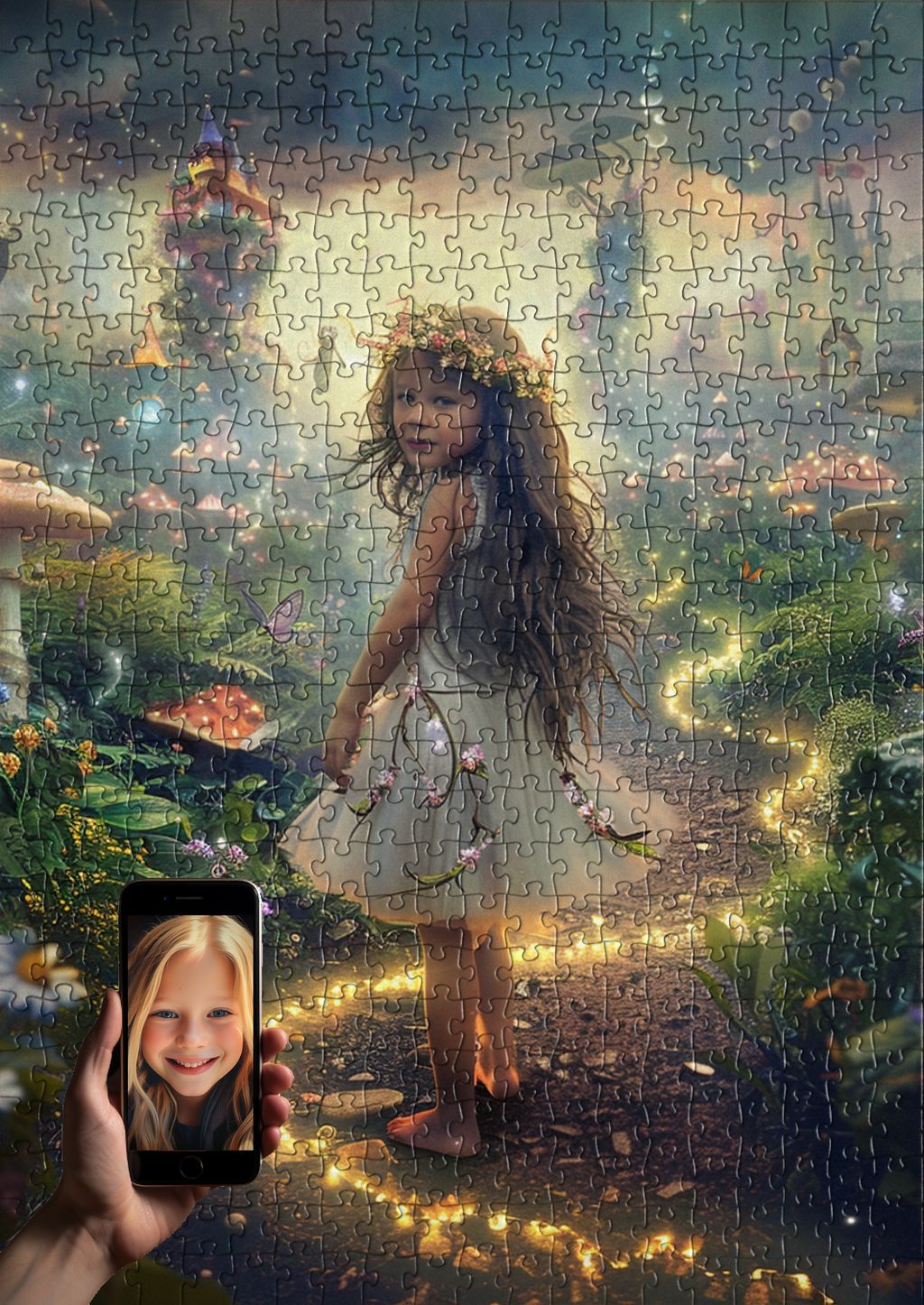
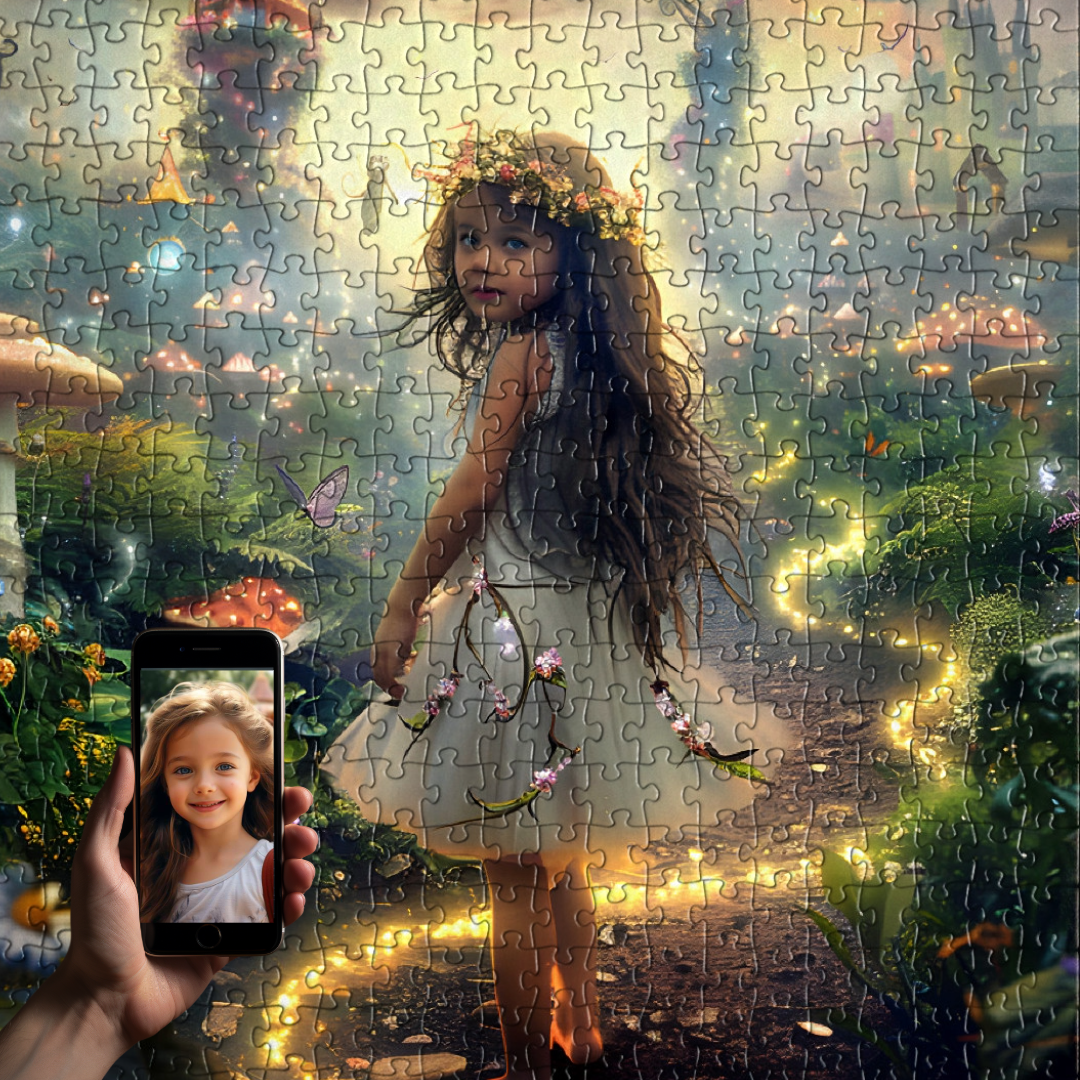
A 30-piece personalised puzzle, especially one featuring your child as the hero of the picture, is the kind of object a child keeps for years. Bought at age two, it becomes part of family ritual: the parent or grandparent assembles most of it while the child watches, hands over pieces, and slots in the last one or two with help. Around the third birthday, you'll notice the child wanting to do more. By three and a half, many children complete it on their own. The puzzle has grown with them, and they have a sense of mastery over an object that once felt impossibly big.
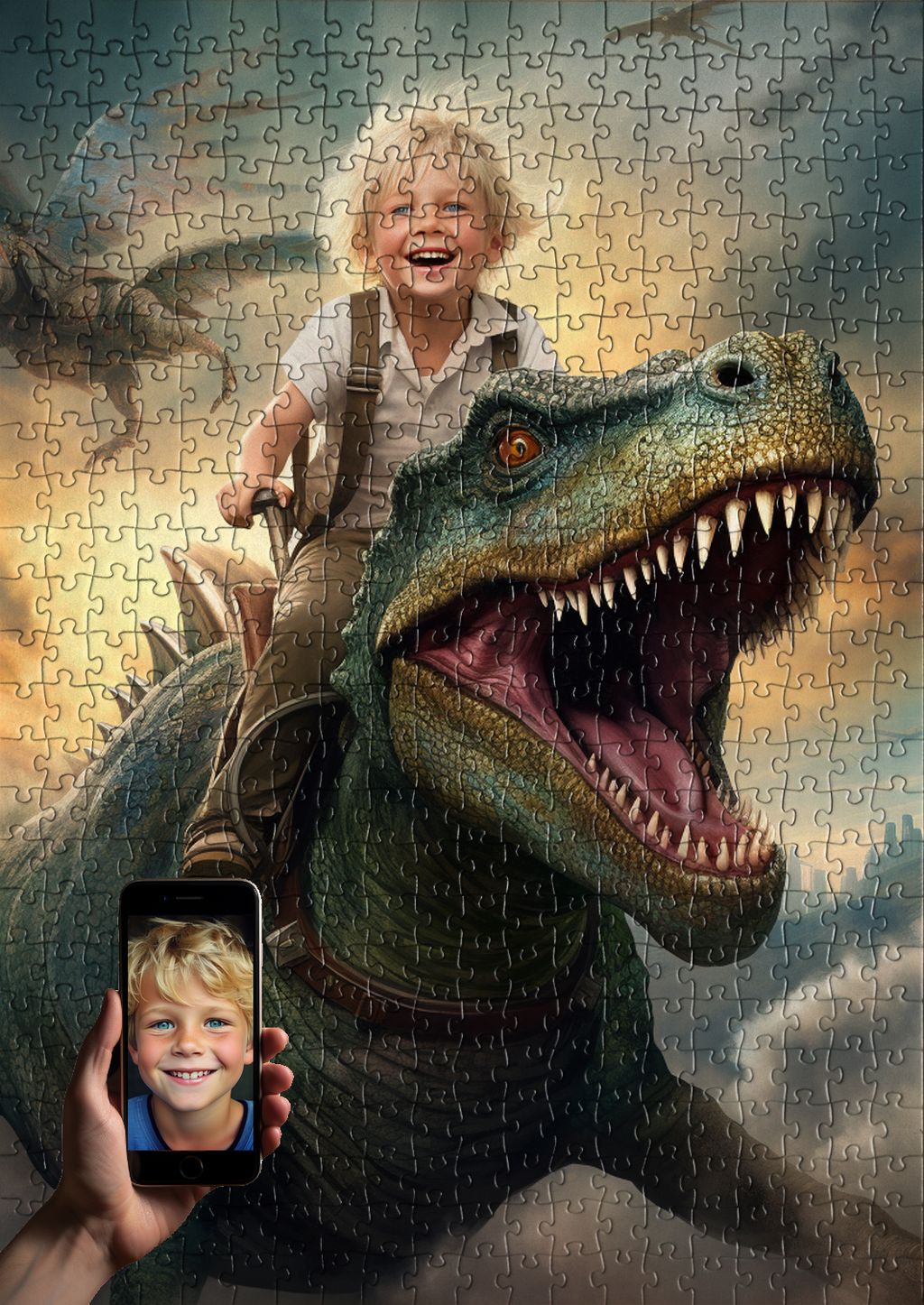
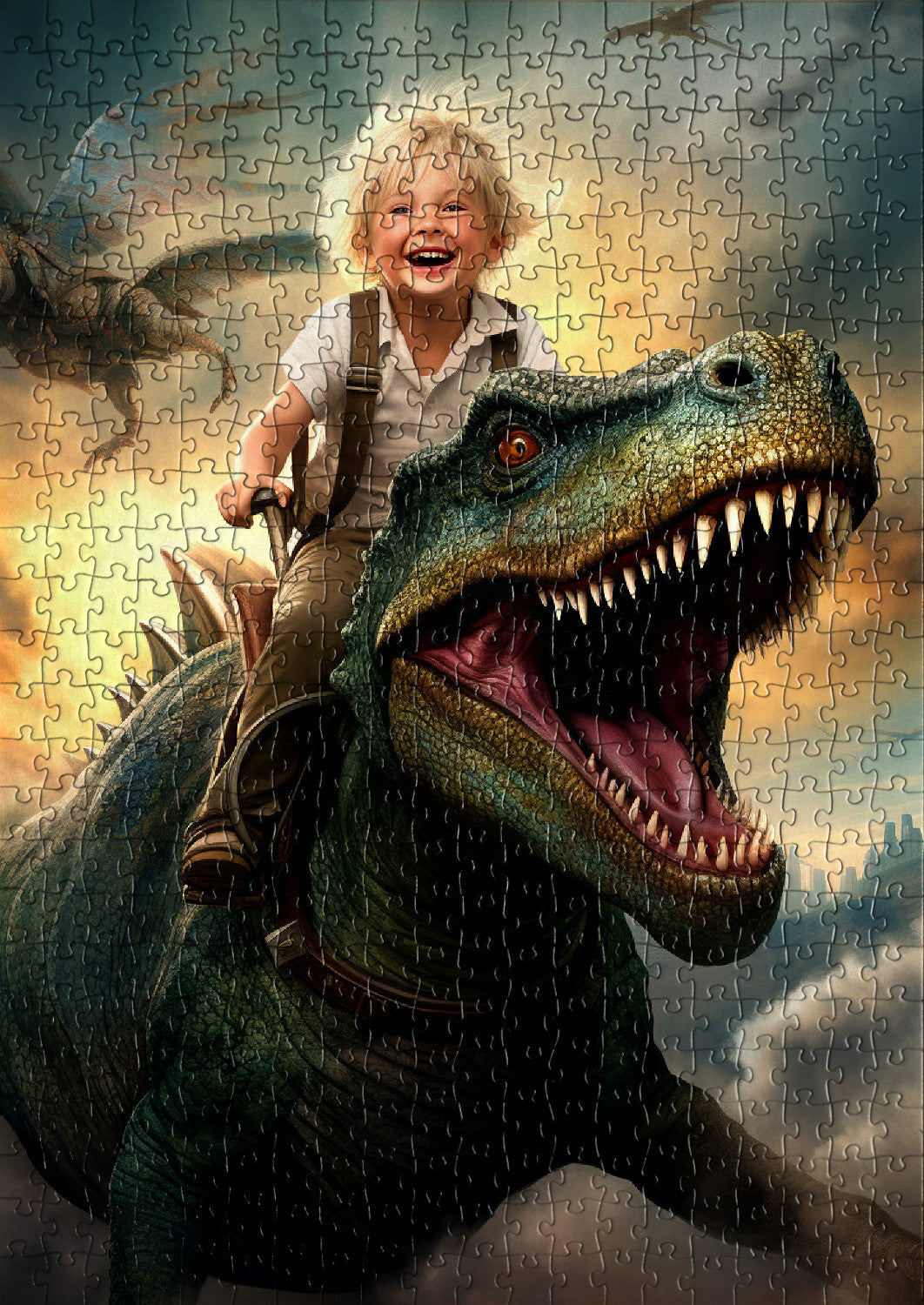
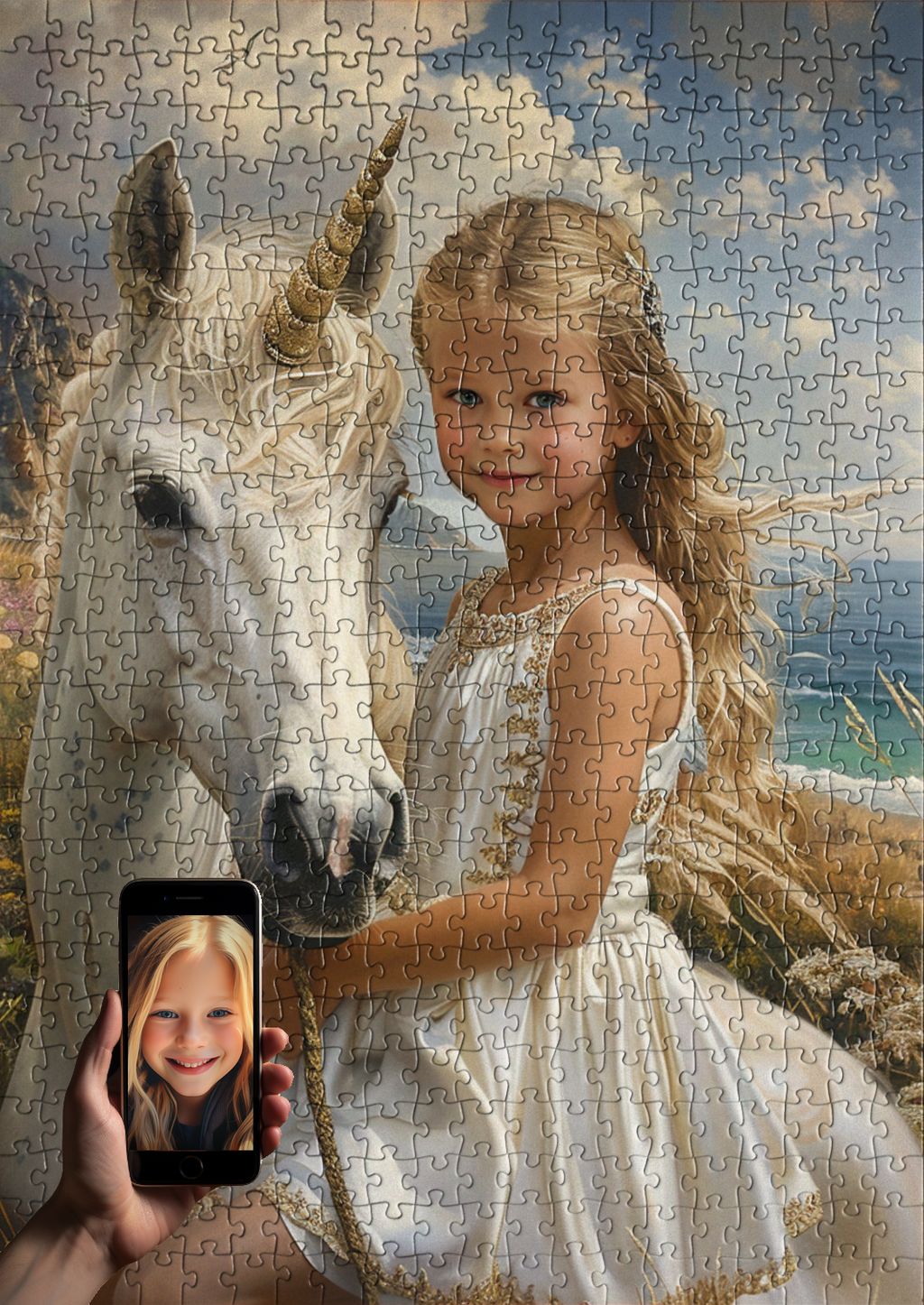
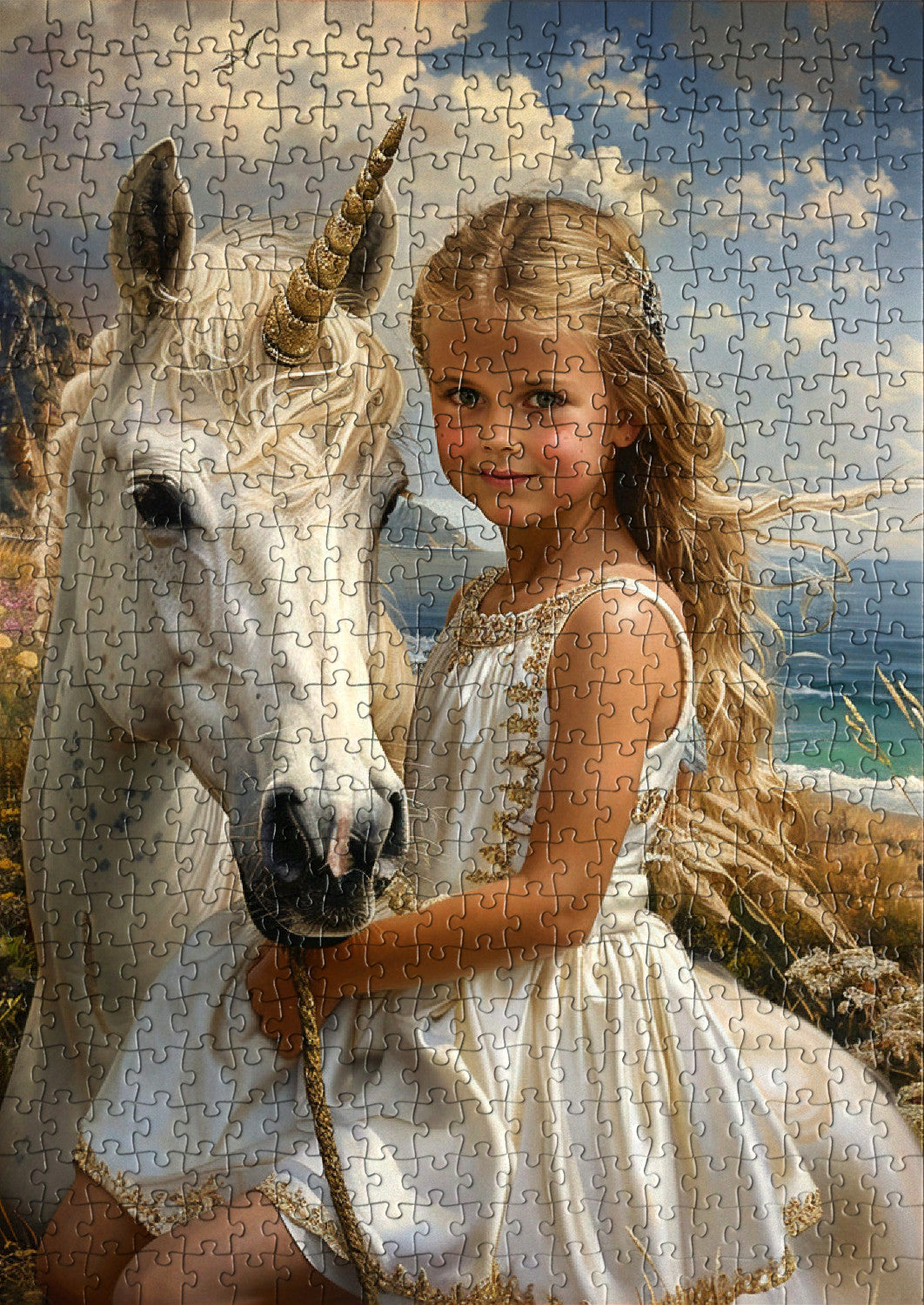
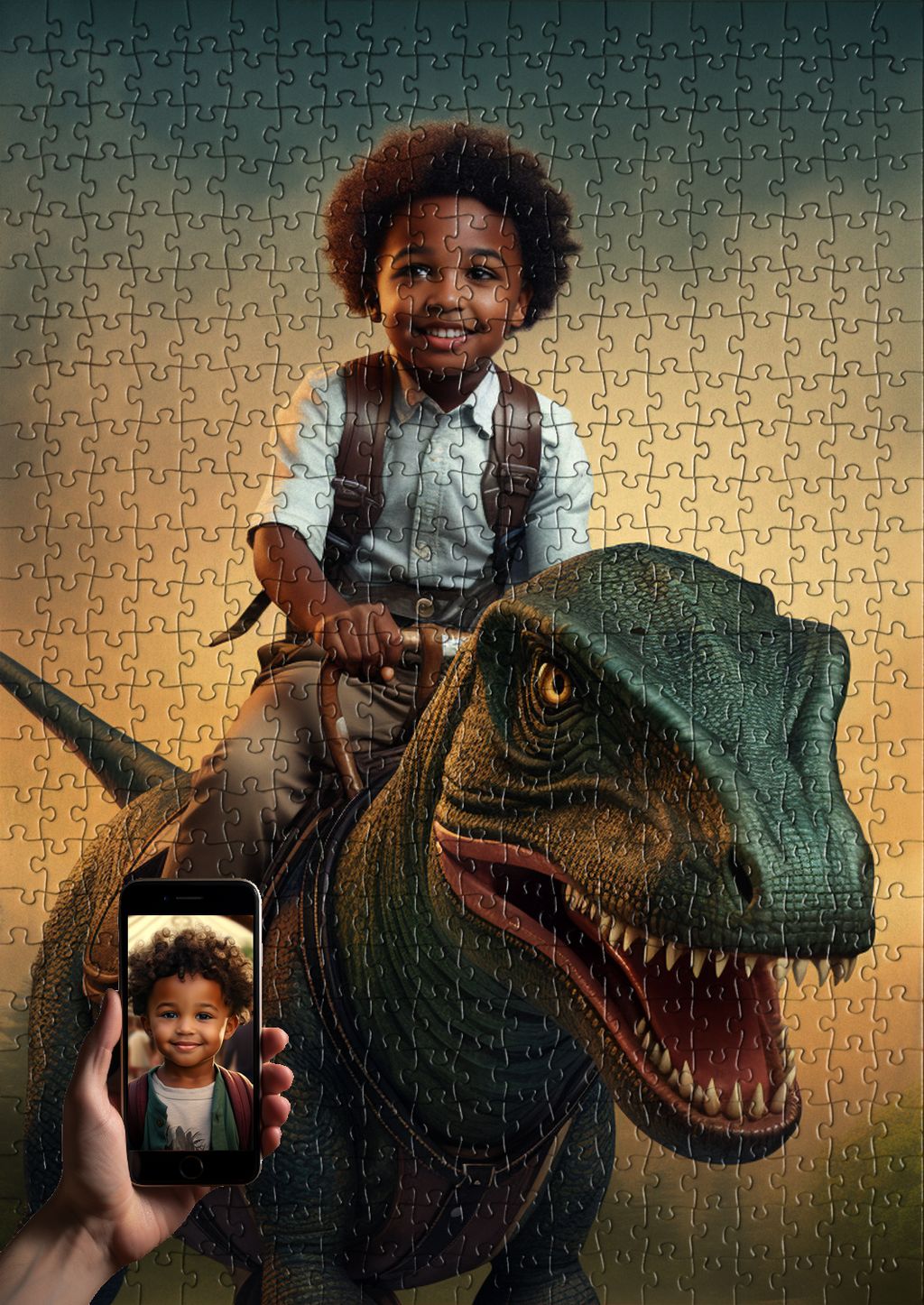
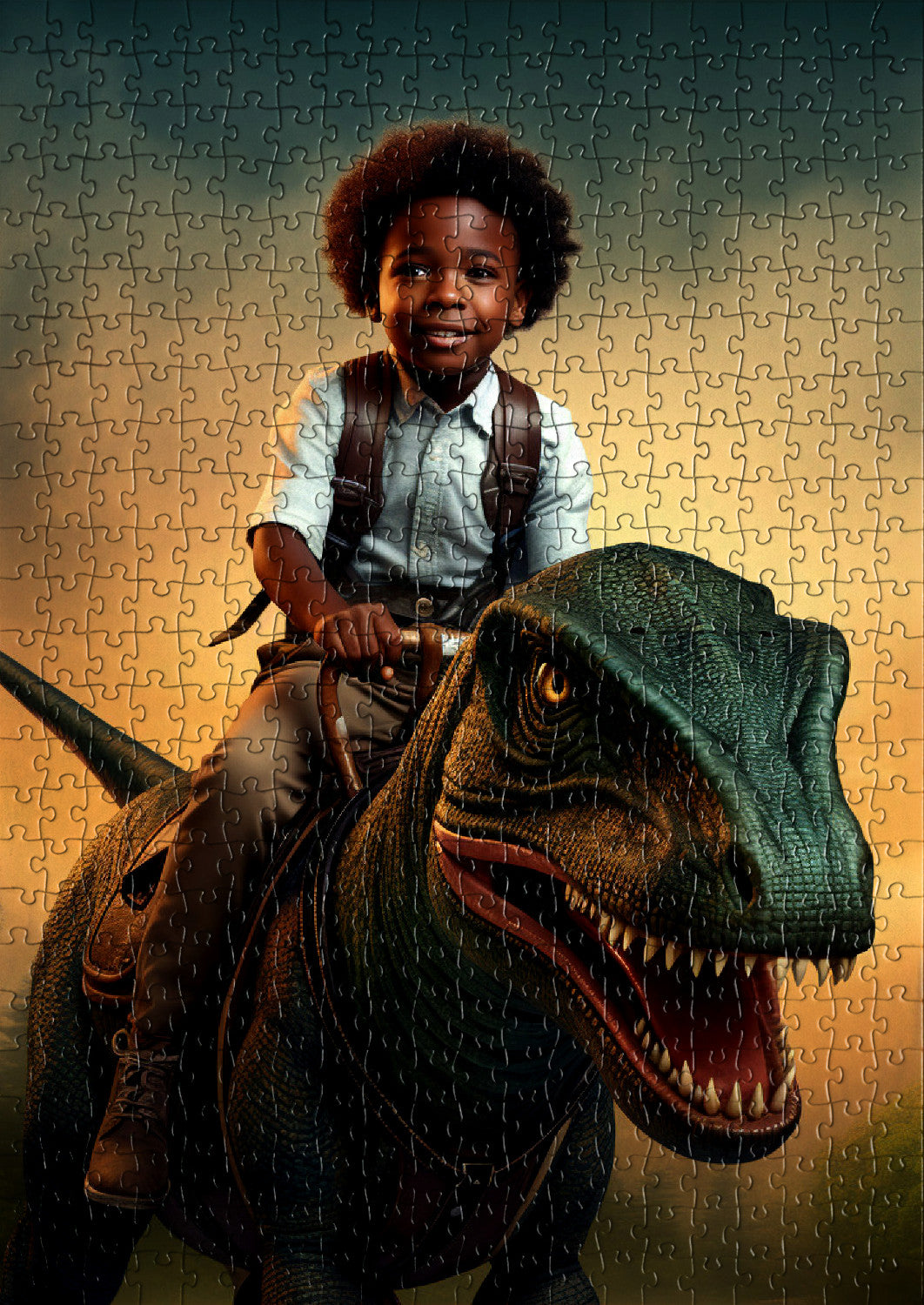
Personalised designs like the Kid Riding Dinosaur or Girl with her Unicorn work particularly well in this role, because the emotional pull of seeing themselves in the picture keeps a younger child engaged even when the mechanics are still beyond them.
For the advanced 2.5-year-old, with supervision
Some children at 30 to 36 months, particularly those with older siblings or strong fine motor skills, will genuinely tackle a 30-piece puzzle with an adult sitting next to them, sorting edge pieces and offering hints. If this sounds like your child, a 30-piece can absolutely be on the table. Just keep it as a together activity rather than a solo one for a while longer.
Safety: the points that still apply at two
Two-year-olds are no longer babies, but they are not yet beyond mouthing small objects, especially when tired, teething, or absorbed in a new toy. A few simple safety habits go a long way.
- Apply the choke test. If a piece fits through a cardboard toilet roll tube, it is a choking risk for a child under three. Chunky wooden pieces almost always pass; small cardboard pieces from older-child puzzles often do not.
- Choose sturdy materials. Wood and thick board hold up to chewing far better than thin cardboard, which a determined toddler can shred and swallow in fragments.
- Check finishes. Look for non-toxic, water-based paints and inks, and make sure surfaces are smooth without splinters.
- Supervise the first few sessions. Once you have seen your child interact calmly with a puzzle a few times, you can relax. But the first introductions deserve your eyes.
- Store pieces out of reach of younger siblings. If there is a baby in the house, a 30-piece puzzle becomes a hazard the moment it is left on the floor.
Setting up puzzle time so it actually works
The right puzzle in the wrong environment will still flop. A few practical adjustments make an enormous difference at this age.
Sit on the floor, not at a table
Two-year-olds work better with their whole body close to the activity. A low rug, a play mat, or simply the carpet lets them move around the puzzle, kneel, or lie on their tummy. Tables put the work at chest height and limit how they can approach it.
Use a non-slip surface
A textured rug, a silicone mat, or a piece of felt under the puzzle stops pieces from sliding when a small hand pushes too hard. This single change reduces frustration enormously.
Offer one puzzle at a time
Putting out three puzzles to "choose from" usually ends with all the pieces mixed together on the floor and no puzzle completed. One tray, one task, one finished picture. That is the Montessori-friendly rhythm that works best.
Rotate puzzles every few weeks
If you have four or five puzzles, keep two out and put the rest away in a cupboard. After two or three weeks, swap them. The "new" puzzle that reappears feels fresh and is met with delight, even though the child has seen it before. This is a gentle way to avoid both boredom and overwhelm.
Store pieces in labelled bags
Resealable bags labelled with the puzzle name or a small photo of the finished picture make it easy to grab a complete set without hunting for stragglers. Trays can be stored upright like books on a shelf.
A realistic puzzle roadmap from two to three
To put all of this together, here is roughly how a child's puzzle life can unfold over the third year. Every child is different, so treat this as a sketch, not a schedule.
- 24 to 30 months: 4 to 6 piece chunky knob and peg puzzles, shape sorters, simple wooden inset puzzles.
- 30 to 36 months: 8 to 12 piece wooden jigsaws, first interlocking puzzles, magnetic travel puzzles. Some children begin a 20 to 30 piece puzzle with help.
- Around the third birthday: 20 to 30 piece puzzles with light supervision become realistic for many children, which is why this is when a SwappyPrint 30-piece really comes into its own.
If you are choosing a gift that needs to feel special and last beyond the moment, a personalised 30-piece puzzle hits a sweet spot: meaningful now as a shared activity, and genuinely independent within six to twelve months. A design like the custom photo puzzle made from a beloved family snapshot can become a small heirloom rather than a toy that ages out.
Frequently Asked Questions
Can a 2-year-old do a 24-piece puzzle?
Some can, especially closer to their third birthday and with an adult alongside. As a general rule, a 24-piece wooden jigsaw is a reasonable target for the 30 to 36 month range, while younger 2-year-olds will be happier with 4 to 12 chunky pieces. Watch your child's frustration signals more than the number on the box.
My 2-year-old loses interest after two minutes. Is something wrong?
Not at all. A focused attention span of 2 to 5 minutes is completely typical at this age. Short, frequent puzzle sessions build skill far better than long ones. If your child walks away, let the puzzle stay out on the mat. They will often return later for another short burst.
Are cardboard puzzles safe for 2-year-olds?
Thick board puzzles designed for toddlers, with large pieces, are generally fine. Thin cardboard puzzles with small pieces, especially those marketed for older children, are not ideal because pieces can be bent, torn, and chewed. When in doubt, choose wood.
Should I help my child or let them struggle?
Aim for the middle. Offer just enough help to keep frustration manageable: hand them the right piece in the wrong orientation, or point to the area where a piece belongs, rather than placing it for them. This preserves their sense of agency while preventing the puzzle from becoming an emotional defeat.
Is it worth buying a personalised puzzle for a 2-year-old?
It can be, particularly as a milestone gift such as a birthday, a new sibling, or a grandparent's present. Treat it as a together activity for the first six to twelve months, then watch your child take ownership of it as their skills catch up. The emotional pull of seeing themselves in the picture tends to extend its useful life well beyond a generic puzzle.
Choosing well rather than choosing fast
The best puzzle for a 2-year-old is rarely the most ambitious one. It is the one that meets them where they are, lets them feel capable, and quietly stretches them over time. For most toddlers that means starting with 4 to 12 chunky wooden pieces and adding more advanced puzzles slowly as fine motor skills, attention, and patience grow. A larger puzzle can absolutely be part of the picture, but as a shared activity now and a personal triumph later. Whichever route you take, the real gift is the time you spend on the floor together, piece by piece, watching your child discover what their hands and mind can do.

Share and get 15% off!
Simply share this product on one of the following social networks and you will unlock 15% off!