
It is 6:30 in the evening. Dinner is half-cooked, the little one is asking for a snack, and your older child has just remembered, with a heavy sigh, that there is reading homework. You sit down together. They squirm. They say they are tired. They guess at a word from the picture instead of reading it. You correct them gently. They snap. You snap back. Ten minutes of reading somehow stretches into forty-five minutes of negotiation, and the evening ends with a slammed book, a crying child, and a parent who feels both guilty and exhausted.
If that scene sounds painfully familiar, please hear this first: you are not failing, and your child is not lazy. The nightly reading battle is one of the most common struggles parents of five to eight year olds describe, across countries and school systems. It does not mean your child will never love books. It does not mean they are "behind for life." It means they are right in the middle of one of the hardest cognitive tasks a young brain ever takes on, and the homework that is supposed to help them through it has, for the moment, become the very thing pushing them away from it.
This article is here to help you turn that around. We will look at why the homework battle happens, what schools realistically expect between ages five and eight, why some children resist more than others, and what actually moves a child from effortful decoding toward easier, more confident reading.
Above all, we want to reframe the goal. The priority right now is not finishing every word of tonight's homework sheet. The priority is to protect the relationship your child has with reading, and the relationship they have with you at the reading table. A child who is temporarily a bit behind on decoding can catch up. A child who has learned that reading equals shouting, shame, and tears is a much harder problem to solve later. Let's start there.
Why the reading homework turns into a fight
Before we look at tactics, it helps to understand what is actually happening in that 6:30pm meltdown. The fight is almost never about laziness. It is the predictable result of several things piling up at the worst possible time of day.
- Your child is genuinely exhausted. School is mentally draining at this age. They have spent the whole day concentrating, sitting still, and following instructions. Their fuel tank is close to empty by late afternoon.
- Decoding is hard cognitive work. For a fluent adult, reading feels automatic. For a five or six year old, every word is a small puzzle: see the letters, recall the sounds, blend them, check the result against a known word, then do it all again. It is genuinely tiring.
- Homework feels like extra pressure on a skill they already feel shaky about. If your child suspects they are not as fast as the kid next to them in class, opening the reading book at home is also opening that wound.
- It becomes a power struggle. Reading is one of the few things a young child can flatly refuse to do. When they sense your stress rising, refusal becomes a way to take back some control.
- Your own stress is in the room too. You know reading matters. You worry. They feel it. The pressure cooker builds on both sides.
De-escalation tactics that actually help
Once you see the fight for what it is, you can change the conditions around it. None of these tactics require you to be a saint. They just lower the temperature.
- Pick a better time of day. Avoid hunger, bedtime, and the exhausted first minutes after school. A short slot after a snack often works better.
- Keep it short and predictable. Ten calm minutes at roughly the same time removes much of the daily negotiation.
- Break it into tiny chunks. One page, a pause, then another page is still practice.
- Give them some control. Let them choose the book, the seat, or who reads first.
- Use a visible timer. A clear end point makes reading feel finite.
- Read the hard words for them. If one word would derail the whole sentence, say it and keep the meaning moving.
- Stop before the meltdown. End on a small win, and never use extra reading as a punishment.
- Stay calm. Your calm is the biggest variable in the room.
And if the homework is consistently causing distress, talk to the teacher. A good teacher would much rather know that the nightly book is destroying your evenings than have you grind through it in silence. Often they will adjust expectations, suggest a different book, or reassure you that your child is doing fine in class even if home reading feels like a war zone. Your job as a parent is not to be a second teacher. It is to keep reading positive enough that the actual teaching can land.
What schools really expect between ages 5 and 8
One of the most exhausting parts of having a reluctant reader is the comparison game. A friend's child is reading chapter books. Your sister-in-law's son "read independently at four." Suddenly your perfectly normal six year old, who is decoding short sentences, feels behind. Stop the comparison. Expectations vary enormously by country, and even more by school within a country.
A few rough anchors, just so you have a sense of the landscape:
- France. Reading really takes off in CP, around age six, built on a phonics-first approach (la méthode syllabique). Many children enter CP barely decoding and leave it reading short texts.
- England (UK). Systematic synthetic phonics starts in Reception and Year 1, with the phonics screening check near the end of Year 1, around six. Scotland, Wales and Northern Ireland organise reading differently, so don't treat one UK timetable as universal.
- US. Kindergarten through grade 2 covers letter sounds, decoding, and then fluency, often framed around the "science of reading." Expectations vary by state and district.
The shape of the journey is similar everywhere, though: letter sounds, then blending and decoding, then word recognition, then fluency, and eventually reading to learn rather than learning to read. A child who looks "behind" on one country's timetable can be perfectly on track on another's. The trajectory matters far more than the exact month a particular skill clicks. If your child is moving forward, even slowly, the system is working.
Why some children resist more than others
Some children take to reading like ducks to water. Most do not. Resistance is normal and rarely means anything sinister. A few reasons it shows up more strongly in some kids:
- They need more repetition. Some brains need a sound-letter link explained five times. Others need it fifty. Both are within the normal range.
- They are perfectionists. Children who hate getting things wrong often refuse to try, because trying means risking a mistake in front of you.
- They have strong verbal skills already. Surprisingly, very articulate children sometimes resist hardest. They can already tell rich stories aloud, and stumbling through "the cat sat on the mat" feels like a step backwards.
- They are exhausted by school. Especially the youngest in their year group.
When to gently raise a flag
Most resistance fades as fluency builds. But it is worth a calm conversation with the teacher, and possibly an assessment, if you see a cluster of these signs persisting well past the age when peers move on:
- Persistent letter reversals and confusion between similar letters long after most classmates have stopped.
- Strong avoidance of any reading task, even very short ones, that does not improve over months.
- Disproportionate fatigue after small amounts of reading.
- Heavy reliance on guessing words from pictures or context, with little attempt to decode.
- Difficulty with rhyming, sound games, or hearing the individual sounds in a word.
None of these on their own mean anything. Together, persistently, they are worth a chat. Conditions like dyslexia are highly supportable when identified early, and an assessment is not a label, it is information. Frame it for yourself as "we want to understand how my child learns best," not "something is wrong."
The big idea: automaticity through small daily practice
Here is the single most useful concept for parents of reluctant readers: reading only becomes enjoyable once decoding is automatic. Until then, every sentence is hard work, and the story stays locked behind the effort of sounding things out. That is the real reason children resist. Not because they hate stories, but because the mechanical work of reading is too loud for the story to come through.
The way out of this is not heroic weekend sessions. It is short, calm, daily practice. Ten to fifteen minutes a day, almost every day, does far more than an hour on Sunday. Why?
- Decoding becomes faster only with repeated exposure. Daily reading gives the brain the steady reps it needs.
- Short sessions stay below the frustration threshold, so the child finishes feeling capable rather than defeated.
- Daily contact keeps the skill warm. Long gaps mean re-learning the same words next week.
- It normalises reading as just something we do, like brushing teeth, rather than a Big Event.
The goal of those ten minutes is not to "get through the book." It is to push, gently, toward the moment when reading stops being effortful. Once a child crosses that line, books become rewarding on their own, and the homework battle quietly disappears.
Strategies that turn a reluctant reader around
So how do you make those ten minutes a day actually happen, and even, eventually, become something your child looks forward to? Here are the tactics that consistently work.
Lower the stakes on what counts as "reading"
- Let them choose the material. Comics, joke books, graphic novels, fact books about sharks or trucks or unicorns. All of it counts.
- Let them re-read favourites. Repeated reading of a loved book is one of the fastest builders of fluency and confidence.
- Allow "easy" books. A six year old happily reading a book aimed at four year olds is practising fluency. That is exactly what you want.
- Count environmental reading: cereal boxes, menus, road signs, the captions in a video game, the recipe you are following together.
Read to them and with them
Do not stop reading aloud to your child just because they are learning to read themselves. Reading to them keeps the joy of stories alive while their own decoding catches up. Paired reading, where you take turns sentence by sentence or page by page, is gold: they get rest, they hear fluent reading modelled, and they stay in the story.
Make it playful
- Treasure hunts with written clues around the house.
- Reading the recipe while you bake together.
- Silly voices for different characters. The sillier the better.
- "I spy with a sound" instead of "with my little eye."
- Rhyming games in the car.
Praise the right things
Praise effort, strategy, and persistence, not innate cleverness. "You really worked hard at that tricky word" lands better than "you're so smart." The first tells them that effort pays off. The second tells them that if something feels hard, maybe they are not actually smart after all, which is exactly the trap perfectionist readers fall into.
Learning through play: games, tools, and screen-free practice
For a reluctant reader, learning through play is not a gimmick. It is often the bridge that gets a child across the hard middle phase, where decoding is still effortful but books still feel too long. The trick is to keep play and practice gently overlapping so the child gets the reps without realising every single one.
Playful digital practice, used in moderation
A short, well-designed reading game can be a useful low-pressure way to practise sounds and words on a day when opening a book would trigger a fight. As one free example, BlaBlaRadar's reading game turns letter-sound and word practice into a playful format children can dip into for a few minutes at a time. Treat it as one small ingredient in the mix, not as a replacement for books or for time together.
Screen-free tools that do a lot of quiet work
Most of the practice that builds fluent readers happens away from screens. A few favourites:
- Magnetic letters on the fridge. Build words while dinner cooks. Swap one letter at a time to make word families (cat, bat, hat, mat).
- Phonics flashcards used in tiny doses, almost as a game.
- Sound games in the car. "What word starts with the same sound as snake?" No materials needed.
- Labels around the house. Tape a small label on the door, the lamp, the chair. Reading becomes wallpaper.
- Audiobooks paired with the print book. Your child follows along on the page while a fluent voice reads aloud. This is a powerful fluency builder, especially for children who love stories but find decoding heavy.
- Simple board games with cards to read, or games like word bingo.
- Story-rich, screen-free play. Puzzles, small-world play, dress-up. Anything that keeps narrative and imagination central, so the child stays in love with stories while their reading catches up.
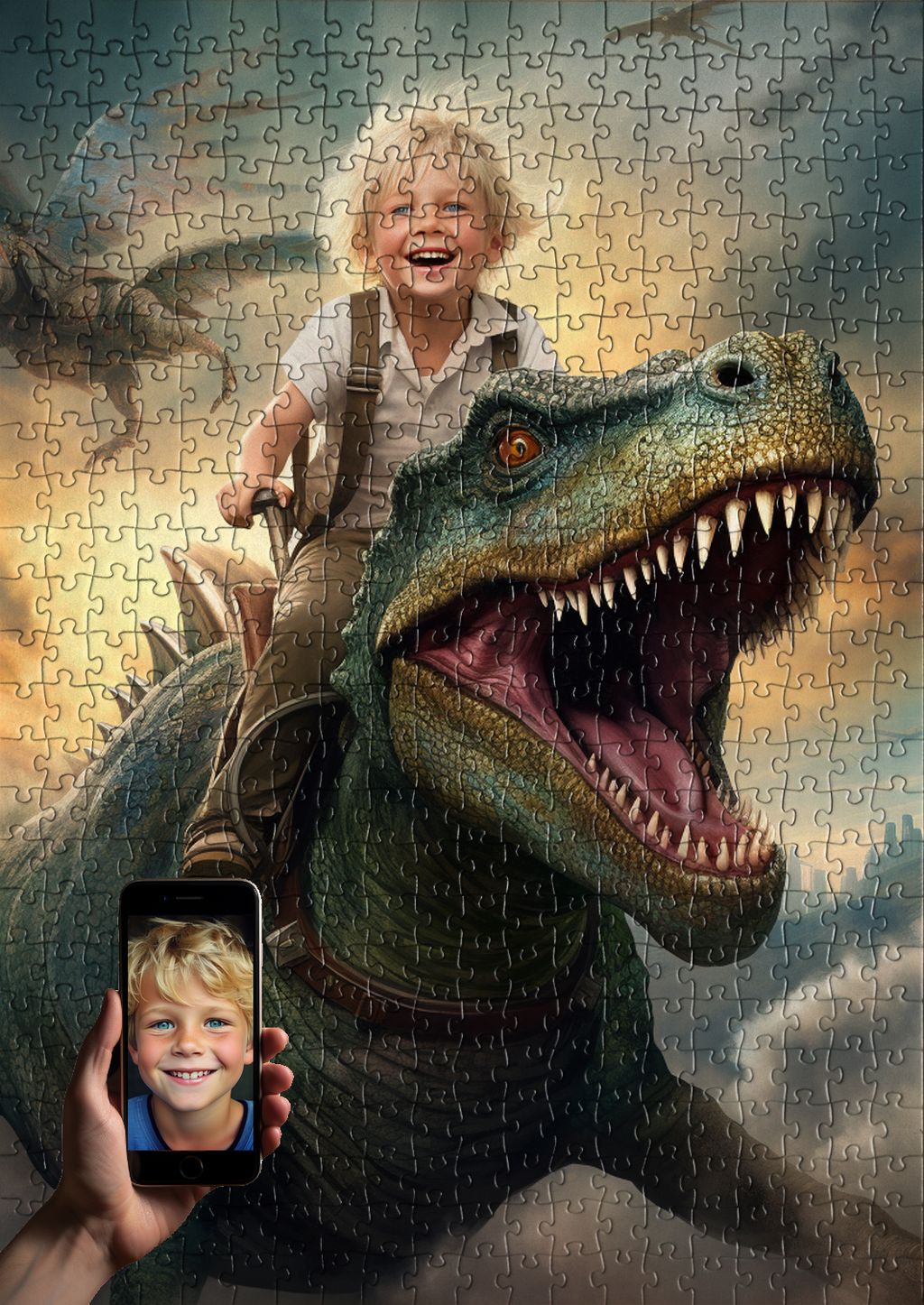
This last point matters more than it sounds. A child who hates the mechanics of reading can still adore stories, characters, and adventures. Keeping that love alive in other forms is part of what gets them through. A puzzle that puts your child into a story they care about, like our Personalized Pirate Adventure Puzzle or the Little girl with a magical unicorn, gives them quiet, screen-free time inside a narrative world. The reading muscle and the storytelling muscle grow together, even when the books are temporarily on hold.
Frequently Asked Questions
My child can technically read but says they hate it. What do I do?
This usually means decoding still feels like work. Focus on short, easy, fun material, lots of re-reading, and being read to. The love comes back when the effort drops.
How much should a six year old read each day?
Roughly ten to fifteen minutes of focused reading practice is plenty at this age, on top of whatever you read to them. Consistency matters far more than length. Five days of ten minutes will do more for your child than one heroic forty-minute session at the weekend. If ten minutes feels impossible, start with five. The habit matters more than the dose at first.
Should I worry if my child seems behind the other kids in their class?
Usually not. There is a wide normal range, and children pick up reading at very different ages. What matters is the trajectory: is your child moving forward, picking up new sounds and words, gradually reading more confidently than they did three months ago? If yes, they are fine. If they have been stuck on the same spot for a long time, or if you are seeing several of the warning signs we mentioned earlier, have a calm chat with the teacher.
Are reading apps and games good or bad?
Neither, on their own. A short, well-designed reading game used a few times a week as one ingredient in a wider mix can genuinely help motivation and practice. The problem is when screens replace books, conversation, and time with you, rather than supplementing them. Keep digital practice short, keep it optional, and keep the bulk of your child's reading life in print and in your lap.
My child guesses words from the pictures instead of reading them. Is that bad?
Picture-guessing is a normal early strategy, but you do not want it to become the main one, because it skips the decoding practice your child needs. Gently redirect: cover the picture with your hand, point to the first letter, and ask "what sound does it start with?" Praise the attempt to decode, even when the word is wrong. You are teaching them to look at the letters first, then check the picture, not the other way around.
The real goal is a child who still likes stories tomorrow
If you take one thing from this article, let it be this: your most important job during the hard early reading years is not to finish every homework page. It is to keep your child's relationship with stories, books, and you warm enough that they want to come back tomorrow. Fluency comes from calm, small daily doses over time. Quiet, screen-free play with stories and characters your child loves, whether that is a puzzle, dress-up, an audiobook, or ten minutes of silly reading on the sofa, is all part of the same project: helping a small person love stories while the words catch up.














Share and get 15% off!
Simply share this product on one of the following social networks and you will unlock 15% off!