
You set your four-year-old up with a new activity, feeling proud of yourself for planning ahead. Markers, paper, a quiet corner. Three minutes later, she's under the table pretending to be a cat. You sigh and wonder, for what feels like the hundredth time this month: is this normal? Should she be able to sit and focus for longer than that?
If you have ever found yourself googling "child attention span by age" at 9 p.m. after a long day, you are in very good company. Concentration is one of the most misunderstood milestones in early childhood. Parents often expect far more focus than is developmentally realistic, especially when comparing their child to a sibling, a classmate, or a memory of themselves at the same age (which, gently, is almost never accurate).
The good news: pediatric researchers and child development experts have studied this carefully, and there are clear, age-based ranges for how long a typical child can sustain attention on a task. The other good news: attention is not a fixed trait. It is a skill that grows with the brain, and you can support it at home through everyday play, gentle routines, and the kinds of hands-on activities children actually enjoy.
In this guide, we will walk through what to expect from ages 3 to 10, what influences focus beyond age itself, the red flags that genuinely warrant a chat with your pediatrician, and the activities (yes, including puzzles) that build sustained attention in a way that feels like play. We will also share a simple at-home test you can use this weekend if you want a clearer picture of where your child currently stands.
What "Attention Span" Actually Means at This Age
Before we look at numbers, it helps to define what we are measuring. Sustained attention is the ability to stay focused on a single task without being pulled away by every passing distraction. It is different from selective attention (filtering out noise to focus on one thing) and divided attention (juggling two tasks at once, which young children genuinely cannot do well).
When pediatricians and educators talk about attention span in young children, they are usually referring to sustained attention on a developmentally appropriate, moderately interesting task. Not a screen. Not a favorite toy that could hold a child's interest for an hour. A neutral, structured activity like a puzzle, a drawing prompt, or listening to a story.
This distinction matters because parents often say, "But she watches YouTube for forty-five minutes straight!" That is not a measure of attention. That is a measure of how well an algorithm has learned to deliver novelty every few seconds. We will come back to screens shortly.
Child Attention Span by Age: The Developmental Ranges
The following ranges are broad practical estimates, not diagnostic cutoffs. Many children focus longer on highly preferred play and less on adult-directed tasks. Pediatric milestone sources can provide useful anchors, but they do not turn attention span into a precise stopwatch by age.
- Age 3: 3 to 8 minutes on a structured activity
- Age 4: 5 to 10 minutes
- Age 5: 10 to 15 minutes
- Age 6: 15 to 20 minutes
- Age 7: 20 to 25 minutes
- Age 8: 25 to 30 minutes
- Ages 9 to 10: 30 to 45 minutes
A few important caveats. These ranges assume a child is engaged in something age-appropriate, neither too easy nor too hard. They assume reasonable rest, food, and a calm environment. And they describe averages, which means roughly half of children will fall above and half below. A child sitting near the bottom of their range is not behind. A child slightly above is not gifted. This is a developmental window, not a finish line.
Why the Range Widens With Age
You will notice the ranges grow not just longer but wider as children age. That is because the prefrontal cortex, the brain region responsible for focus and self-regulation, develops gradually and unevenly through childhood. By age 9 or 10, the gap between a child who has had lots of practice concentrating and one who has had less can be quite large, even though both are perfectly typical.
What Influences Attention Beyond Age
If your child's focus seems to swing wildly from day to day, that is not your imagination. Several factors influence attention from one moment to the next, and most of them have nothing to do with whether your child "can" concentrate.
- Sleep quality. A tired three-year-old will look like a distracted three-year-old. Poor or insufficient sleep is the single biggest disruptor of focus in young children.
- Hunger and blood sugar. The window between snack time and meltdown time is often shorter than we think. Try a small protein-rich snack before any task that requires sitting.
- Interest level. Children focus longer on things they care about. A dinosaur-obsessed five-year-old will concentrate on a dinosaur puzzle far longer than on a generic shapes worksheet.
- Sensory environment. Background TV, a sibling playing nearby, an itchy tag in a shirt, fluorescent lighting. Young children are not yet skilled at filtering out sensory input, so their environment does a lot of the focusing work for them.
- Time of day. Most young children focus best in the late morning, after breakfast has settled and before the pre-lunch dip. The hour before dinner is, biologically, the worst time to ask for concentration.
- Emotional state. A child who is anxious, overstimulated, or upset cannot access the parts of the brain responsible for sustained attention. Connection comes before concentration, always.
If your child seems to focus well in the morning and falls apart by 5 p.m., that is not an attention problem. That is a perfectly designed nervous system telling you it is tired.
A Simple At-Home Test for Your Child's Attention Span
If you want a more concrete sense of where your child currently sits, you can run this small experiment over a few days. It is not a diagnostic tool. It is just a structured way to observe what is already happening.
- Pick a quiet time of day, ideally mid-morning, when your child is fed and rested.
- Choose an activity that is age-appropriate and moderately interesting. A puzzle is ideal because it has a clear beginning, middle, and end. Avoid screens and avoid your child's all-time favorite toy.
- Set up the activity, give a brief invitation ("Want to do this puzzle with me nearby?"), and then quietly start a timer on your phone.
- Note when your child first disengages: gets up, asks for something else, becomes visibly distracted. Do not redirect them back.
- Repeat on two or three different days to get an average.
Compare the average to the age ranges above. If your child consistently lands within or near their range, you have your answer. If they land slightly below, look at the influencing factors first before worrying. If they land consistently and significantly below across many different tasks (more on that next), it may be worth a conversation with your pediatrician.
Red Flags That Warrant a Pediatric Conversation
Most attention concerns parents bring up turn out to be developmentally typical. But there are patterns worth flagging to a professional, especially if they appear together and persist over time.
- Attention span is consistently 50% or more below the age range across many different activities, not just disliked ones.
- Difficulty focusing shows up in multiple settings (home, preschool, grandparents' house), not only one.
- Your child seems unable to focus even on activities they genuinely love and chose themselves.
- There are accompanying concerns about impulsivity, difficulty following two-step instructions appropriate to their age, or significant frustration with everyday tasks.
- Teachers or caregivers raise concerns independently.
A pediatrician will not diagnose attention issues at age 3 or 4 based on a single conversation. What they can do is rule out hearing problems, vision issues, sleep disorders, and other physical factors that often masquerade as inattention. That alone is worth the visit.
The Honest Truth About Screens
We promised to come back to this, so here it is, gently but clearly. Fast-cut content (short videos, app games designed to reward every tap, cartoons that change scenes every two seconds) trains the developing brain to expect a new stimulus every few seconds. Over time, this raises the bar for what feels "interesting enough" to focus on. A puzzle, a book, or a quiet drawing activity simply cannot compete with that pace.
This is not a moral judgment. Screens are part of modern family life and they are not going away. But fast-paced, highly rewarding content can make slower real-world tasks feel less appealing by comparison, especially when it crowds out sleep, movement, conversation, and hands-on play. Reducing fast-cut content and gradually reintroducing slower activities can make transitions easier for many families.
Practical guidance most pediatricians agree on:
- Choose slower-paced content (think classic Mister Rogers tempo, not algorithm-driven shorts).
- Watch together when you can, so screens become social rather than solo.
- Protect the first and last hour of the day as screen-free.
- Keep meals screen-free, which doubles as practice for sustained attention.
Activities That Naturally Build Attention
The single best way to grow your child's attention span is to give them lots of low-pressure opportunities to practice it. Concentration is a muscle, and like any muscle, it strengthens with regular, enjoyable use.
Puzzles: A Top Tool for Sustained Focus
Puzzles can be a useful attention-building activity for ages 3 to 10, especially when the piece count fits the child. Here is why they work so well:
- Visible progress. Every piece placed is concrete evidence of moving forward. Young children, who live in the present, find this enormously motivating.
- Built-in control of error. A piece either fits or it doesn't. The child does not need an adult to validate each step, which protects the flow of concentration.
- A clear end point. Unlike open-ended play, a puzzle has a finish line. This teaches children the satisfying experience of completing something, which builds the appetite to focus longer next time.
- Emotional engagement. When the image on the puzzle matters to the child, focus deepens dramatically. A generic puzzle might hold a four-year-old for six minutes. A puzzle featuring something they love, like dinosaurs, princesses, or even their own face, can stretch that to fifteen or twenty.
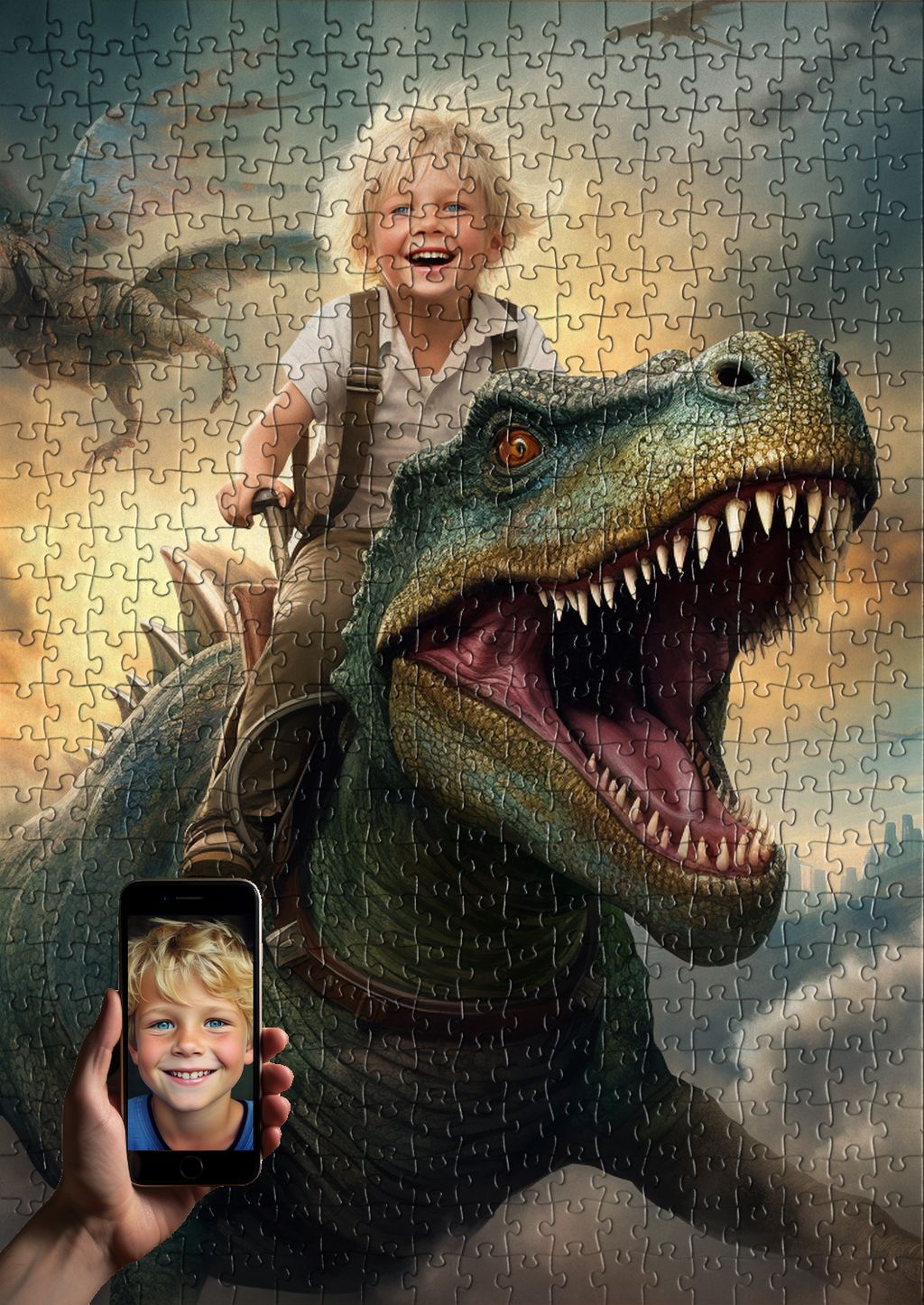
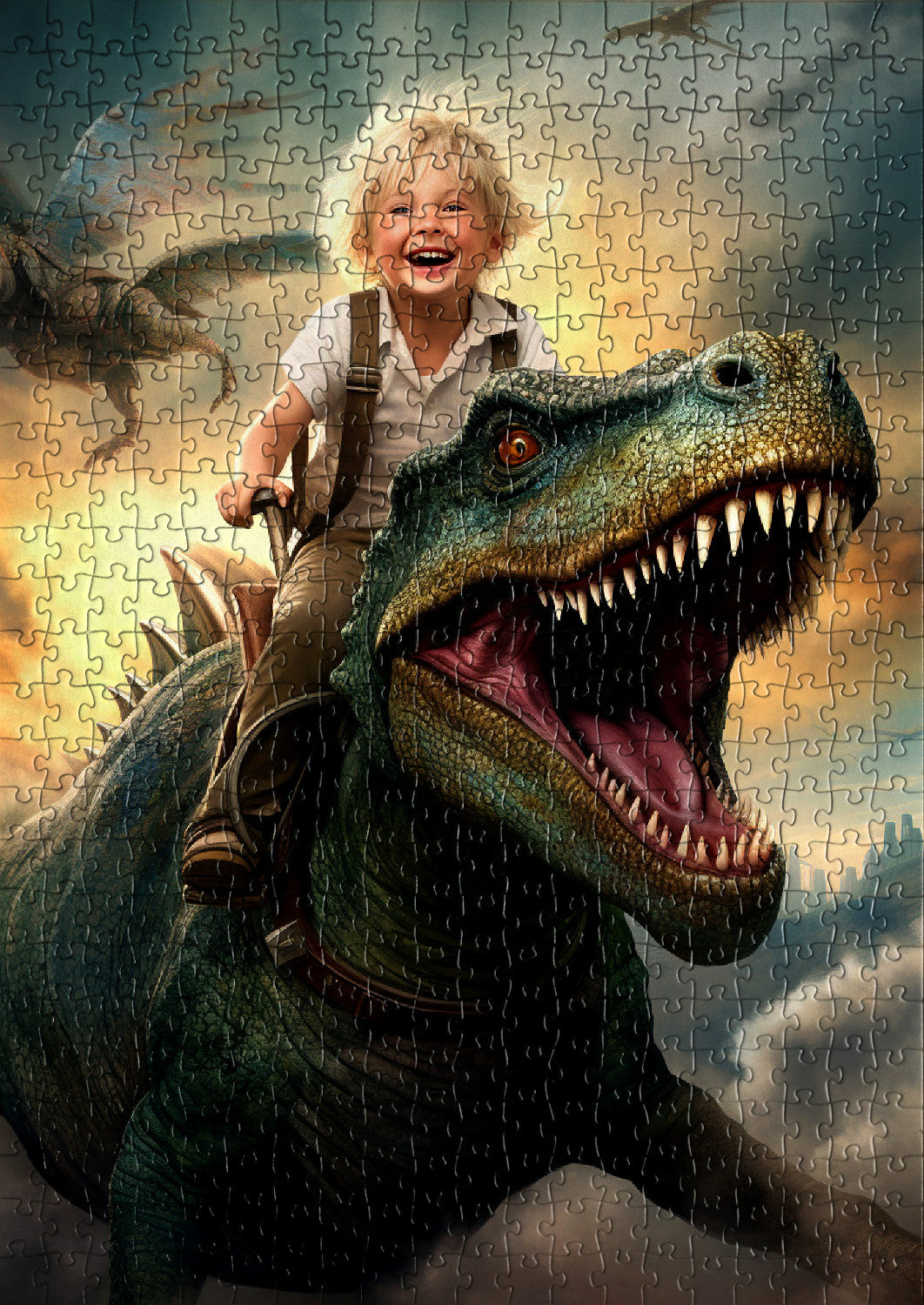
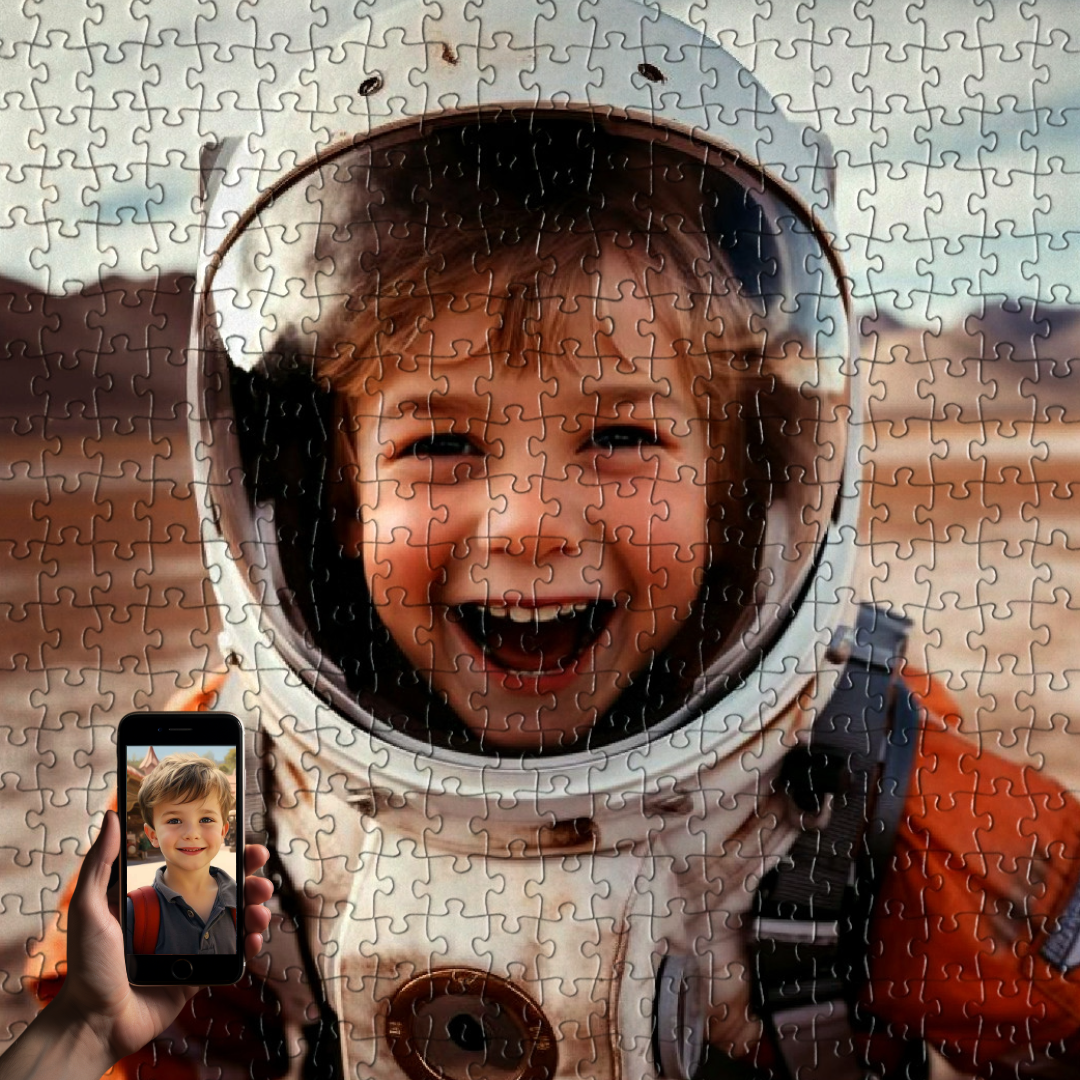
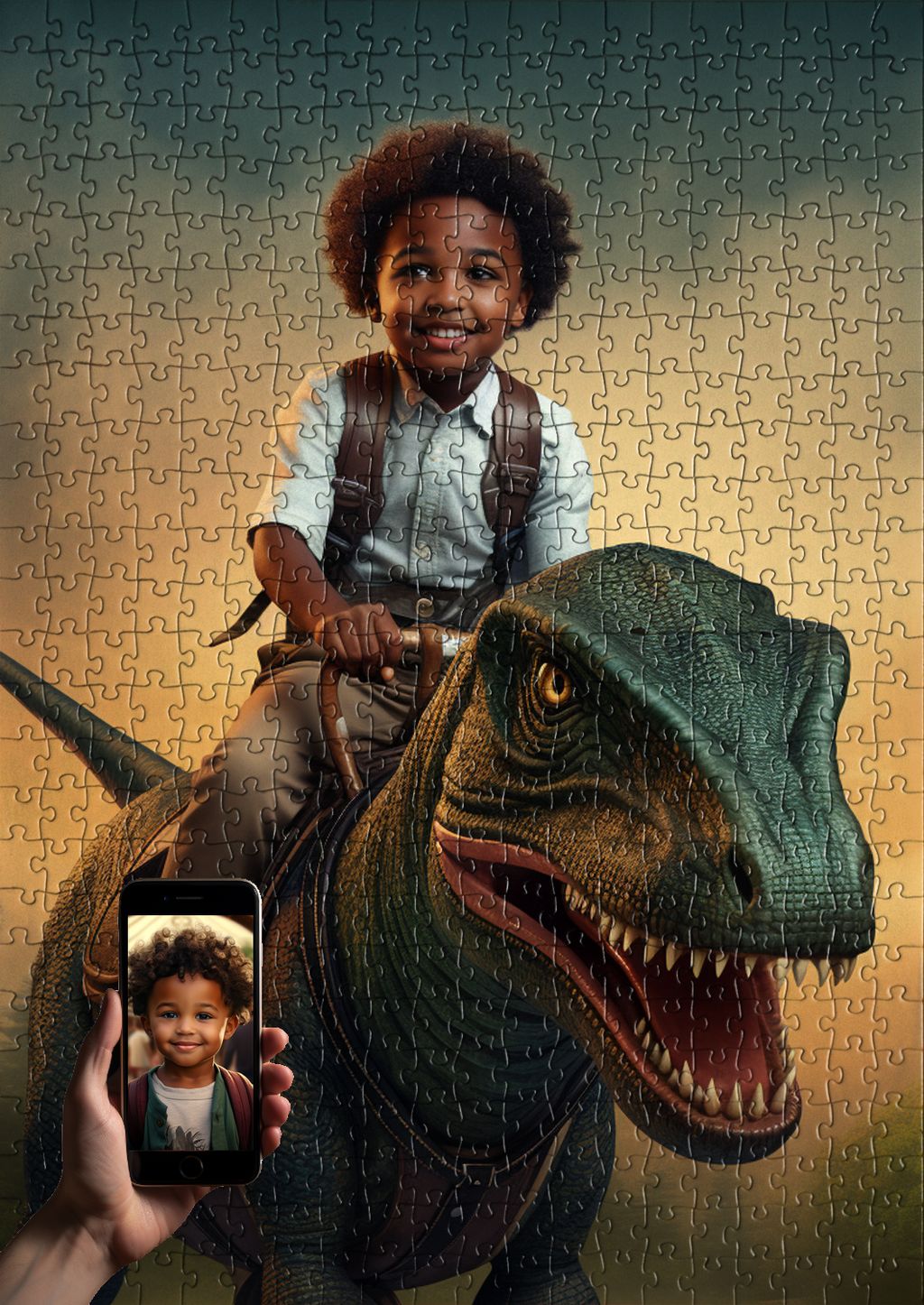
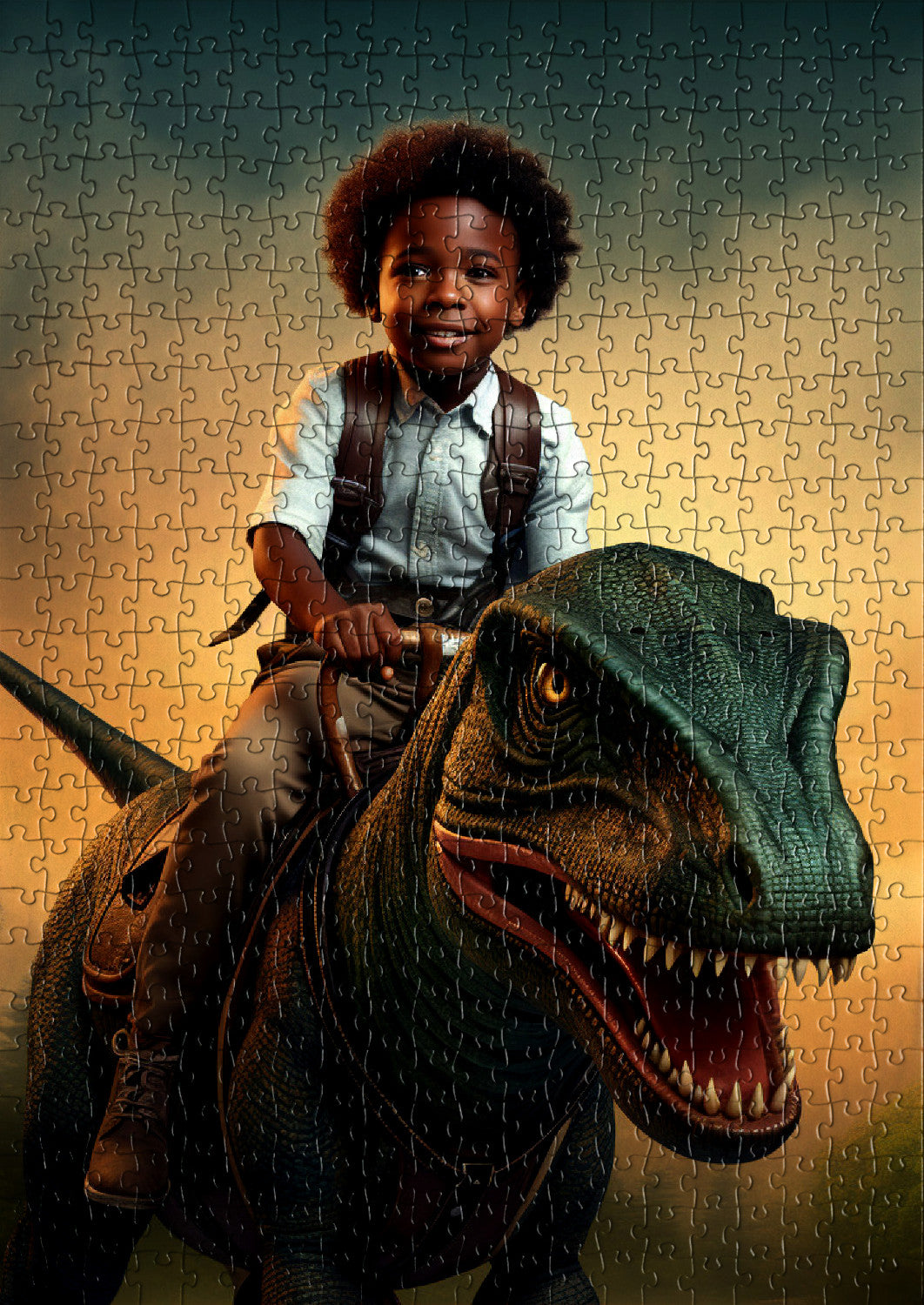
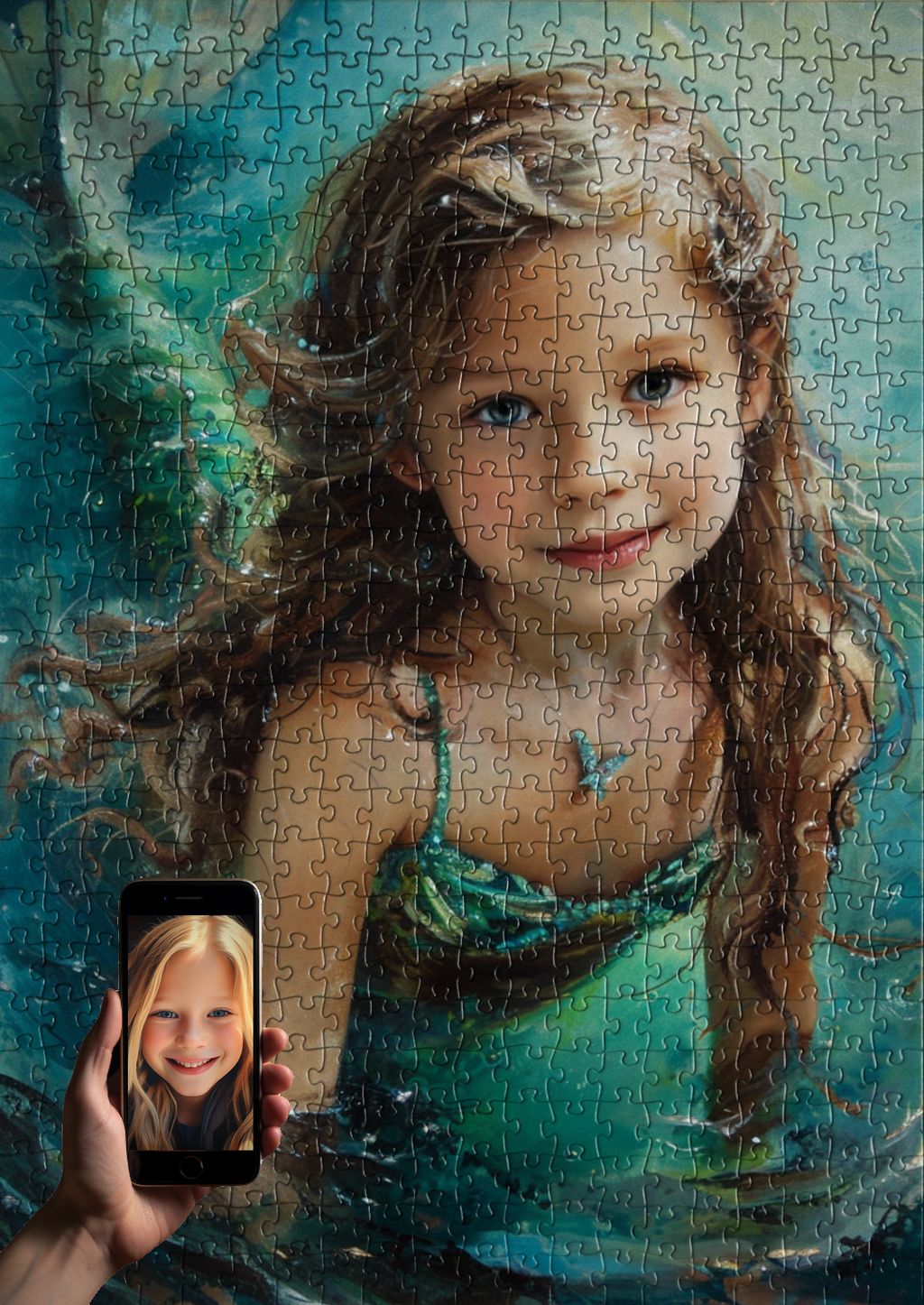
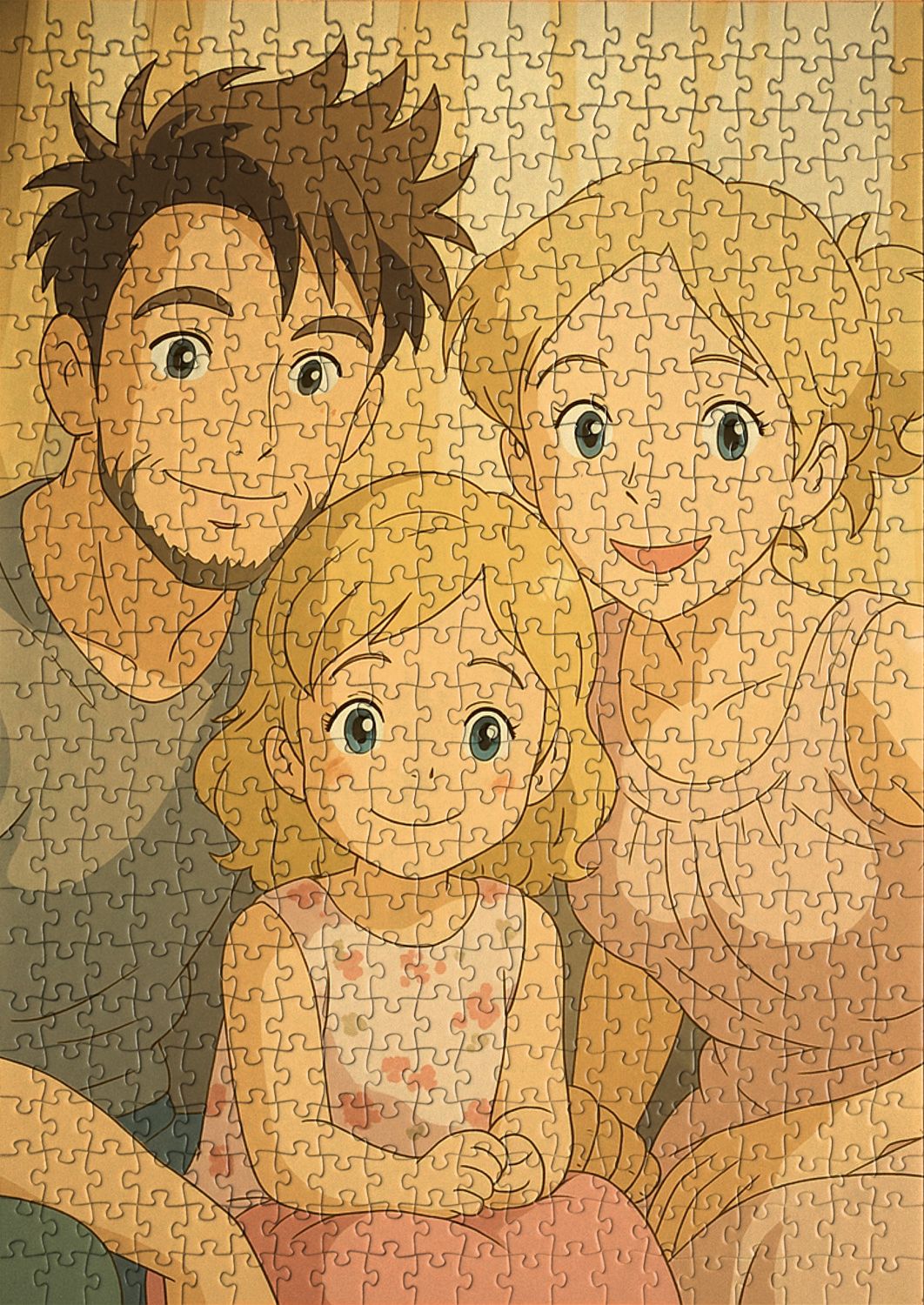
This is why we love personalised designs. A puzzle like the Kid Riding Dinosaur can captivate a child who is mid-dinosaur-phase far longer than a generic image would. For a child who needs maximum emotional pull, a fully custom photo puzzle made from a family picture transforms the activity into something deeply personal. And our Unique Puzzle, Imagined by You lets you co-design a one-of-a-kind image with your child, which itself becomes an early lesson in sustained creative attention.
Other Attention-Building Activities
- Reading aloud. Start with picture books and gradually move to chapter books with fewer images. The slow buildup of mental imagery is excellent practice.
- Cooking together. Following a simple recipe involves sequencing, waiting, and sustained engagement. Plus, you get cookies.
- Building activities. Blocks, magnetic tiles, and construction toys reward longer focus with bigger, more satisfying results.
- Art with a goal. Open-ended drawing is wonderful, but occasionally offering a specific challenge ("Can you draw our whole family?") stretches attention further.
- Nature observation. Watching ants, examining leaves, or listening for birds builds the slow, patient attention that screens erode.
Attention also depends on the body being able to settle, which is closely tied to when a child can sit still for an activity and to the hand control that comes with developing fine motor skills. These three milestones grow together, and progress in one often quietly supports the others.
How to Stretch Attention Without Pushing
Once you know your child's current range, the goal is not to drag them past it. It is to make the upper edge of their range feel achievable and rewarding. A few principles that work well:
- Start slightly below their max and build up. If your five-year-old can focus for twelve minutes, set up tasks that take eight to ten. Success breeds appetite.
- Sit nearby, not over them. Your calm presence regulates their nervous system. Hovering or correcting interrupts flow.
- Protect the focus when it happens. If your child is deep in a puzzle, do not break the spell to offer water or praise. Let them finish. The experience of completing something on their own is the actual reward.
- Notice the effort, not the outcome. "You stuck with that even when it got tricky" is more useful than "Good job."
- Build a rhythm. Children focus better when concentrated activities happen at predictable times. The brain learns to show up.
Frequently Asked Questions
Is it normal for my 4-year-old to only focus for 5 minutes?
Yes, that sits right at the lower end of the typical range for a four-year-old (5 to 10 minutes on a structured task). Check for the basics first: sleep, hunger, time of day, and how interesting the activity actually is to your child. With practice and a few well-chosen activities, most four-year-olds stretch comfortably to seven or eight minutes within a few months.
Does a long attention span on screens mean my child can focus well?
Not really. Screens, especially fast-cut content, deliver constant novelty that does not require sustained attention from the viewer. A child who watches videos for an hour but cannot stay with a puzzle for five minutes is not lazy or inattentive. They are simply showing you which environment matches their current focus skills. Real-world activities build the muscle that screens do not.
How can I tell if my child has an attention problem versus just being a kid?
The general pattern professionals look for is consistent attention significantly below the age range (often 50% or more below), across multiple settings, on many different kinds of tasks (not just disliked chores), and accompanied by other signs like difficulty following age-appropriate instructions. If that describes your child, talk to your pediatrician. If your child just has rough days or strong opinions about which activities are worth their time, that is parenting a young human.
What is the best activity to build attention in a 3 to 6 year old?
Puzzles are hard to beat in this age range, particularly puzzles featuring something your child loves. The combination of visible progress, built-in feedback, and a clear finish line makes them uniquely well-suited to growing sustained focus. Reading aloud, building toys, and cooking together are close seconds.
How long should screen time be at these ages?
The American Academy of Pediatrics recommends no more than one hour per day of high-quality programming for children ages 2 to 5, and consistent limits with co-viewing for ages 6 and up. More important than the exact number is the pace of the content and what it replaces. Slow shows watched together do not erode attention the way fast-cut solo scrolling does.
The Bigger Picture
Attention is one of those quiet skills that shapes almost everything else. Reading, learning, friendships, emotional regulation, even the satisfaction of finishing something hard. It grows slowly, and it grows best when children are given calm spaces, meaningful materials, and the freedom to get absorbed in something they care about. If you take one thing from this guide, let it be this: your child's attention span is not a verdict on their future. It is a snapshot of where they are right now, with plenty of room to grow.
The most powerful thing you can offer is not a longer to-do list of focus drills, but a few unhurried minutes each day with something worth their attention. A puzzle on the floor. A book in your lap. A windowsill with two leaves to compare. The kind of small, real-world moments that quietly teach a child what it feels like to be fully here. If you are looking for one of those moments this week, choose something that already lives in their imagination, and let them lead.








Share and get 15% off!
Simply share this product on one of the following social networks and you will unlock 15% off!