
Every August, somewhere around the third week of the month, parent forums and group chats light up with the same quiet panic. A four-year-old who slept through the night for two years is suddenly waking up at 2 a.m. asking if the teacher will be nice. A five-year-old who has been potty-trained since she was three has had two accidents in a week. A confident kindergartener clings to a parent's leg at the supermarket and whispers, "I don't want to go." If you are reading this, there is a good chance you recognize at least one of those scenes from your own home this week.
First day of school anxiety in a child is one of the most universal experiences of early childhood, and also one of the most underestimated. To an adult, "school starts in three weeks" is a date on a calendar. To a three, four, five, or six-year-old, it is an enormous unknown stitched together from fragments: a new building, an unfamiliar grown-up who will be in charge of them for hours, a room full of children they have never met, rules they do not yet understand, and the dawning realization that the slow rhythm of summer, with you, is ending. Their nervous system reacts the way any small, sensible nervous system would react to a large unknown. It braces.
The good news is that early-childhood researchers, teachers, and clinicians have spent decades figuring out what genuinely helps. The even better news: most of it is calm, simple, and something you can begin at the kitchen table this week. Below, we walk through the signs of school anxiety to watch for, the practical calming techniques that soothe a worried young child, the quiet power of identity-affirming objects at home (including why a personalized puzzle can act as a kind of anchor), and finally, how to recognize when anxiety has crossed the line into something that needs professional support. Throughout, the goal is the same: to help your child arrive at that classroom door feeling, if not fearless, then at least known, prepared, and loved.
What School Anxiety Actually Looks Like in a 3 to 6 Year Old
Young children almost never say, "I am anxious about school." Their feelings come out sideways, through the body and through behavior. If you know what to look for, you can name what is happening and respond, rather than treat the symptoms as misbehavior.
Common signs of first day of school anxiety in a child include:
- Sleep disruption: harder bedtimes, repeated wake-ups, early waking, new requests to sleep in your bed, vivid dreams about being lost or left behind.
- Stomach aches and other somatic complaints: tummy hurts, head hurts, "my legs feel funny." These are real sensations driven by stress hormones, not faking.
- Clinginess: a child who happily played in the next room in July suddenly needs you within arm's reach in August.
- Regression: brief loss of skills the child had clearly mastered, especially bathroom independence, self-feeding, or dressing.
- Increased tantrums or shorter fuse: meltdowns over socks, the wrong color cup, the seam in a sock.
- Avoidance and questions on loop: "Do I have to go?" asked twelve times a day, or refusing to talk about school at all.
- Quieter signals: a normally chatty child going still, chewing collars or sleeves, hair twisting, more thumb-sucking.
None of these mean something is wrong with your child. They mean your child is feeling something big and does not yet have the language to put it down on the table. Your first job is not to fix the feeling. It is to notice it, name it gently ("I think your tummy hurts because your brain is thinking a lot about the new school"), and stay close. If you want a deeper look at calming techniques you can use year-round, our guide on helping an anxious child with six grounding activities pairs well with everything below.
Practical Techniques That Settle a Worried Young Child
The techniques in this section share a common logic. Anxiety in young children is largely about the unknown and the loss of control. Anything that makes the upcoming experience more familiar, more predictable, and more rehearsable lowers the temperature.
Role-play the school day at home
Pediatric psychologists consistently recommend playful rehearsal for big transitions, and it works because play is how three to six year olds process the world. In the two weeks before school starts, casually act out the day. You be the teacher, then let your child be the teacher. Practice hanging up a backpack, sitting on a carpet square, raising a hand to ask for the bathroom, opening the lunchbox by themselves, finding their water bottle. Use stuffed animals as classmates. Include the boring parts: lining up, waiting, washing hands. Familiarity is the antidote to dread.
Build a predictable morning routine, on paper
A child who knows exactly what happens between waking up and waving goodbye has fewer decisions to make and fewer surprises to fear. Sketch a simple visual schedule with five or six pictures: wake up, get dressed, breakfast, teeth, shoes, hug goodbye. Tape it at child height. Walk through it for several days before school actually starts so it feels like an old routine, not a new demand piled on top of a new school.
Read social stories
Social stories are short, simple narratives in the child's perspective that describe what will happen and how the child might feel. "On Monday, Mama will walk me to my new classroom. My teacher's name is Ms. Lopez. I might feel a little nervous in my tummy. That is okay. I can take a deep breath and find the blue carpet." You can write your own on folded printer paper with stick figures. Plenty of free templates exist online. Reading one each night the week before school is a gentle, low-pressure rehearsal.
Teach one small breathing tool
Children under six do not need elaborate mindfulness practices. They need one tool, taught when calm, that they can reach for when activated. "Smell the flower, blow out the candle" works beautifully: breathe in through the nose as if smelling a flower, breathe out slowly through the mouth as if blowing out a birthday candle. Practice it together while brushing teeth. Then, in the car on the way to school, you can say, "Want to do three flowers and candles with me?" without making it a Big Anxiety Moment.
Visit the building, even from the outside
If the school allows a pre-visit, take it. If not, walk or drive past several times. Point out the playground, the door they will use, where you will wait at pickup. Concrete details ("you will hang your backpack on a hook with your name on it") are far more soothing than reassurance in the abstract ("it will be great, you'll love it").
The Quiet Power of a Transitional Object
In the 1950s, British pediatrician and psychoanalyst Donald Winnicott described what he called the transitional object: the blanket, stuffed bear, or worn-out cloth that a young child uses to bridge the gap between the security of a parent's presence and the wider world. Winnicott understood that these objects are not childish weakness. They are sophisticated psychological tools. They hold a piece of the safe, known world so the child can carry it into a new and uncertain one.
Decades of developmental research since have backed him up. Transitional objects help children self-soothe, regulate big feelings, and tolerate separation. Many schools quietly allow a small comfort item in a backpack for exactly this reason, even if it stays zipped inside as a secret companion.
For the back-to-school stretch, transitional objects do not have to live only in the backpack. They can live at home, too, as anchors the child returns to before and after school days. A familiar bedtime book on the nightstand. A small stuffed animal that "waits at home" during the school day and gets a full debrief at pickup. A photograph of you tucked into a coat pocket. The point is consistency: the same object, in the same place, giving the same message. You are known here. You are loved here. This is yours.
Why personalized objects work even better
There is a reason children write their own names on everything in September, and why teachers spend the first week labeling cubbies, name tags, and coat hooks. For a young child, seeing their own name and face in a place announces, I belong here. There is a spot for me. Identity-affirming items at home do similar work in reverse: they tell the child, after a long, overwhelming day of being one small person in a sea of new faces, here you are again, the center of your own story.
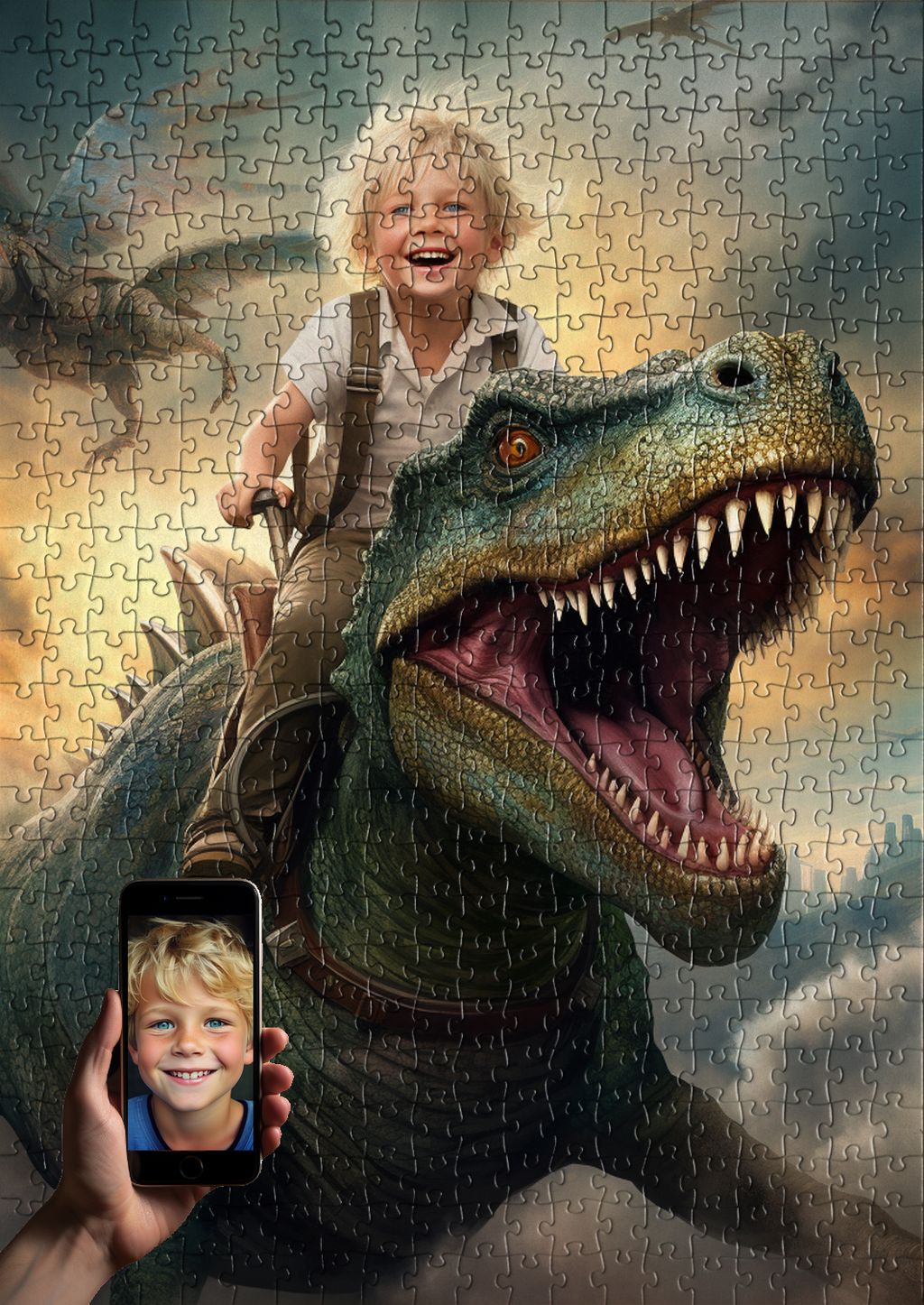
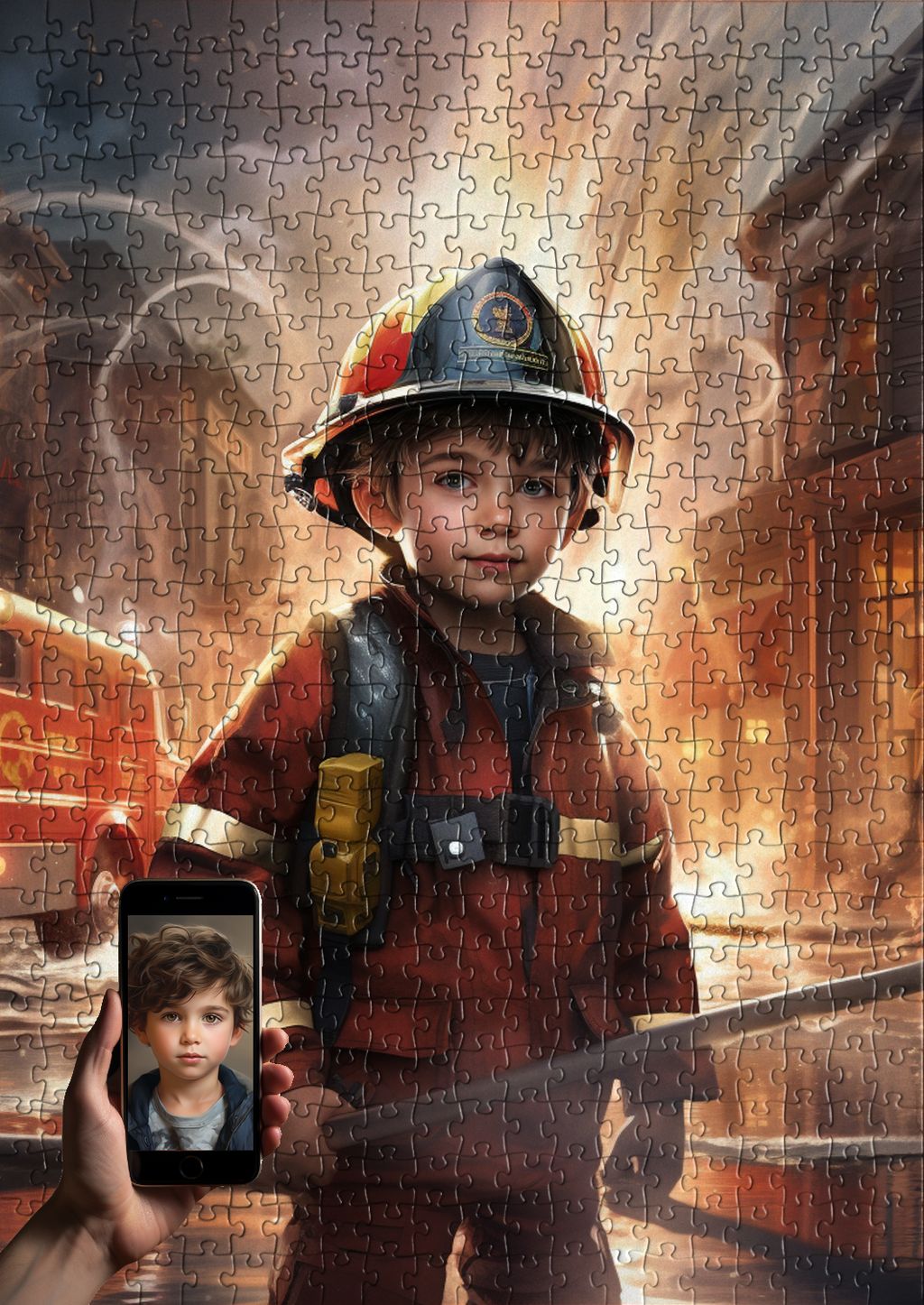
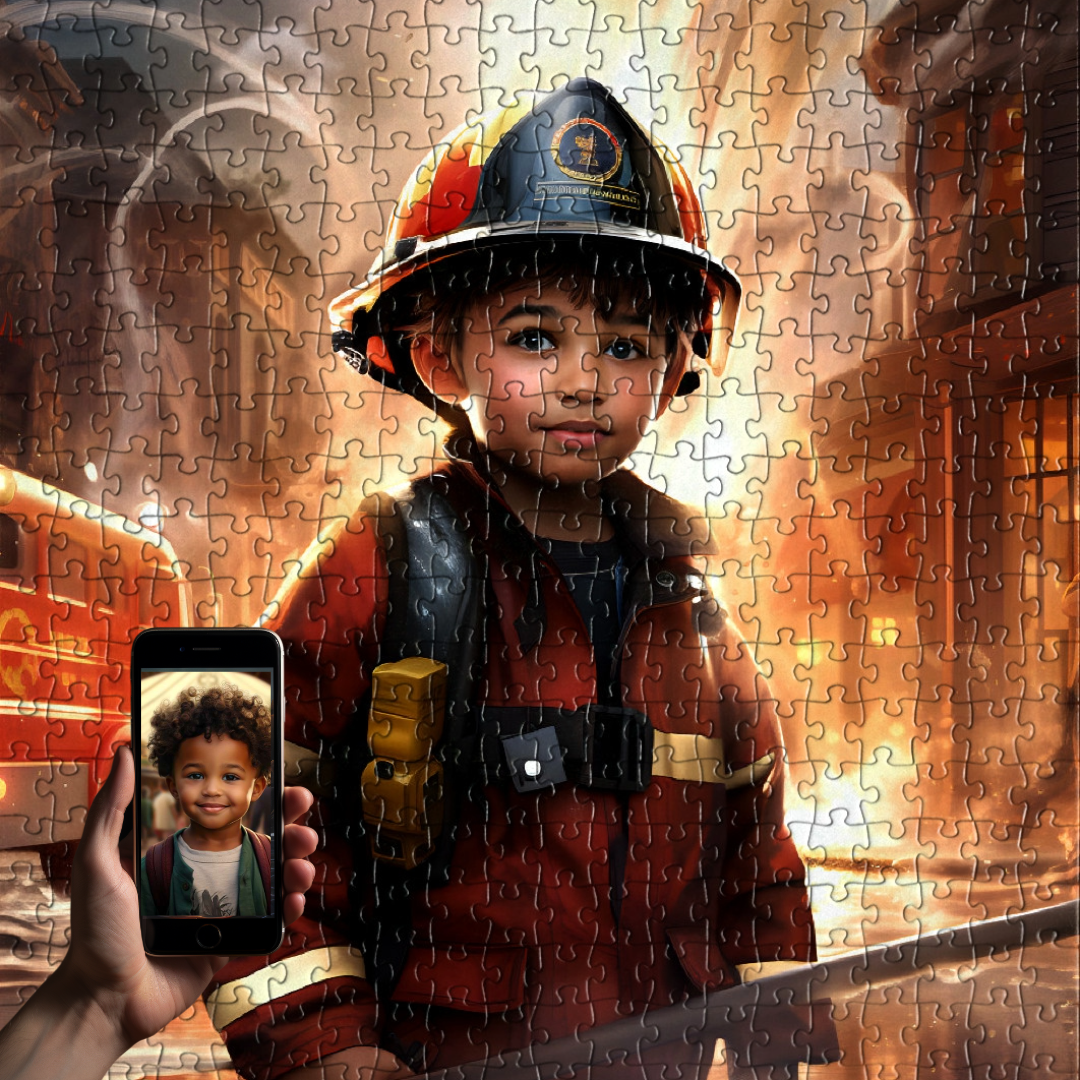
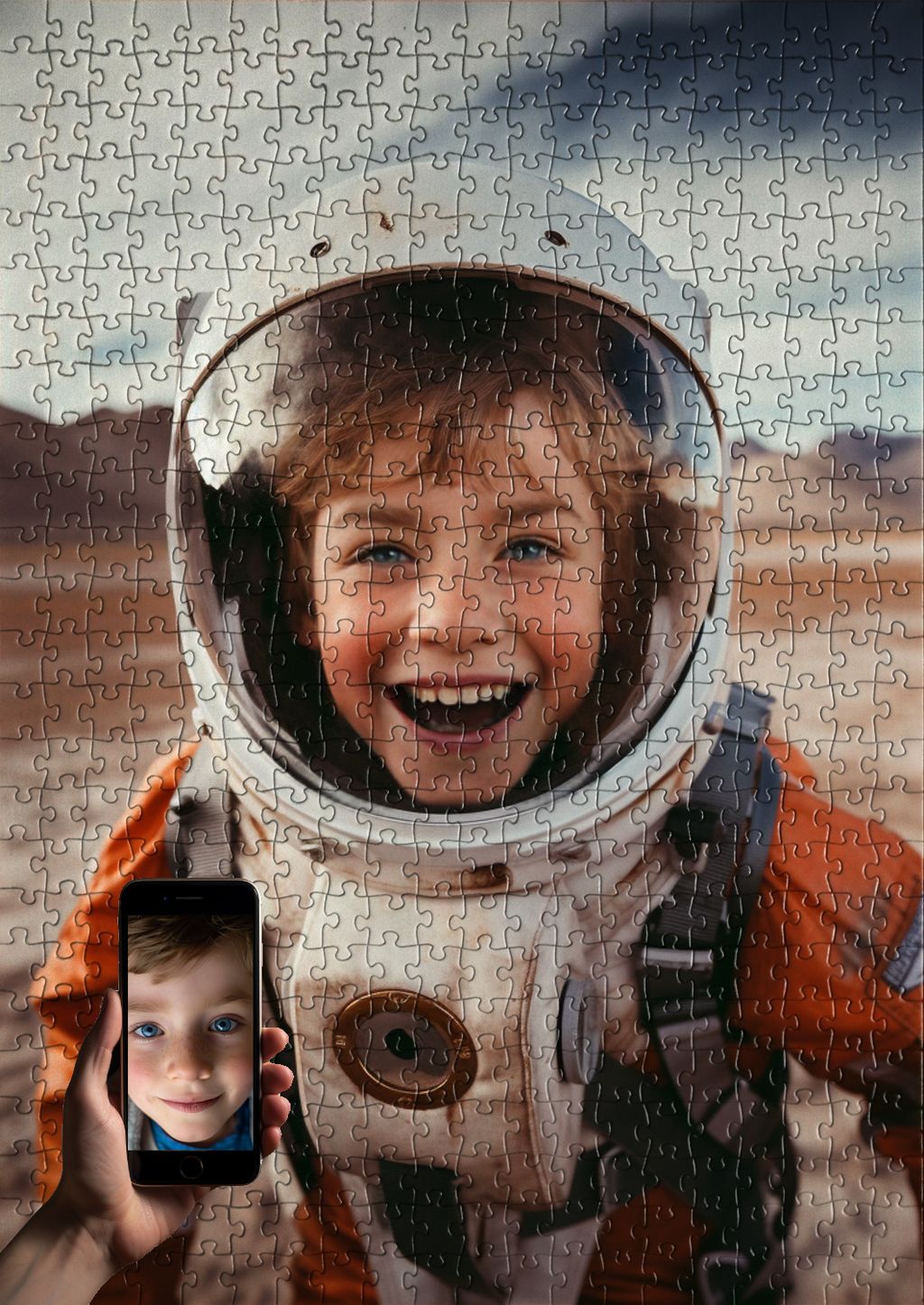
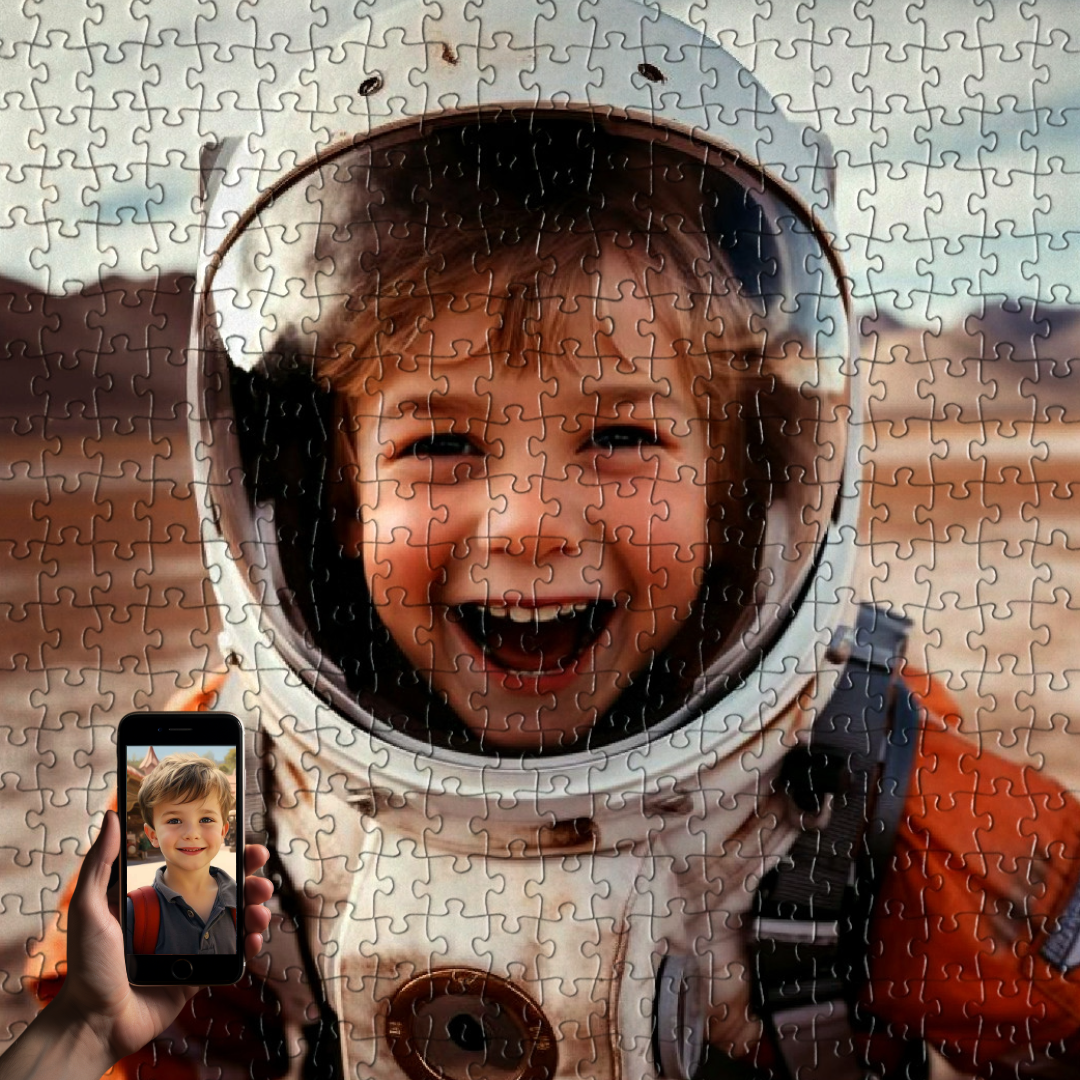
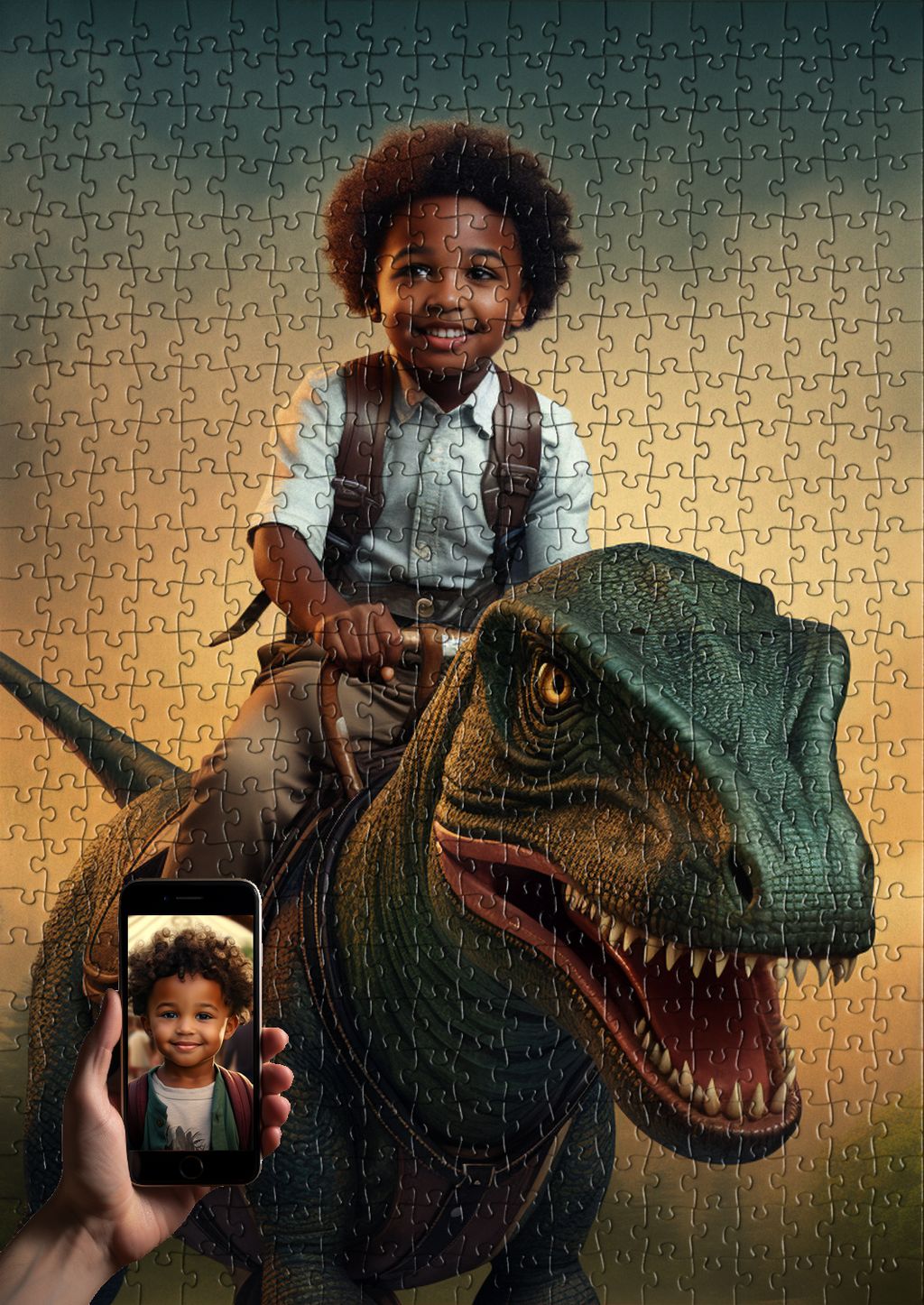
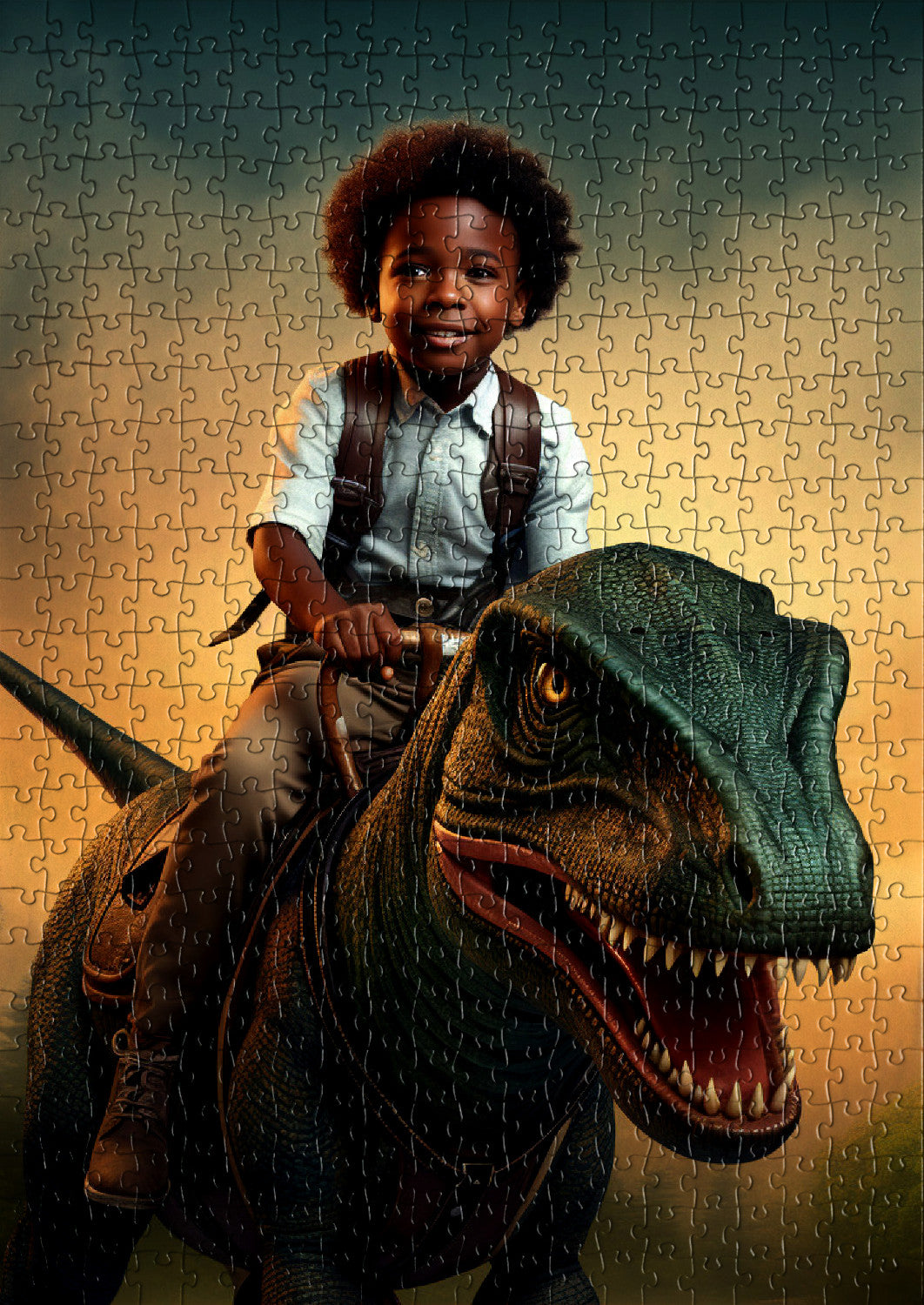
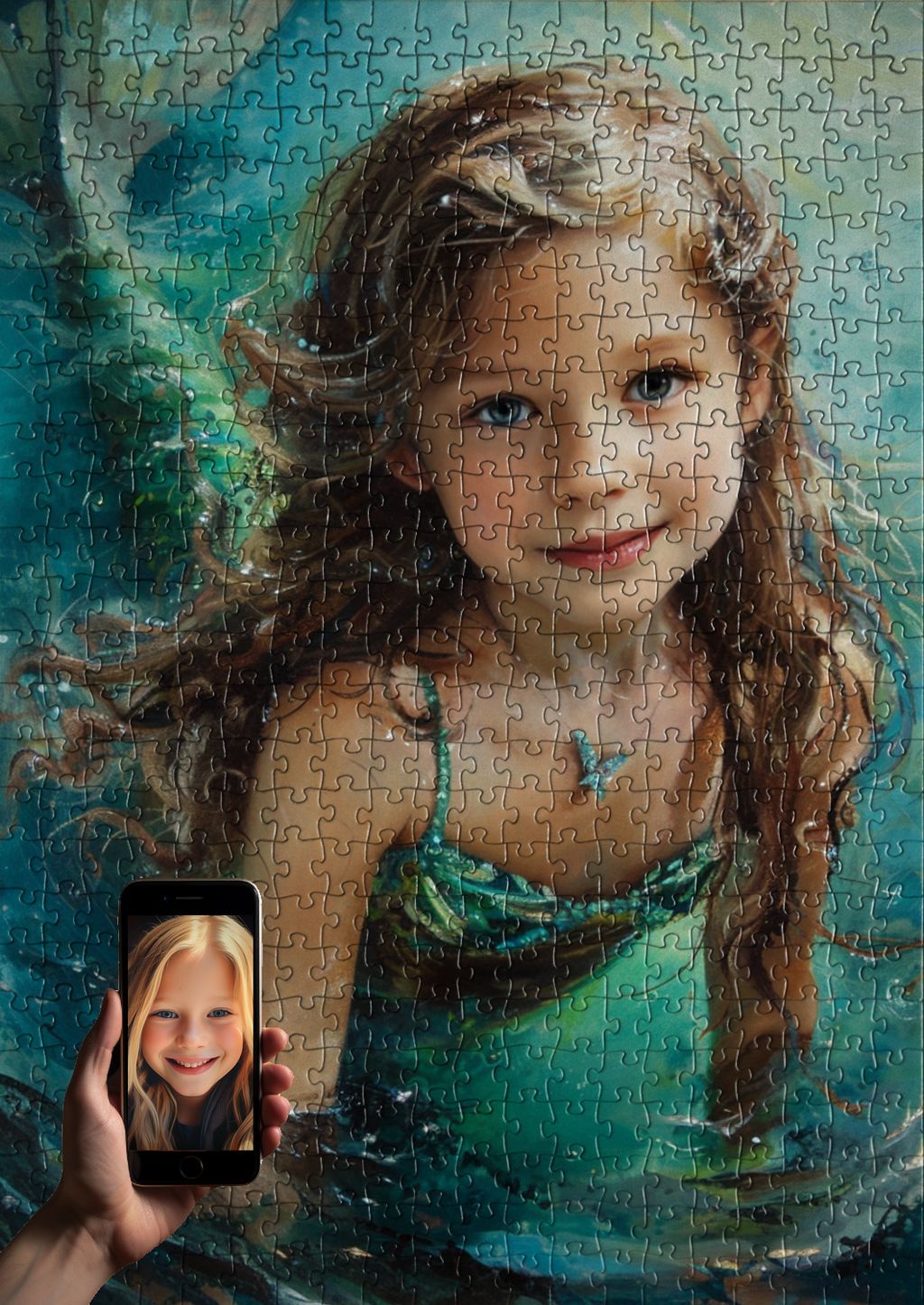
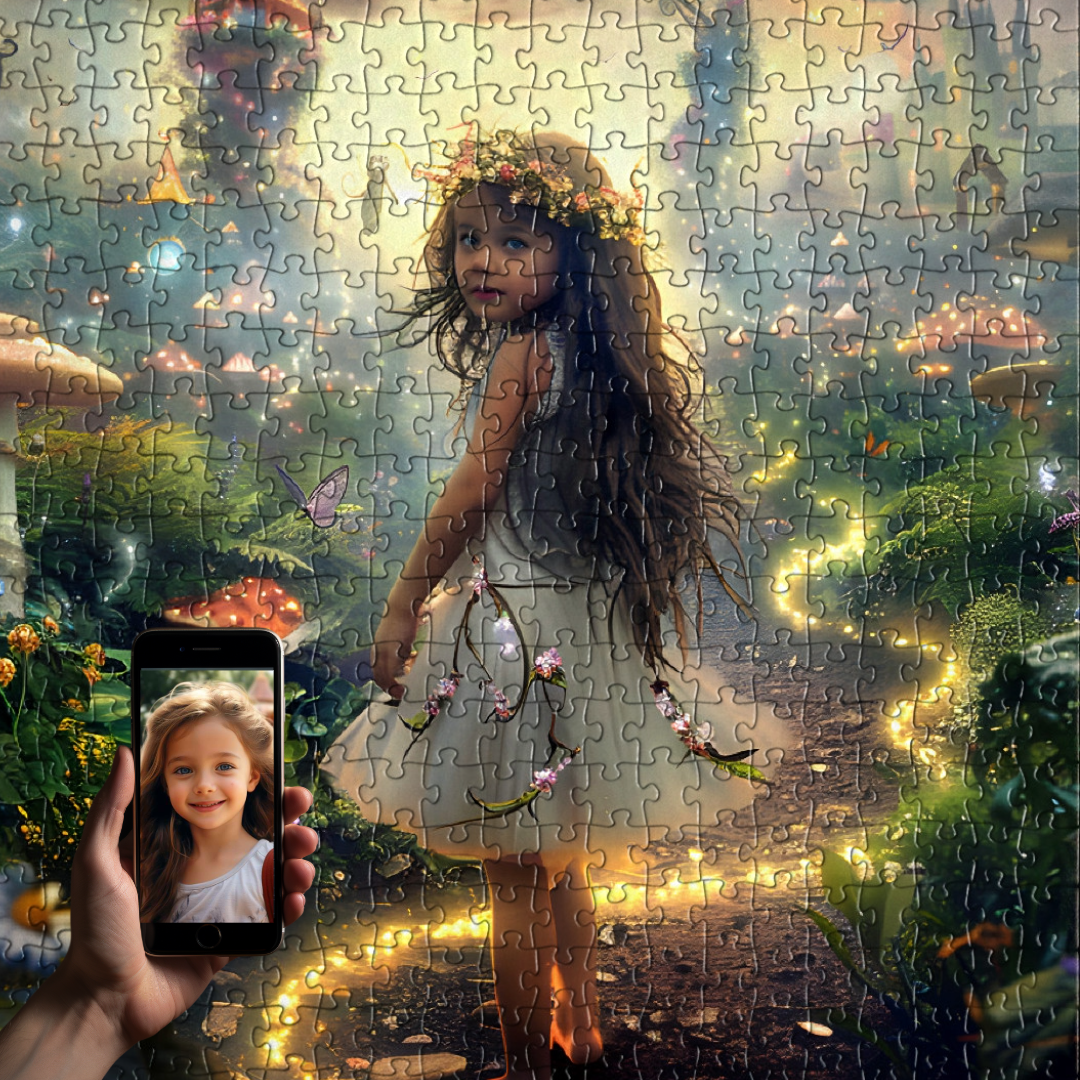
This is one of the reasons many families gravitate toward a custom photo puzzle or a personalized character puzzle in the back-to-school weeks. A puzzle the child can solve before school in the morning, or come home to in the afternoon, is more than a toy. It is a small, repeatable ritual where the child quite literally puts themselves back together. If the image features the child as the hero of an adventure, an astronaut, a firefighter, a knight on a friendly dinosaur, the activity becomes regulating in a layered way: the focused fine-motor task calms the nervous system, the familiar image affirms identity, and the completed picture reminds the child of their own capability. Options like the superhero kid puzzle or a personalized kid riding a dinosaur puzzle tap directly into the "I am brave, I can do hard things" story that helps a worried four-year-old walk through a classroom door.
A Gentle Daily Rhythm for the Two Weeks Before School
You do not need to do everything above. Pick a few and weave them into a rhythm. Here is a simple framework many families find calming:
- Mornings: practice one piece of the school routine playfully. Lunchbox opening. Shoes. Backpack on, backpack off.
- Afternoons: low-stimulation, body-based play. Water table, sandbox, walks, swinging. Anxious bodies need movement.
- Evenings: predictable wind-down. Bath, two books (one of them the social story or a back-to-school picture book), lights down, quiet conversation.
- Anywhere: name feelings out loud, briefly, then move on. "You seem a little wiggly today. Sometimes brains get wiggly before something new. I get it." No long lectures.
- Once a day: an absorbing, self-chosen activity that lets the child enter flow. Puzzles, drawing, building, sorting. These tasks regulate without anyone having to talk about feelings.
If your child has developed an imaginary friend in the past few weeks, take that as information rather than worry. Imaginary companions often arrive precisely during big transitions because they help children rehearse social scenarios and feel less alone. Our article on whether it is normal for a child to have an imaginary friend goes into this in more depth.
What to Say (and Not Say) in the Days Right Before
The language we use shapes what children expect. A few guidelines that hold up well across pediatric practice:
- Validate, do not minimize. "It makes sense that you feel nervous. New things can feel big," lands far better than "There's nothing to worry about."
- Be specific about goodbyes. "I will hug you twice, then I will walk to the blue door, and Ms. Lopez will help you find your hook." Predictability soothes.
- Promise only what you can keep. Do not say "I will be right outside." Do say "I will pick you up after snack time, just like we practiced."
- Watch your own face and voice. Children co-regulate from us. If your jaw is tight when you say "It's going to be wonderful," they hear the jaw, not the words.
- Resist the long pep talk. Short, warm, confident sentences beat long reassurance speeches, which often signal to the child that there must be something to fear.
When School Anxiety Might Need Professional Support
Mild transition anxiety often eases over the first few weeks. The tummy aches may fade. The morning resistance may shorten. Pickup smiles may return. Some children, though, need more than home strategies, and recognizing this is an act of love, not failure.
Consider reaching out to your pediatrician, a child psychologist, or the school counselor if you see any of the following:
- Persistent school refusal: weeks (not days) of intense distress about going, with no signs of easing.
- Panic-level reactions: hyperventilating, vomiting, inconsolable shaking at drop-off that does not settle within a few minutes of you leaving.
- Somatic symptoms without a medical cause: ongoing stomach aches, headaches, or sleep problems that your pediatrician has ruled out medically.
- Significant regression that does not bounce back: weeks of bedwetting, loss of speech, or withdrawal from previously loved activities.
- Your gut. Parents are usually the first to sense that something has shifted beyond normal nerves. Trust that.
Reaching out early does not mean labeling a child or jumping to a diagnosis. It often means a few sessions of play-based support, a conversation with the teacher, or simple environmental adjustments that smooth the path. Early help is gentler than waiting.
Frequently Asked Questions
How long does first day of school anxiety usually last?
For most three to six year olds, the anticipation period (the two to three weeks before) is the most intense, and the first week of school is the bumpiest. By weeks three to four, the majority of children have settled into the new routine, even if they still have the occasional rough morning. If you are still seeing severe distress at the six-week mark, it is worth checking in with the teacher and your pediatrician.
Should I let my child bring a comfort object to school?
If the school allows it, yes, especially for the first few weeks. A small stuffed animal in the backpack, a family photo in a pocket, or a smooth "worry stone" can be deeply reassuring. Talk to the teacher beforehand so the object is welcomed rather than confiscated. Many teachers have a "quiet friend stays in the cubby" rule that works well.
My child was fine last year but is anxious this year. What changed?
Often, nothing dramatic. New teacher, new classroom, new classmates, a friend who moved, a growth spurt that brings more self-awareness, or simply a developmental leap into a stage where the child notices more and feels more. Anxiety can also surface in a year that follows a calm one, because the child now has the cognitive capacity to anticipate. This is normal, not a regression.
Is it okay if my child cries at drop-off?
Yes. Tears at drop-off are common and usually pass within minutes of you leaving. The hardest thing, and the most helpful, is a confident, warm, brief goodbye: hug, "I love you, I will see you after snack," and walk out. Lingering or sneaking away both tend to make the next day harder. Ask the teacher to text or email you a quick update once your child has settled. They almost always have.
Can a puzzle really help with anxiety?
Focused, repetitive activities like puzzles activate the parts of the brain that handle calm, sustained attention, and they give an anxious child a sense of control of error: the puzzle either fits or it doesn't, and the child gets to be the one who figures it out. When the image on the puzzle reflects the child's own face or interests, it adds an identity-affirming layer that is especially grounding during a season of big change. Five quiet minutes with a beloved puzzle before school can do more than a long conversation about feelings.
A Soft Landing for a Big Beginning
The first day of school is, in some real way, the first day of a child's public life. It deserves to be met with care, not with cheerful dismissal of how hard it feels. The most powerful thing you can give your child this August is not a perfect lunchbox or a flawless drop-off. It is the steady message, through routines, rehearsals, words, and small familiar objects waiting at home, that they are deeply known and that they are not facing this alone. If a personalized puzzle on the kitchen table becomes part of that message, the place a worried four-year-old returns to in the afternoon to put their own brave face back together, piece by piece, then it has done exactly the quiet, important work that early childhood asks of us.






Share and get 15% off!
Simply share this product on one of the following social networks and you will unlock 15% off!